
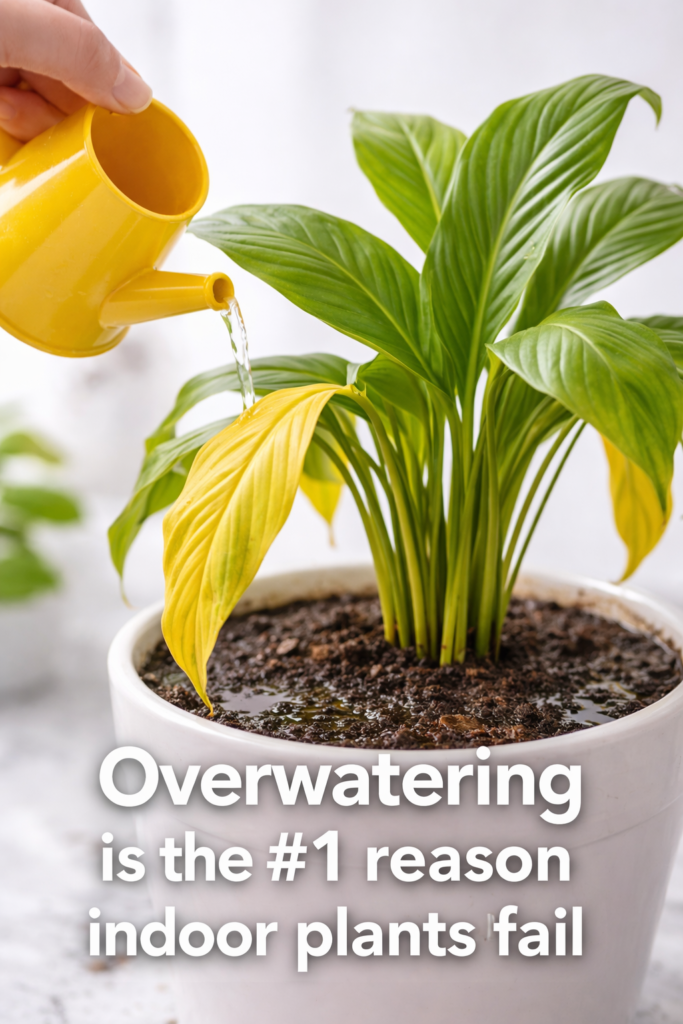
If your plant is slowly dying and you don’t know why, there’s a good chance you’re overwatering it.
Overwatering is the #1 reason indoor plants fail — and the worst part is that most people think they’re helping their plant when they do it.
In reality, too much water can suffocate roots, stop growth, and eventually kill the plant.
In this guide, you’ll learn how to recognize overwatering early, fix it, and prevent it from happening again.
Why Overwatering Is So Dangerous
Most people assume plants die from lack of water.
But indoors, the opposite is far more common.
When soil stays wet for too long, roots can’t get oxygen.
Without oxygen, roots begin to weaken, rot, and stop absorbing water properly.
This creates a dangerous cycle:
- roots stop working
- plant shows stress (yellow leaves, drooping)
- you water more
- damage accelerates
Overwatering doesn’t just harm your plant — it gets worse over time if not corrected.
👉 If your plant is already declining, here’s how to save a dying plant before it’s too late.
Signs You Are Overwatering Your Plant
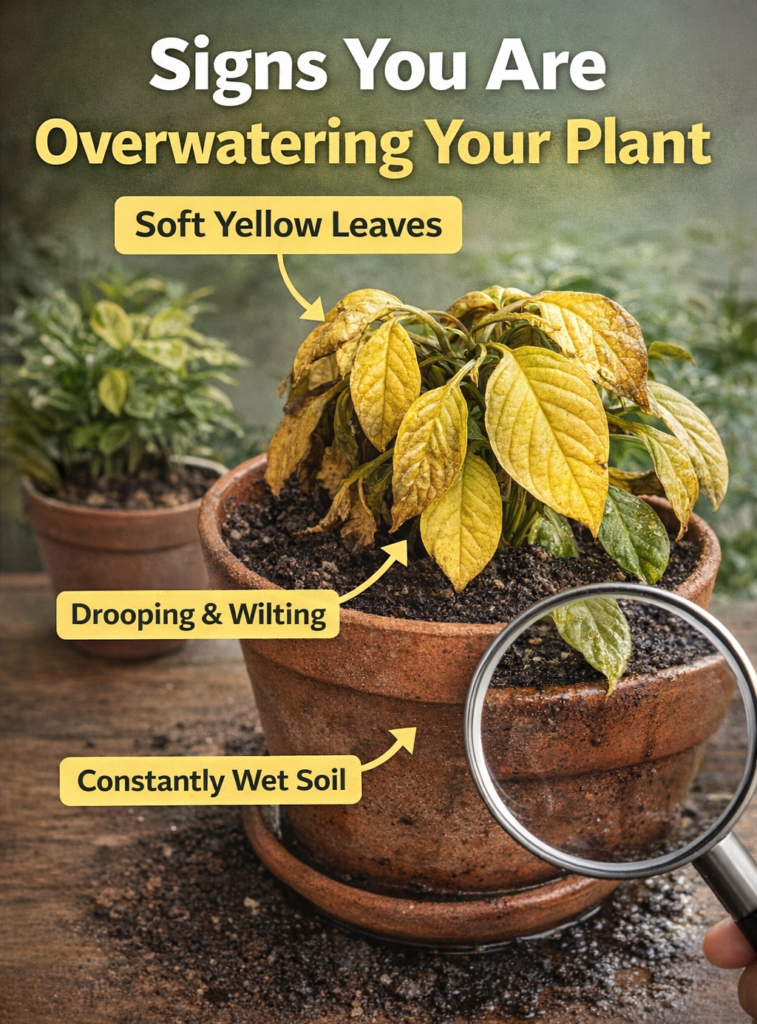
Overwatering doesn’t always look obvious at first.
Here are the most reliable signs:
1. Soft Yellow Leaves
Leaves turn yellow but feel soft, not dry.
This is one of the earliest and most common signals.
If your plant is turning yellow, overwatering might be the cause—but it’s not the only one. Learn all possible reasons in our guide to yellow leaves on indoor plants.
Brown leaves can also come from overwatering—not just yellowing.
👉 Learn how to read the difference here: Brown Leaves on Indoor Plants (Causes & Fixes)
👉 Not all brown leaves mean the same thing — here’s what’s actually causing them (and how to fix it)
2. Constantly Wet Soil
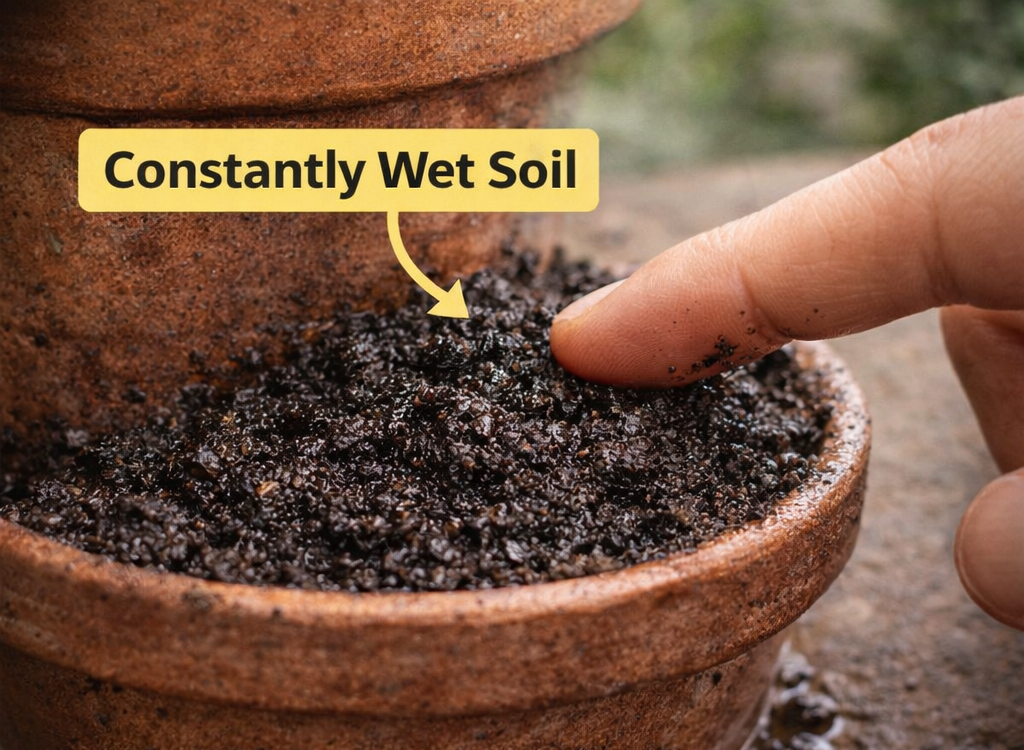
If the soil feels wet days after watering, that’s a red flag.
Healthy soil should dry out between waterings (for most plants).
3. Drooping (Even With Wet Soil)
This confuses many people.
If your plant is drooping but the soil is wet, water is NOT the problem — excess water is.
This is often misunderstood with peace lilies, which naturally droop when thirsty — but if the soil is wet, drooping is a warning of overwatering, not underwatering.
👉 Full breakdown here: Peace Lily Care Indoors (Beginner Guide That Actually Works)
4. Slow or Stalled Growth
Overwatered plants often stop growing.
The roots are too damaged to support new growth.
5. Bad Smell From Soil (Advanced Case)
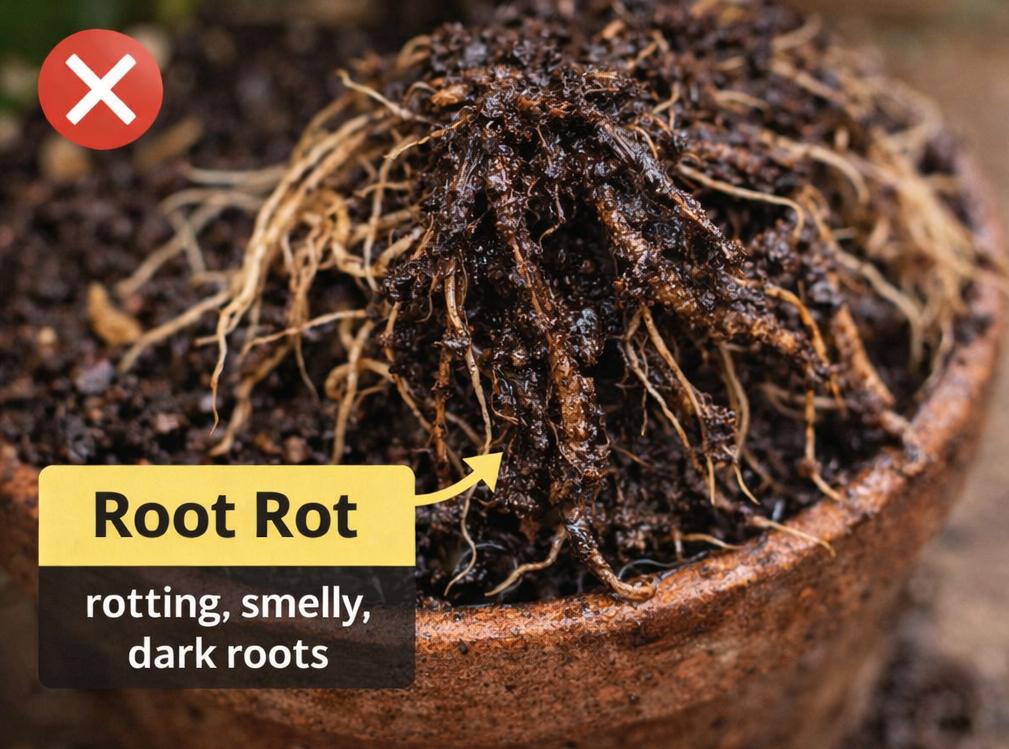
A foul smell usually means root rot has started.
At this point, action is urgent.
What Causes Overwatering (It’s Not Just “Too Much Water”)
Overwatering is not only about how often you water.
It usually comes from a combination of factors:
- watering too frequently
- pots without drainage holes
- soil that retains too much moisture
Poor repotting choices (like oversized pots or wrong soil) make this worse — learn how to avoid it in Repotting Indoor Plants: When, Why, and How to Do It Without Killing Them - low light (soil dries very slowly)
In many cases, overwatering is caused by low light. Learn why here: Indoor Plant Light Requirements (Complete Guide That Actually Makes Sense) - cold environments (slower evaporation)
In many cases, the problem isn’t just watering — it’s the pot setup itself.
Choosing the wrong pot can trap moisture and silently cause overwatering issues.
👉 The real problem might not be watering:
Do Indoor Plants Need Drainage Holes? (The Truth Most People Ignore)
You can water “correctly” and still overwater if these conditions are wrong.
Not sure how often you should actually water? Check our full guide on how often to water indoor plants to avoid this mistake.
Many people overwater because they don’t know when their plant actually needs water — learn how to tell if your plant needs water to avoid this mistake.
How to Confirm If Overwatering Is the Real Problem
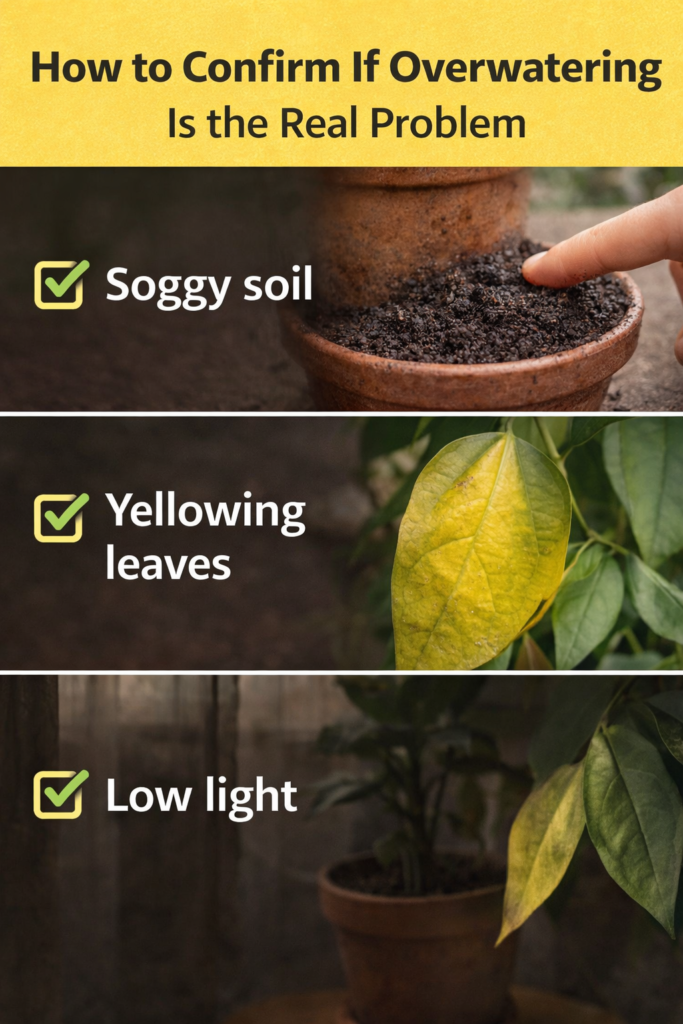
Before fixing anything, you need to be sure.
Step 1: Check the Soil
Insert your finger into the soil:
- wet → likely overwatering
- soggy + compact → high risk
Step 2: Look at the Leaves
- soft + yellow → excess water
- firm + crispy → underwatering (different problem)
👉 If the edges are brown and crispy but the soil isn’t dry, it’s likely a humidity issue — not watering. Learn how to fix it:
Indoor Plant Humidity (How Much Do Plants Really Need?)
Step 3: Evaluate Environment
- low light + wet soil = classic overwatering setup
If all three match, the diagnosis is clear.
How to Fix an Overwatered Plant
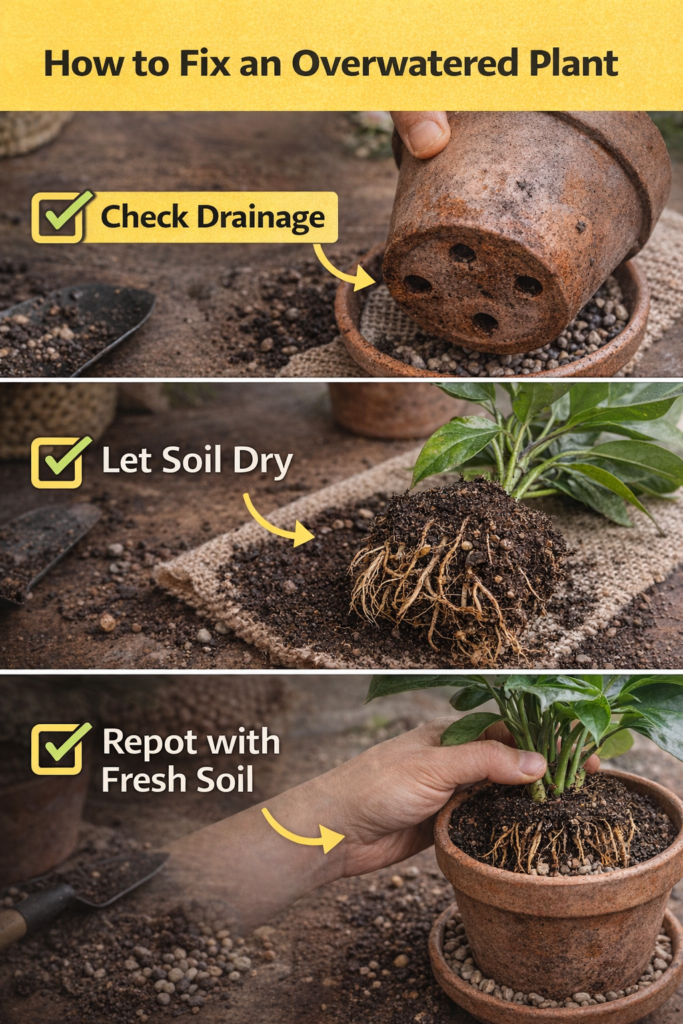
Act fast — but don’t panic.
1. Stop Watering Immediately
Do not add more water.
Let the soil dry out completely.
2. Improve Drainage
- make sure the pot has drainage holes
- remove excess water from saucers
3. Let the Soil Breathe
- loosen compact soil if possible
- move plant to a brighter area (not direct harsh sun)
4. Check the Roots (If Severe)
If the plant keeps declining:
- remove from pot
- inspect roots
Healthy roots = firm and light-colored
Rotten roots = dark, mushy, smelly
Cut damaged roots and repot if necessary.
👉 For a complete beginner-friendly routine, follow our full guide on how to care for indoor plants.
Plants That Are Most Sensitive to Overwatering
Some indoor plants are far more sensitive to overwatering than others.
These plants store water in their leaves or roots, which means they need much less frequent watering—and are much easier to overwater.
Common examples include:
- snake plants
- succulents
- ZZ plants
These plants prefer dry conditions and can quickly develop root rot if the soil stays wet for too long.
For example, snake plants and ZZ plants are especially vulnerable to excess moisture. If you’re growing one, follow our complete guides to avoid common watering mistakes: Snake Plant Care Indoors (Beginner Guide) and ZZ Plant Care: Why It’s Slowly Dying (Even If It Looks Fine).
If you’re unsure whether your plant falls into this category, it’s always safer to underwater slightly than to overwater.
How to Prevent Overwatering (Simple Rules)
Prevention is easier than fixing damage.
Follow these rules:
- always check soil before watering
- water only when top layer is dry
- use pots with drainage holes
- adjust watering based on light and season
- avoid “watering on schedule” blindly
Plants don’t follow calendars — they follow conditions.
The Most Common Mistake
The biggest mistake?
Watering again when the plant looks stressed.
People see yellow leaves or drooping and assume the plant needs more water.
In many cases, this makes things worse.
Always check the soil first — not the leaves.
Should You Remove Yellow Leaves?
Yes — but only when they are fully yellow.
These leaves won’t recover and continue draining energy.
Use clean scissors and remove them at the base.
Final Thoughts
Overwatering is one of the easiest mistakes to make — and one of the hardest to notice early.
But once you understand the signs, it becomes simple to avoid.
Remember:
Yellow leaves are not the problem.
They are the warning sign.
Fix the cause early, and your plant can fully recover.