
👉 No drainage = plant death (even if you water perfectly)
TL;DR
- ✅ Yes — most indoor plants NEED drainage holes
- ❌ The problem is NOT overwatering… it’s trapped water
- ⚠️ No drainage = root rot (even if you water “correctly”)
- 💡 You can use pots without holes… but only with the right method
- 👉 If unsure → always choose drainage
Introduction
Most people think:
👉 “I’m overwatering my plant.”
But here’s the truth:
👉 You’re not watering wrong… you’re using the wrong pot.
👉 Still unsure about watering? Read the full guide:
Indoor Plant Watering Guide (Stop Killing Your Plants With Kindness)
You can water perfectly and still kill your plant.
Why?
Because the water has nowhere to go.
Do Indoor Plants Really Need Drainage Holes?
Short answer:
👉 Yes. Almost always.
Real answer:
👉 It depends on how water is managed.
Here’s where most people get it wrong:
Plants don’t die from water…
👉 They die from water that stays trapped.
What Happens Without Drainage?
When a pot has no drainage holes:
- Water collects at the bottom
- Roots stay constantly wet
- Oxygen in the soil drops
- Root rot develops
👉 Learn how to spot and fix it:
Overwatering Indoor Plants: Signs, Causes, and How to Fix It
👉 Result:
yellow leaves, weak growth… and eventually death
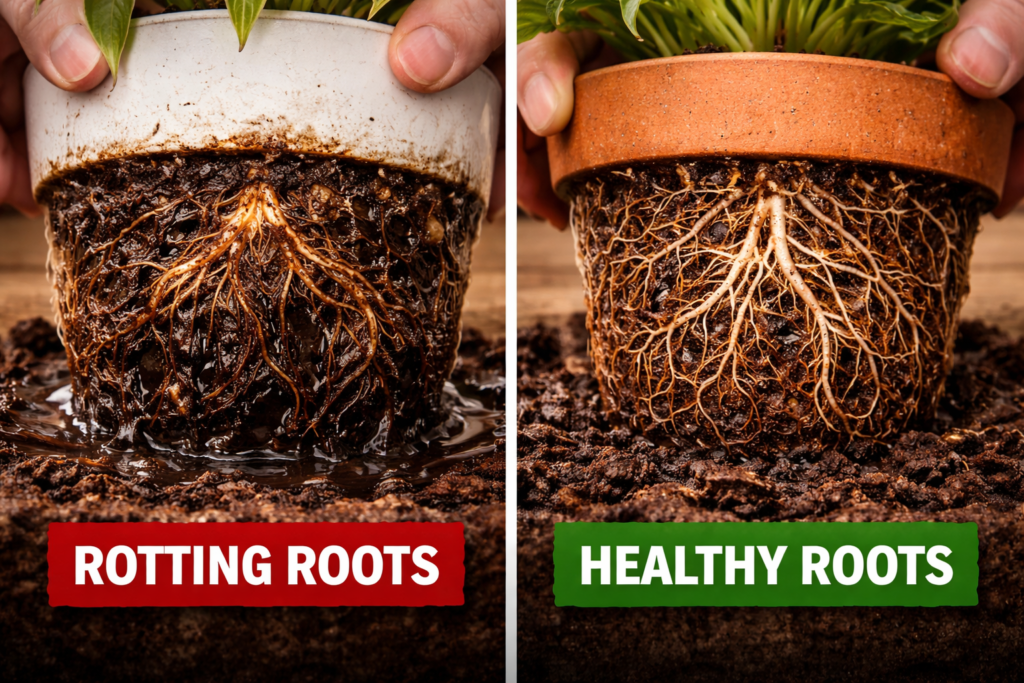
This is NOT the problem
People usually blame:
- “watering too often”
- “too much water”
- “bad watering technique”
👉 But the real issue is:
👉 No exit for excess water
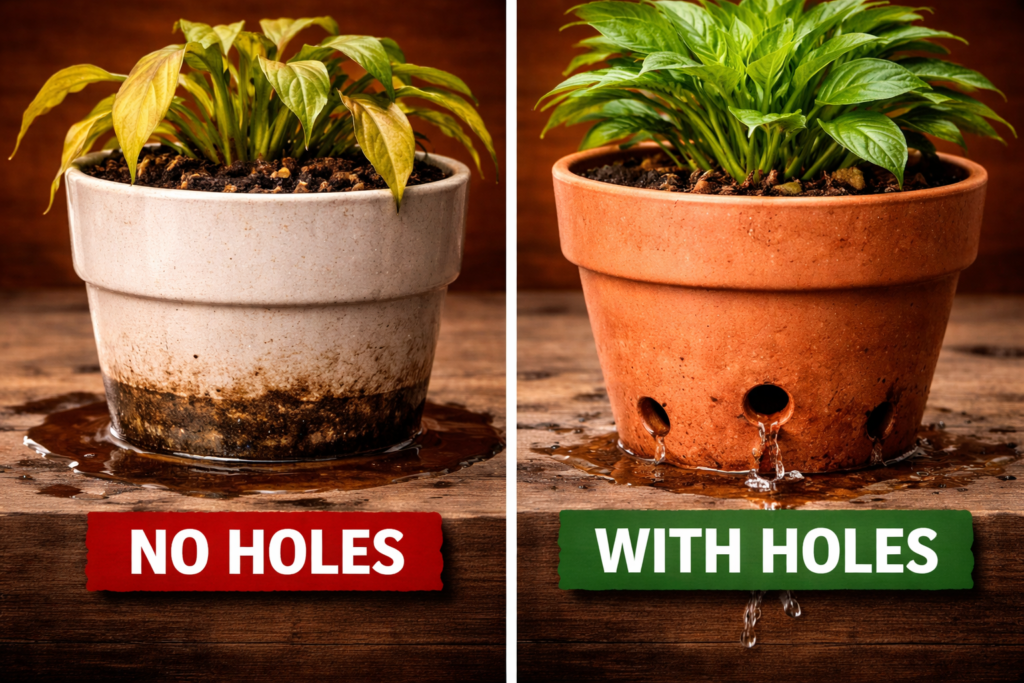
No Drainage vs Drainage (Real Difference)
👉 Real example:
A Monstera in a pot without drainage can look perfectly healthy for weeks.
Then suddenly:
💀 yellow leaves appear, growth stops, and roots are already rotting
The problem didn’t start today…
it started the moment water had nowhere to go.
❌ No drainage
- Water buildup
- Suffocating roots
- High risk of root rot
✅ With drainage
- Excess water escapes
- Roots get oxygen
- Healthier, more stable plant
Can Plants Survive Without Drainage Holes?
👉 Yes… but here’s the catch:
This is NOT beginner-friendly.
It only works if you:
- Use very small amounts of water
- Monitor moisture closely
- Use fast-draining soil
👉 Not sure what soil to use?
Best Soil for Indoor Plants (That Actually Keeps Them Alive) - Have experience reading plant signals
👉 You’re basically “manually controlling” the system
Common mistake
People use pots without holes…
but water like normal
That’s how plants die.
If your plant is dying and you don’t know why…
👉 check the pot first.
Not the light.
Not the watering schedule.
👉 The pot.
Smart Alternative (Best Setup)
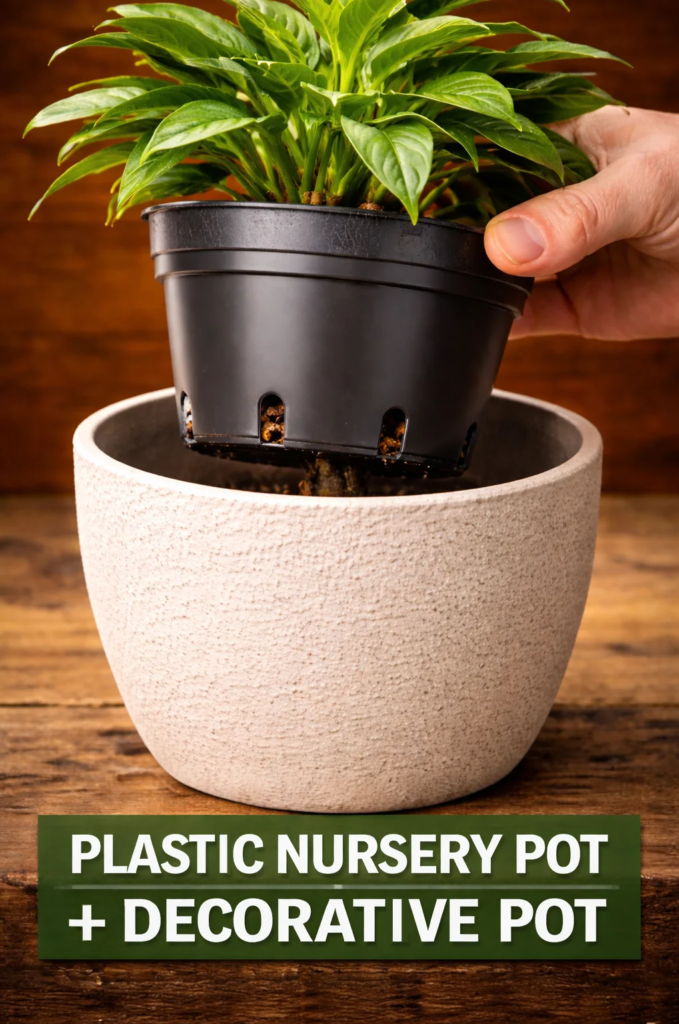
The best solution:
✔️ Nursery pot + decorative pot
- Inner pot = has drainage holes
- Outer pot = no holes (just aesthetic)
👉 Need to repot your plant?
Repotting Indoor Plants: When, Why, and How to Do It Without Killing Them
Benefits:
- Full control over watering
- Better root health
- Keeps the look you want
How to Know If Your Plant Needs Drainage
Use this simple rule:
It needs drainage if:
- It’s a tropical indoor plant (Monstera, Pothos, etc.)
- It lives indoors
- You’re not highly experienced
So… basically almost all plants
Rare exceptions:
- Aquatic plants
- Semi-hydro setups
- Advanced growers
Most Common Mistakes
1. “I’ll add rocks at the bottom”
Doesn’t fix the problem
just raises the water level
2. “I’ll just water less”
Hard to control
moisture still builds up over time
3. “It’s fine so far”
Damage is slow
by the time you notice, it’s too late
Related Reading
👉 Want to choose the right pot?
Indoor Plant Pots Guide: The Mistakes That Are Killing Your Plants
Conclusion
Yes — indoor plants need drainage holes
For most plants, it’s not optional
But the key idea is this:
It’s not how much you water… it’s where that water goes
Final Thought
Before blaming your watering…
check your pot
That’s usually the real problem.