
TL;DR
Most plant problems are not about watering — they’re about the pot.
Overwatering is usually a pot problem, not a watering problem.
Always choose pots with drainage holes (this is non-negotiable).
Pot size matters: bigger is not better.
Material affects how fast soil dries.
If your plant is struggling, check the pot before anything else.
Most People Blame Watering… But This Is the Real Problem
Most people assume their plant is dying because they’re watering it incorrectly.
That’s not always true.
In many cases, the real issue isn’t how often you water, but what happens to that water after it enters the pot.
You can water perfectly and still damage your plant if the container traps moisture in the wrong way.
Your pot controls how fast the soil dries, how much oxygen reaches the roots, and whether excess water can escape or stays trapped. When that balance fails, roots suffocate and begin to rot.
That’s why what looks like “overwatering” is often just a poor pot setup.
What Makes a Good Indoor Plant Pot?
A good pot isn’t about aesthetics — it’s about function.
At its core, a functional pot does three things well: it allows excess water to drain, it provides airflow to the roots, and it matches the size of the plant.
Everything else, including color or style, is secondary.
When any of these three factors fail, problems start to appear — even if everything else in your care routine is correct.
The #1 Rule — If It Doesn’t Drain, It Doesn’t Work
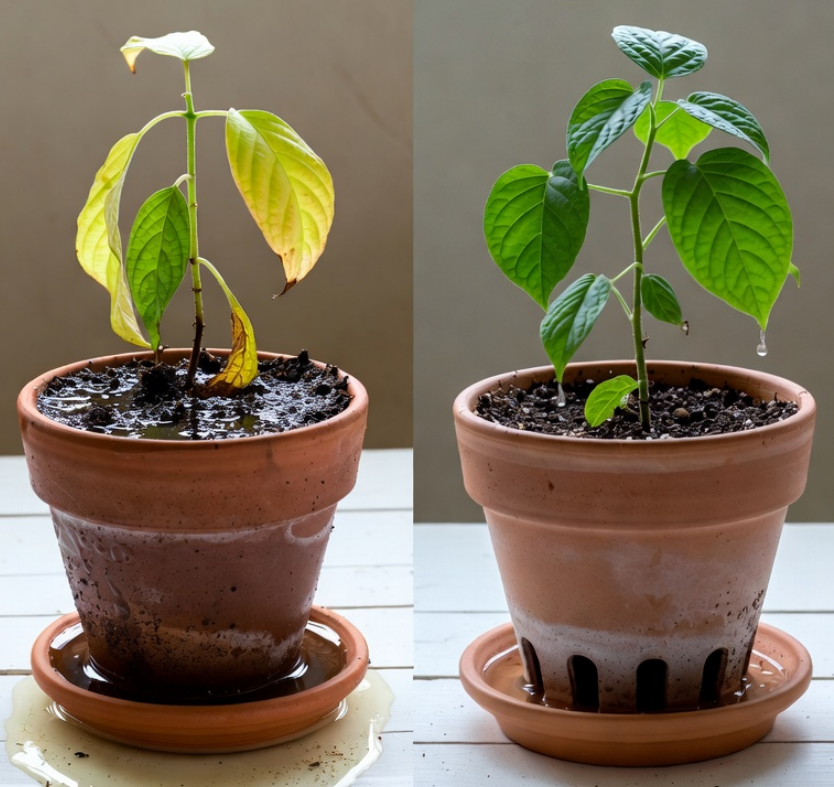
Drainage is not optional.
A pot without a drainage hole creates the perfect conditions for root rot. Water collects at the bottom, the soil stays constantly wet, and oxygen levels drop. Over time, roots begin to suffocate.
If you’re not sure why drainage matters so much, read:
Do Indoor Plants Need Drainage Holes? (The Truth Most People Ignore)
Many people try to compensate by watering less, but that rarely solves the underlying issue. Without a way for water to escape, moisture will always accumulate over time.
Wrong vs Right Setup
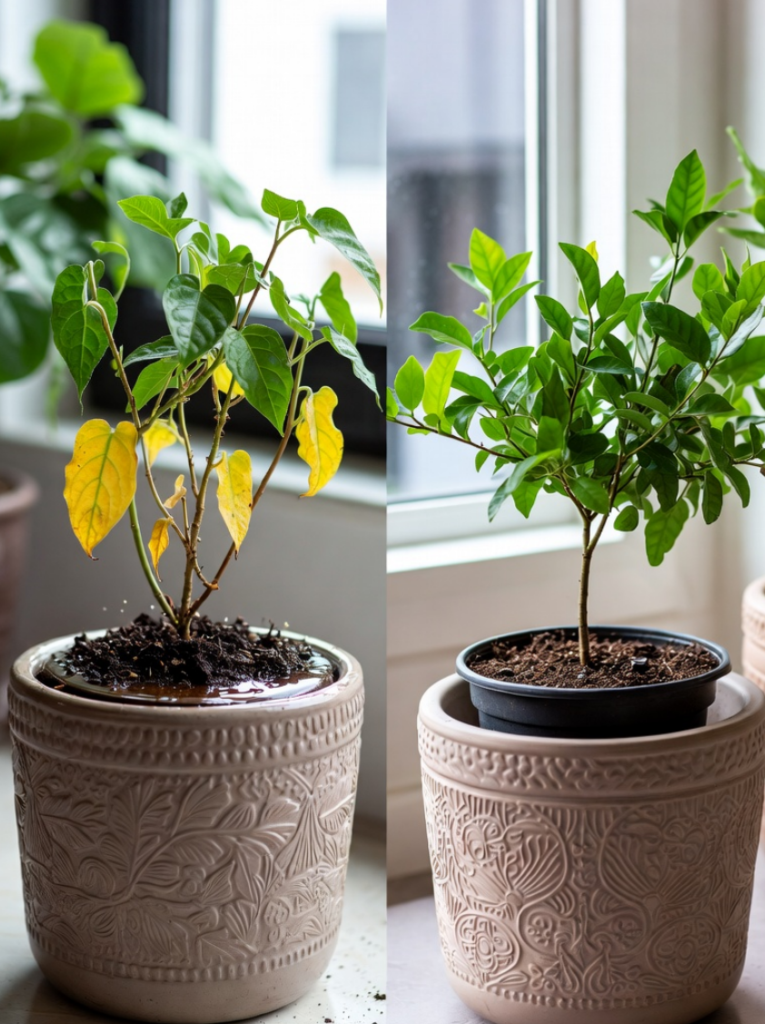
The difference between a healthy plant and a struggling one often comes down to setup.
Using decorative containers without drainage, glass pots, or sealed planters increases the risk significantly. These setups trap water and make it difficult to control moisture levels.
A better approach is simple: use a pot with at least one drainage hole, ideally paired with a tray or slight elevation to allow excess water to exit properly.
If your plant is declining and you can’t figure out why, this is the first thing to check.
Why Bigger Pots Kill Plants
One of the most common mistakes is choosing a pot that’s too large.
It seems logical to give roots more space, but in practice, more soil means more water retention. That extra moisture takes longer to dry, and roots can’t absorb it fast enough.
The result is consistently damp soil — the ideal environment for root rot.
If you’re planning to repot, read:
Repotting Indoor Plants: When, Why, and How to Do It Without Killing Them
The safest rule is to increase pot size gradually, by about 1–2 inches. Large jumps in size almost always create more problems than they solve.
If your plant stopped growing after repotting, this is often the reason.
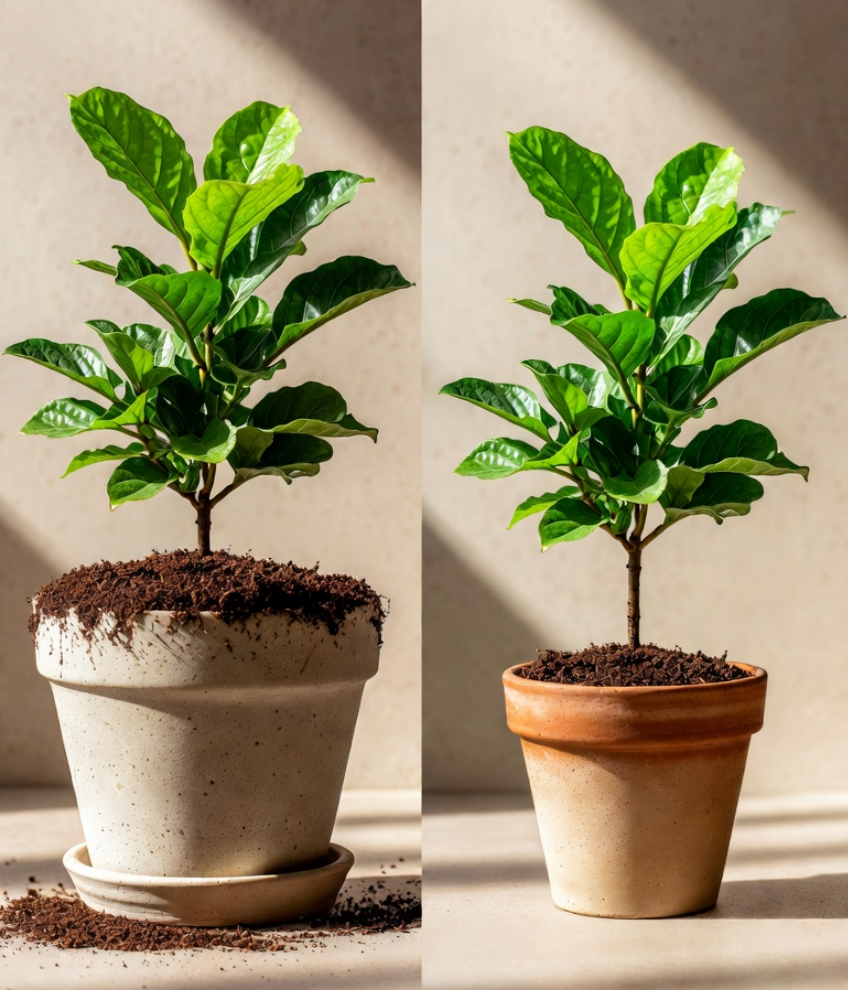
Pot Material Changes Everything
Pot material has a direct impact on how your soil behaves.
Terracotta is porous, which means it absorbs moisture and allows soil to dry faster. This makes it a safer option for beginners or for plants that are sensitive to overwatering.
Plastic, on the other hand, retains moisture. It’s lightweight and practical, but it increases the risk of overwatering if you’re not careful. It works best for plants that prefer consistently moist soil or for people who tend to forget to water.
Glazed ceramic sits somewhere in between, depending on the finish.
What’s often overlooked is that the same plant, with the same watering schedule, can behave completely differently depending on the pot material.
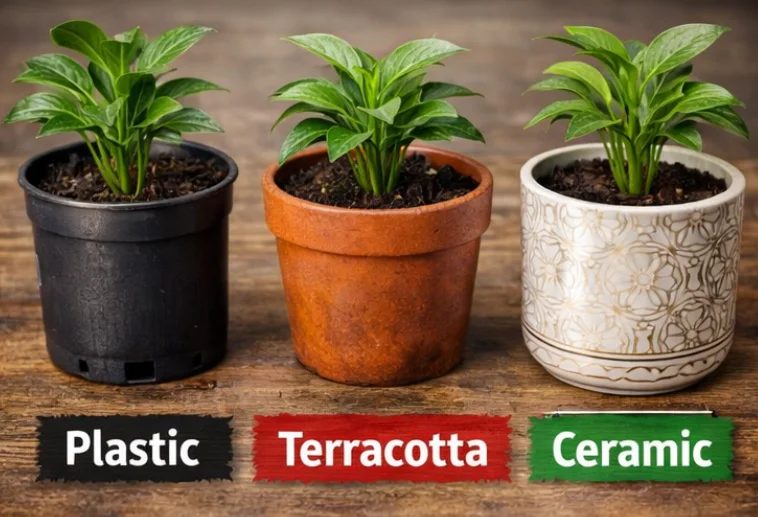
Match the Pot to the Plant
Not all plants want the same environment, and your pot should reflect that.
For example, a snake plant prefers dry conditions and fast drainage, which makes a smaller terracotta pot a good choice.
A peace lily, on the other hand, prefers more consistent moisture, so plastic or glazed ceramic tends to work better.
The key idea is simple: the pot should adapt to the plant, not to your aesthetic preferences.
Using Decorative Pots the Right Way
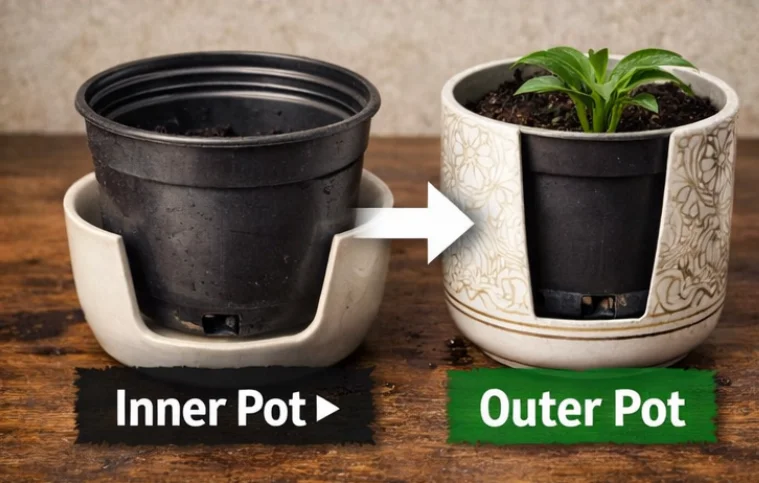
Decorative pots without drainage aren’t inherently bad — they’re just often used incorrectly.
Instead of planting directly into them, use them as an outer container. Keep your plant in a nursery pot with drainage holes and place that inside the decorative pot.
This setup allows you to control drainage while maintaining the look you want.
When the Problem Isn’t Time — It’s the Pot
People often ask how frequently they should repot, but that’s not the most useful question.
What matters is whether the current pot is still working for the plant.
If roots are growing out of drainage holes, water is running straight through, or the plant has stopped growing, it may be time to reassess the pot.
This isn’t about following a schedule — it’s about recognizing when the system no longer fits the plant.
Common Mistakes That Kill Plants
Most plant issues aren’t random, and they’re rarely about “bad luck.”
They usually come down to structural problems like using pots without drainage, choosing oversized containers, relying on decorative-only setups, or ignoring how materials affect moisture.
If your plant is struggling, it’s often not because you lack skill — it’s because the setup is working against you.
How to Choose the Right Pot (Simple System)
Start with drainage. If the pot doesn’t allow water to escape, it’s not a good choice.
Then look at size. Increase gradually, no more than 1–2 inches beyond the current root ball.
Next, consider your watering habits. If you tend to overwater, choose terracotta. If you underwater, plastic or ceramic may be more forgiving.
Finally, match the pot to the plant’s natural preferences.
You don’t need the perfect pot — you need one that works.
What Should You Actually Buy?
If you want a safe default, choose a medium-sized pot with a drainage hole, slightly larger than the root ball, and preferably made of terracotta.
A practical upgrade is to combine a nursery pot with a decorative outer pot, giving you both function and aesthetics.
Key Takeaways
Plant care becomes much simpler when you stop focusing only on watering and start thinking in systems.
Your pot controls water movement, airflow, and root health. When that system is wrong, nothing else will fully fix the problem.
Keep Learning: Indoor Plant Care Guides
- Choosing the right soil for indoor plants
- Indoor Plant Watering Guide
- Signs of overwatering and how to fix it
- When and how to repot plants safely
Final Thought
Before adjusting your watering routine or trying new products, take a step back and look at your pot.
In many cases, that’s where the real issue starts.