
TL;DR
- Most homes are too dry (20–40%) — many plants need 50–70% humidity
- Misting does NOT fix humidity long-term (it’s a myth)
- Best methods: grouping + trays + humidifier
- Airflow + watering habits matter as much as humidity
- Fix the environment, not just the symptom
Stop Misting Your Plants — It Doesn’t Work
Most people think humidity = spraying leaves.
It’s wrong.
You spray → humidity spikes for a few minutes → then drops again.
The plant gets no real benefit
Worse:
- Wet leaves can lead to fungal issues
- You think you’re helping → you’re not fixing the actual problem
This is NOT the problem:
Your plant isn’t dying because you don’t mist it
It’s struggling because your environment is too dry overall
👉 If your plant keeps struggling, it’s usually the environment — here’s why: Why Indoor Plants Die (And How to Prevent It)
And this is why your plant still looks bad.
What Humidity Do Indoor Plants Actually Need?
Here’s the baseline:
- Typical home: 20–40% humidity
- Tropical plants: 50–70% humidity
- Sensitive plants (calatheas, ferns): 60%+
That gap is the problem.
Signs Your Plant Needs More Humidity
- Brown leaf edges
- Crispy tips
- Leaves curling inward
- New growth looks weak or deformed
👉 Think brown or crispy leaf edges always mean a humidity problem? Not necessarily — here’s what’s actually causing them (and how to fix it)
👉 If you’re seeing brown tips, this guide breaks down the exact causes and fixes: Brown Leaves on Indoor Plants (Causes & Fixes)
Most people get this wrong — and it’s why plants start declining.
They increase watering instead.
That leads to overwatering, not better humidity
This is where most plants start declining
👉 This often turns into overwatering — learn how to spot and fix it: Overwatering Indoor Plants: Signs, Causes, and How to Fix It
The 4 Methods That Actually Increase Humidity
Forget hacks. These work.
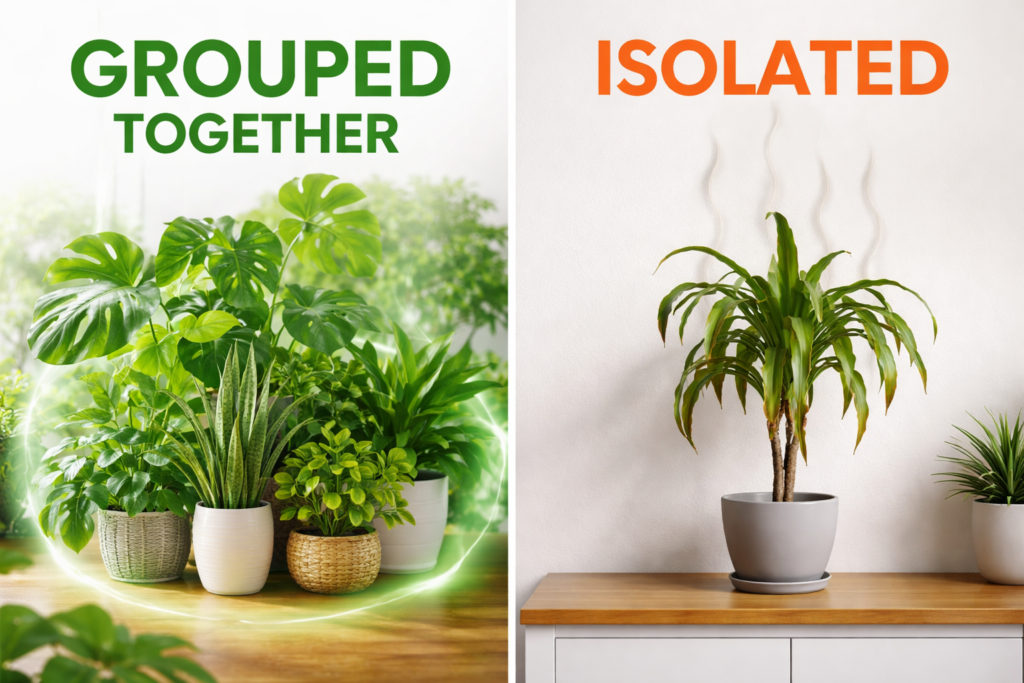
1. Grouping Plants Together (Simple + Effective)
Plants release moisture through transpiration.
More plants = more localized humidity.
You create a mini climate zone
How to do it:
- Place plants close (but not touching leaves)
- Combine medium + large plants
- Avoid spreading them around the room
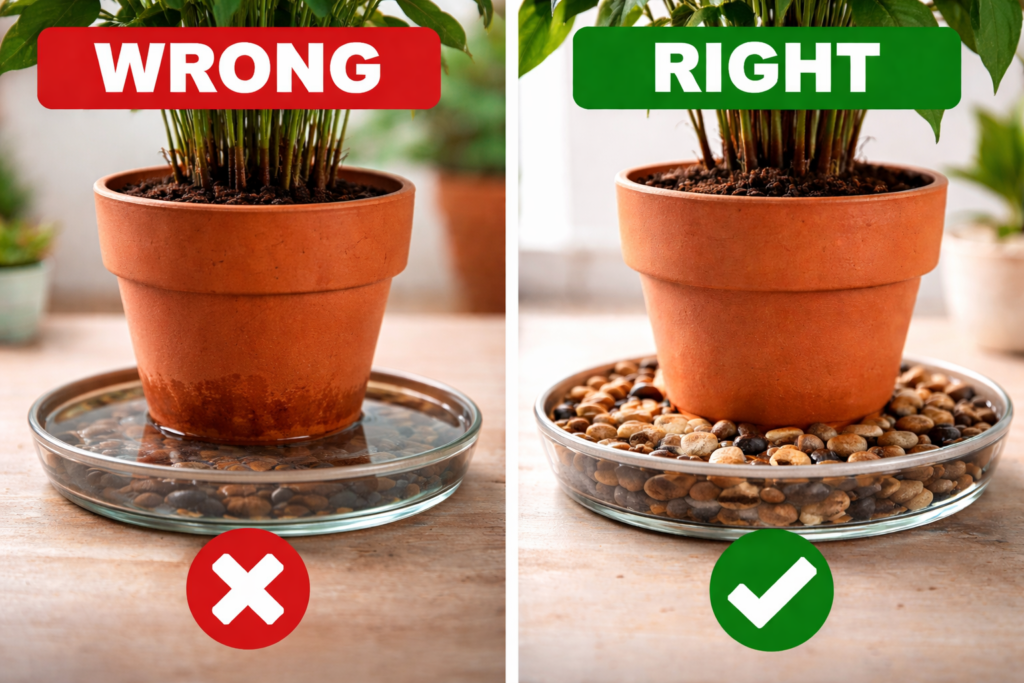
2. Pebble Tray (But Only If You Do It Right)
This method is misunderstood.
Wrong way:
- Pot sitting directly in water → root rot
Right way:
- Tray with pebbles
- Water sits below the pot base
- Evaporation increases humidity around plant
Small effect — but measurable.
3. Humidifier (The Only Real “Control” Method)
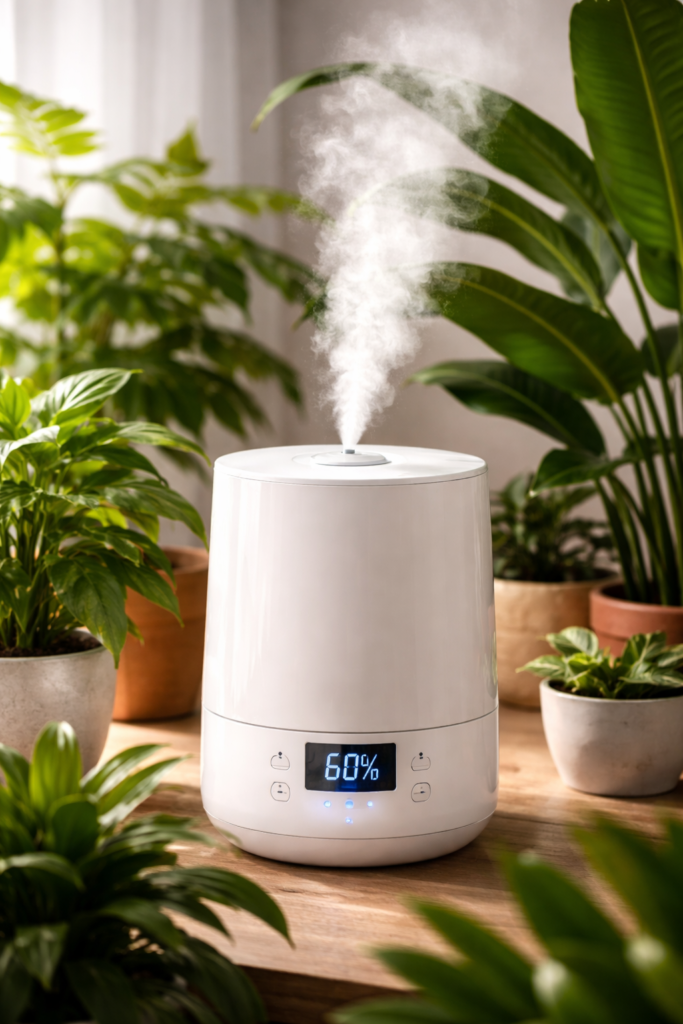
If you want consistency:
👉 This is the only reliable solution
When it’s worth it:
- You have multiple tropical plants
- Your home is below 40% humidity
- You see repeated leaf damage
What to look for:
- Adjustable output
- Quiet operation
- Coverage matching your room size
👉 This is where a small investment saves plants long-term
4. Bathroom / Kitchen Placement (Situational Boost)
Higher humidity rooms exist naturally.
- Bathrooms (after showers)
- Kitchens (during cooking)
But this only works if:
- There’s enough light
- The plant fits the space
This is the part no one tells you:
High humidity + low light = slow decline
What DOESN’T Work (Common Mistakes)
Misting (temporary, ineffective)
One plant alone in a dry room
Overwatering to “compensate”
Placing near AC / heaters
These dry the air even more
Humidity vs Watering (The Critical Difference)
People confuse these constantly.
Wrong thinking:
“Dry plant = needs more water”
Correct thinking:
- Soil moisture = root hydration
- Air humidity = leaf environment
Two different systems
This is where plants actually start dying
You increase watering to fix dry air → roots suffocate → plant declines faster
👉 If watering still confuses you, this guide breaks it down: Indoor Plant Watering Guide (Stop Killing Your Plants With Kindness)
When You DON’T Need to Increase Humidity
Not all plants care.
Low humidity tolerant plants:
- Snake plant
- ZZ plant
- Pothos (to a degree)
If your plant is thriving, don’t fix what isn’t broken
This is NOT the problem:
Slightly dry air won’t kill most beginner plants
How to Increase Humidity (Simple Setup)
If you want a system that works without overthinking:
Do this:
- Group your plants
- Add a pebble tray to sensitive ones
- Use a humidifier if below 40%
- Keep away from direct airflow (AC/heaters)
That’s it.
Quick Troubleshooting
Plant still struggling?
Check this:
- Is humidity actually low? (not assumed)
- Is watering correct?
- Is light sufficient?
Humidity alone rarely kills a plant —
but it amplifies other problems
Final Takeaway
Humidity is not about spraying water.
It’s about controlling the environment.
👉 Fix the air, not just the plant
👉 Combine methods, don’t rely on hacks
👉 And don’t overcorrect — that’s how plants actually die