
If your plant has brown leaves, you’re probably fixing the wrong problem.
TL;DR
Brown leaves don’t mean your plant is dying—they mean it’s struggling.
If your plant leaves are turning brown, this is usually not random—it’s a signal you’re missing something in its environment.
What most people miss is this:
brown tips, crispy edges, and dry patches all point to different problems.
If you learn how to read the pattern, you can fix the issue before it spreads—and before your plant declines for real.
Why Brown Leaves Are a Warning (Not Just Damage)
Most people treat brown leaves like a cosmetic issue.
They cut them off… and move on.
But brown tissue is dead tissue.
And plants don’t kill parts of themselves randomly.
Brown leaves = stress signal
👉 If your plant is already declining, here’s how to save a dying plant before it’s too late.
What makes this tricky:
- The damage shows late
- The cause started earlier
- And it’s often still happening
So if you only react to what you see, you’re already behind.
If you’re not sure what’s actually going wrong, start with this guide:
👉 Why Indoor Plants Die (And How to Prevent It)
Not All Brown Leaves Mean the Same Thing
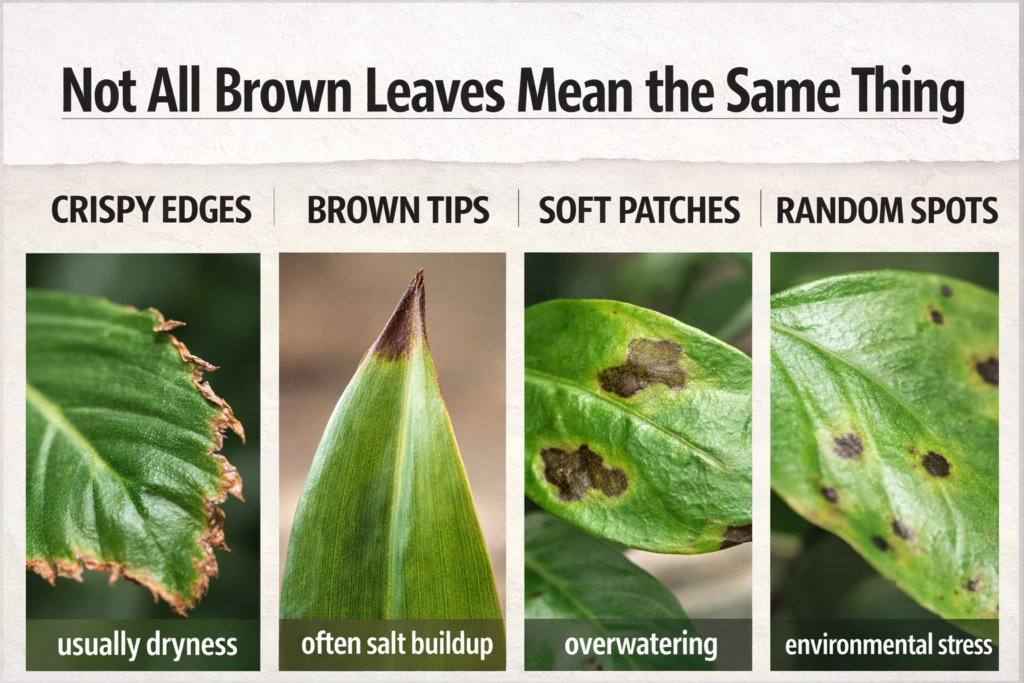
This is where most advice completely fails.
“Brown leaves = underwatering”
Wrong
You need to look at how the brown appears:
This is why “why are my plant leaves turning brown” has no single answer—the pattern matters more than the symptom itself.
Crispy edges
→ usually dryness / low humidity / inconsistent watering
This is what people usually describe as crispy leaves on indoor plants—and it’s often misdiagnosed as just underwatering.
If you’re unsure whether it’s actually dryness, check this:
👉 Underwatering Indoor Plants: Signs, Fixes & How to Save a Dying Plant
Brown tips only
→ often salt buildup or watering pattern issues
Brown tips on indoor plants are one of the most misdiagnosed problems—they’re rarely just about “needing more water.”
Soft brown patches
→ overwatering / root problems
Not sure if you’re overwatering? Read this:
👉 Overwatering Indoor Plants: Signs, Causes, and How to Fix It
Random brown spots
→ environmental stress (light, temperature, drafts)
Same symptom → different cause
That’s why guessing doesn’t work.
The #1 Cause Most People Miss: Dry Air (Not Just Watering)
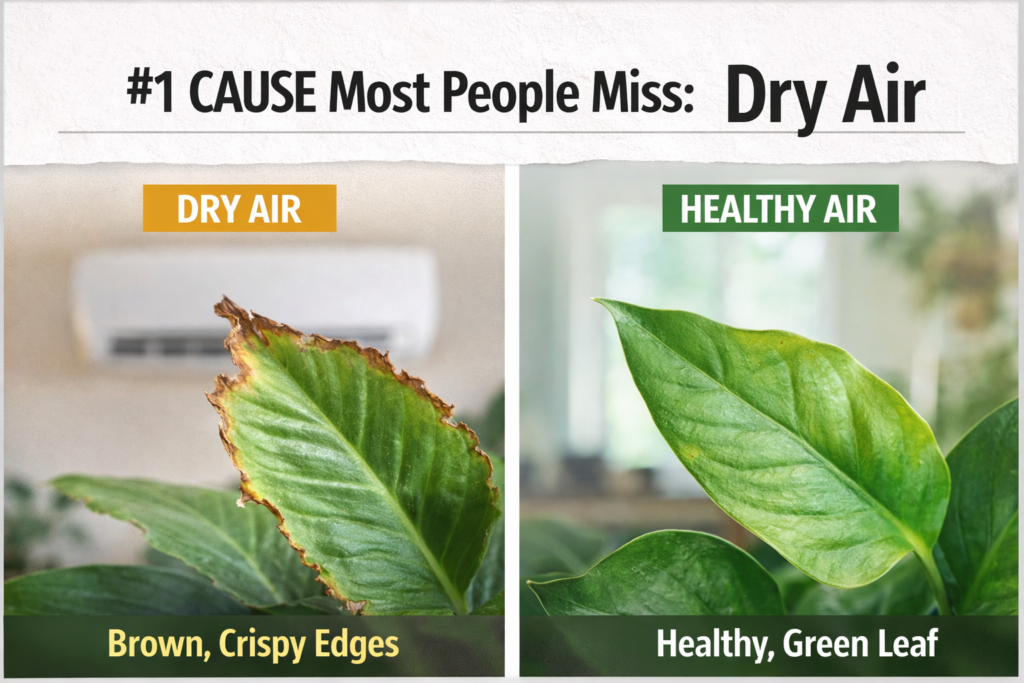
You water your plant.
The soil is fine.
But the air?
Dry.
This is extremely common indoors.
Especially if you have:
- air conditioning
- heating
- low humidity rooms
What happens:
- Leaves lose moisture faster than roots can supply it
- Edges dry out → turn brown
- The plant slowly dehydrates from the outside
And people keep adding water… making things worse
👉 Humidity problems are often misunderstood — especially misting. Learn what actually works: How to Increase Humidity for Plants (Without Killing Them by Accident)
Overwatering Can Also Cause Brown Leaves (And It’s Confusing)
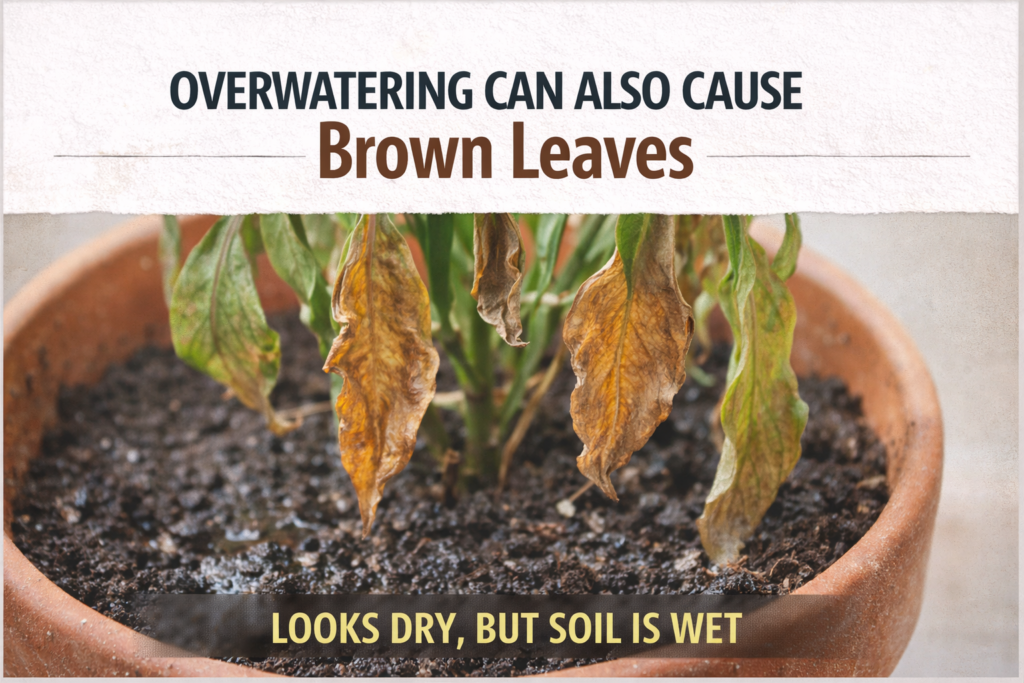
This is where things get counterintuitive.
People think:
“Brown = dry = add water”
But:
Overwatering damages roots
Damaged roots can’t absorb water
Leaves dry out anyway
Result:
Brown leaves… in wet soil
This is why:
- soil feels moist
- but leaves look dry and damaged
and often, the real issue isn’t just watering—it’s poor soil structure → read: Best Soil for Indoor Plants
The plant is “drowning” and “dehydrated” at the same time
This happens more often than people think—especially if your watering routine isn’t consistent:
👉 Indoor Plant Watering Guide (Stop Killing Your Plants With Kindness)
Light Stress: The Silent Trigger
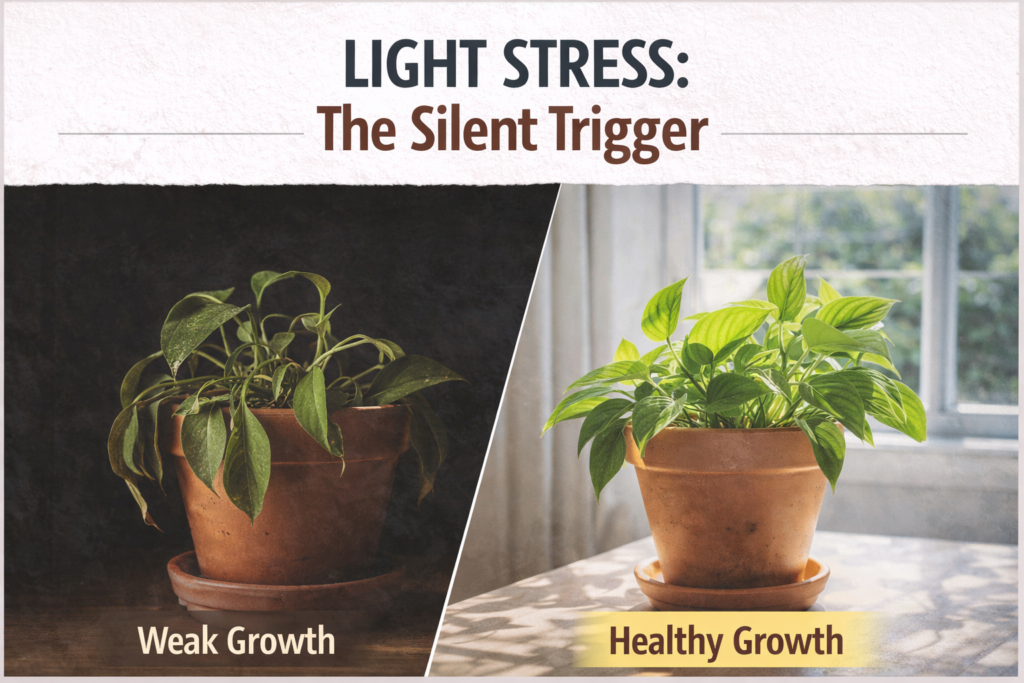
Light doesn’t just affect growth.
It affects everything:
- water usage
- leaf strength
- recovery ability
If your plant is in low light:
- it uses less water
- becomes weaker
- is more sensitive to stress
If it’s in harsh direct sun:
- leaves can burn
- edges turn brown quickly
Same symptom, opposite causes
If you’re not sure what “good light” actually means, use this:
👉 Indoor Plant Light Requirements (Complete Guide That Actually Makes Sense)
Tap Water, Salts, and Chemical Buildup
This one is rarely talked about—but very real.
Over time:
- minerals from tap water build up in soil
- fertilizers accumulate
- roots get stressed
What you see:
Brown tips
Leaf edges dying slowly
Especially common if:
- you never flush the soil
- you fertilize regularly
- water is hard (high minerals)
Pot Size & Root Problems (Hidden but Critical)
Roots control everything above the soil.
If something is wrong below:
leaves show it later
Two common issues:
Pot too big
- holds too much water
- roots suffocate
- leads to stress → brown leaves
Root-bound plant
- no space to grow
- dries out too fast
- inconsistent hydration
Both can create the same symptom
Temperature & Drafts: The Invisible Damage
Plants hate instability.
Cold drafts, AC, heaters:
- dry the air
- shock the plant
- damage leaf edges
Signs:
- brown edges appearing suddenly
- damage on one side only
- worsening after moving the plant
It’s not always care—it’s environment
How to Actually Fix Brown Leaves (Without Guessing)
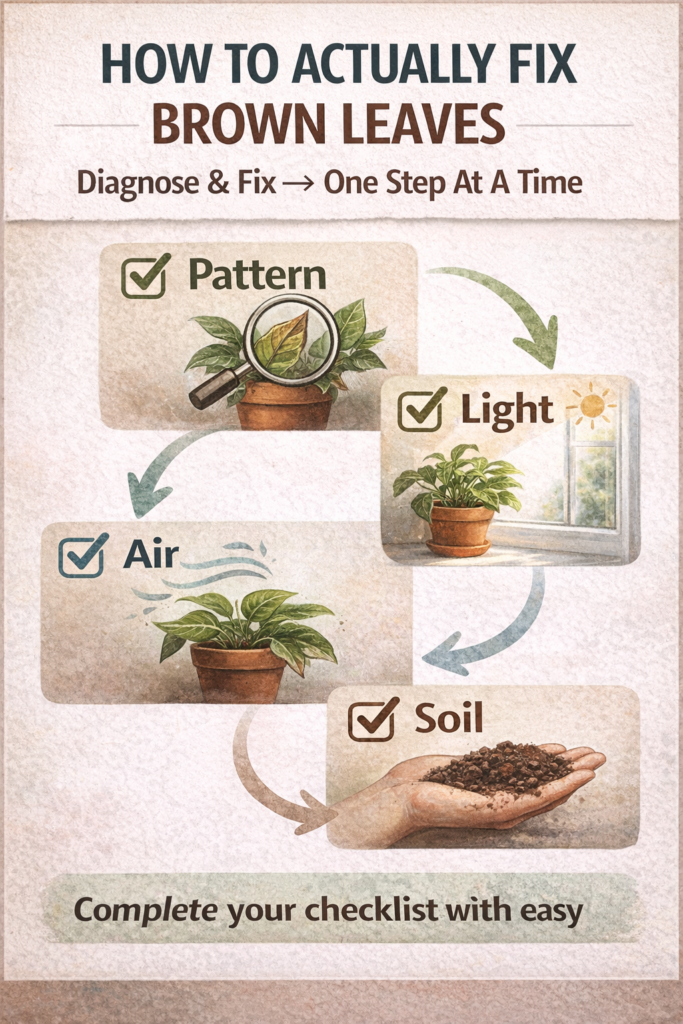
If you’re trying to figure out how to fix brown leaves on plants, the key is not doing more—it’s diagnosing better.
Forget random fixes.
Use this checklist instead:
✔ Pattern
Edges? Tips? Spots? → this tells you the category of problem
✔ Light
Too low or too harsh? Both can cause stress
✔ Air
Dry environment = leaves lose moisture faster than roots can replace it
✔ Soil
Too wet, too dry, or compact soil can all lead to brown leaves
✔ Adjustment
Change ONE variable at a time → not everything at once
What NOT to Do (This Makes It Worse)
- Water more “just in case”
- Move the plant constantly
- Change multiple things at once
- Ignore early signs
This creates more stress, not less
Should You Cut Brown Leaves?
Yes—but with context.
- Brown parts won’t recover
- Removing them improves appearance
But:
Cutting doesn’t fix the problem
If the cause remains:
new leaves will turn brown too
The Real Question: What Is Stressing Your Plant?
This is the shift most people never make.
Stop asking:
“What should I do?”
Start asking:
“What is stressing this plant?”
Because:
- Brown leaves are not random
- They are responses
- And they are predictable
Final Takeaway
Brown leaves are not just damage
They’re a signal you’re missing something
The cause is usually:
- environment
- not just watering
Fix the condition →
The plant stabilizes
Ignore it →
It spreads
👉 Still not sure what’s wrong? Start here:
👉 Indoor Plant Problems (Common Issues & How to Fix Them Fast)
👉 Want to avoid this completely in the future? Read:
👉 How to Care for Indoor Plants (Beginner Guide)