

TL;DR
Don’t water your peace lily on a schedule.
Water only when the top 1–2 inches of soil are dry.
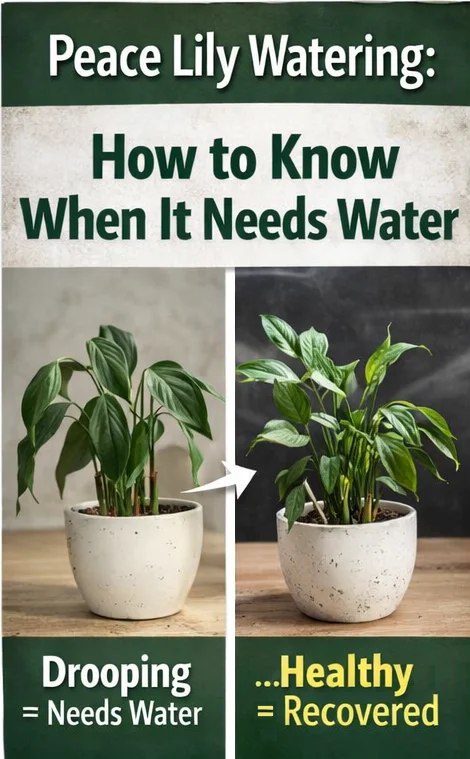
Drooping = needs water (safe, reversible)
Yellow leaves + mushy stems = overwatering (dangerous)
Give bright indirect light (not a dark corner — not sure what this means? read the full guide: Indoor Plant Light Requirements)
Use well-draining soil + a pot with drainage
👉 Most peace lilies don’t die from neglect—
they die from too much water and not enough light.
The “Easy Plant” That Keeps Dying in People’s Homes
Peace lilies are everywhere.
They’re sold as “low maintenance,” “perfect for beginners,” and “hard to kill.”
And yet…
they’re one of the most commonly killed indoor plants.
Not because they’re difficult.
But because people misunderstand what they actually need.
Most peace lilies don’t die suddenly —
they decline slowly, sending clear warning signs that get ignored.
This guide will show you:
- when your peace lily actually needs water
- why leaves turn yellow or droop
- how to fix the most common mistakes
- how to keep it healthy (and blooming)
Most peace lilies don’t die from neglect.
They die because you’re taking care of them the wrong way.
The #1 Mistake: Watering on a Schedule
If your peace lily is struggling…
this is probably why.
Most people:
- water once a week
- follow a routine
- assume consistency = good care
That’s how you create constant moisture.
And constant moisture leads to:
root rot
yellow leaves
weak growth
Here’s the reality:
Peace lilies don’t want a schedule.
They want responsiveness.
What to do instead:
- Check the soil before watering
- Water only when the top 1–2 inches are dry
- Always let excess water drain out
👉 If you’re unsure, read: How to Tell If Your Plant Needs Water (Stop Guessing and Get It Right Every Time)
Peace Lily Watering: How to Know When It Needs Water
The good news?
Peace lilies are one of the few plants that clearly tell you when they’re thirsty.
Look for these signs:
- Leaves start to droop noticeably
- The plant looks “soft” or collapsed
- Soil feels dry below the surface
This is NOT a bad sign.
It’s a signal.
Water it thoroughly, and within hours…
the plant will bounce back.
That’s normal behavior.
Important rule:
- Drooping = underwatering (safe, reversible)
- Yellowing + mushy stems = overwatering (dangerous)
If you’re unsure:
👉 always wait a little longer before watering
Light: Why “Low Light Plant” Is Misleading
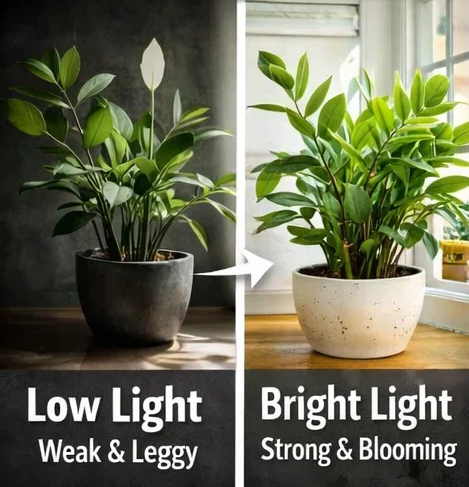
Yes, peace lilies tolerate low light.
But they don’t thrive in it.
In low light:
- growth slows down
- blooms stop appearing
- leaves become smaller and weaker
In bright indirect light:
- faster growth
- stronger leaves
- regular flowering
Not sure what “bright indirect light” actually means in practice?
Read the full guide: Indoor Plant Light Requirements (Complete Guide That Actually Makes Sense)
Best placement:
- Near a window
- Out of direct sunlight
- In a bright room (not a dark corner)
Think: filtered light, not shade
Why Your Peace Lily Leaves Turn Yellow
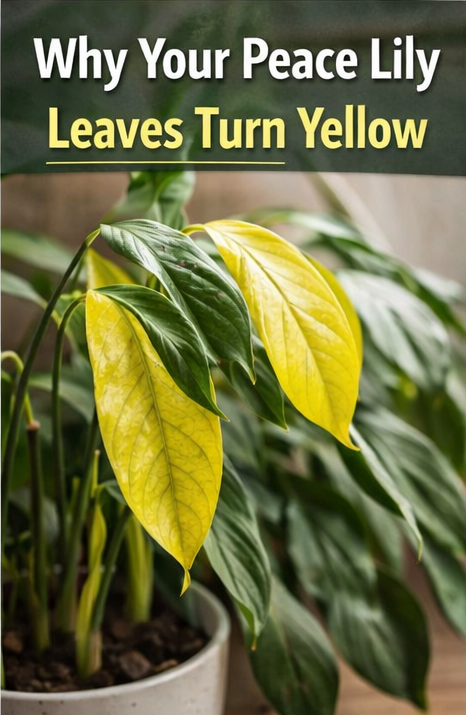
Yellow leaves are one of the most common problems.
But they don’t all mean the same thing.
Most common causes:
- Overwatering (most likely)
- Poor drainage
- Old leaves naturally dying
- Sudden environmental changes
How to respond:
- Check soil moisture first
- Make sure your pot drains properly
- Remove fully yellow leaves
If multiple leaves turn yellow at once:
assume overwatering until proven otherwise
👉 Related: Yellow Leaves on Indoor Plants: Causes and How to Fix Them
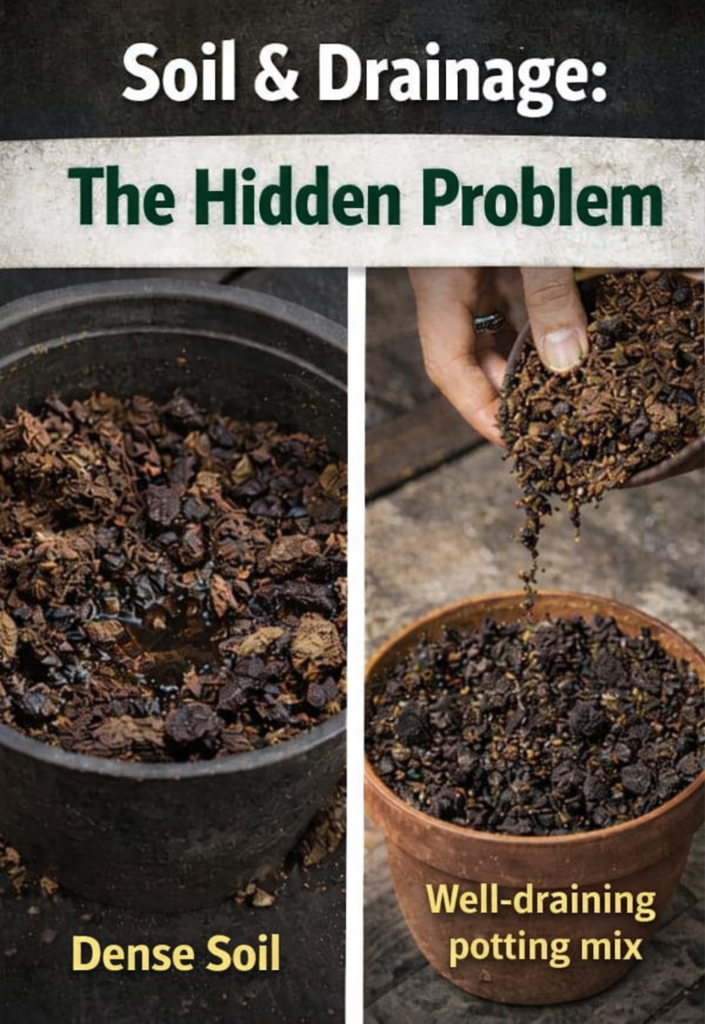
Soil & Drainage: The Hidden Problem
You can water perfectly…
and still kill your peace lily.
Why?
Because of the soil.
Bad setup:
- Dense, compact soil
- No drainage hole
- Water sitting at the bottom
This keeps roots constantly wet.
And that’s exactly what causes root rot.
Ideal setup:
- Well-draining potting mix
- Pot with drainage holes
- Light, airy soil structure
If water takes too long to drain…
you already have a problem.
Humidity: The Missing Piece Most People Ignore
Peace lilies are tropical plants.
That means they prefer:
higher humidity
In dry indoor air:
- leaf tips turn brown
- growth slows
- plant looks “tired”
Easy fixes:
- Place near other plants
- Use a humidity tray
- Avoid dry air vents
You don’t need perfection.
If your air is dry, your peace lily WILL show brown tips.
Repotting: When (and When NOT) to Do It
Peace lilies don’t need frequent repotting.
In fact…
doing it too often can stress the plant.
Only repot if:
- roots are overcrowded
- water drains too slowly
- growth has stopped
Otherwise?
Leave it alone.
Stable plants grow better.
The Bigger Picture: It’s Not Just Water
Most people focus only on watering.
But your plant responds to a system:
- Light
- Soil
- Water
- Environment
If one is off…
the whole plant struggles.
👉 If your peace lily keeps declining:
read Why Indoor Plants Die (And How to Prevent It)
Final Takeaway (Simple Rules That Actually Work)
If you remember nothing else, remember this:
- Don’t water on a schedule
- Let the top soil dry before watering
- Give more light than you think
- Never let roots sit in water
- Watch the plant, not a routine
Do this…
and your peace lily won’t just survive—
it will grow, recover, and even bloom indoors.