
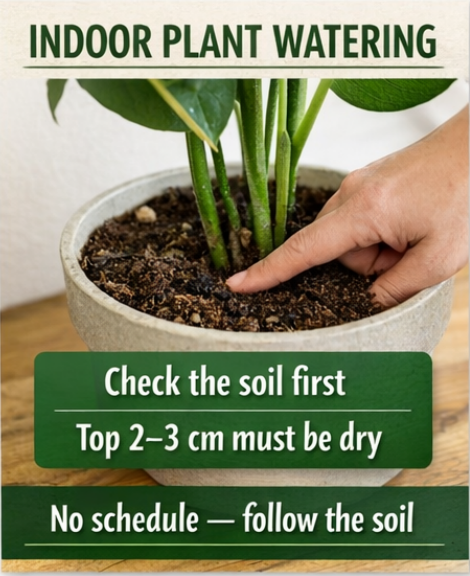
Most indoor plants die from overwatering, not neglect.
The biggest mistake? Following a schedule instead of checking the soil.
Indoor plants don’t follow a fixed watering schedule, and that’s where most beginners go wrong. Watering too often can kill a plant faster than neglect. In this guide, you’ll learn exactly how often to water indoor plants based on real conditions—not guesswork—so your plants stay healthy and avoid common mistakes.
If you’re new, check our complete indoor plant care guide.
Most indoor plants need watering every 7–10 days, but this is only a general guideline. The correct approach is to check the soil, not the calendar.
Water only when the top 2–3 cm of soil feels dry.
For example, peace lilies clearly signal when they need water by drooping — making them a great plant to learn proper watering timing.
👉 See how it works: Peace Lily Care Indoors (Beginner Guide That Actually Works)
Pothos plants are another common example — many beginners overwater them by following a schedule instead of checking the soil.
👉 Learn the correct approach: Pothos Plant Care Indoors (Beginner Guide That Actually Works)
If the soil is still moist, wait. If it’s dry, it’s time to water. This simple habit prevents overwatering, which is the most common cause of plant death.
For a more detailed explanation, check our guide on how to tell if your plant needs water.
Factors That Affect Watering
Several factors change how often your plant needs water:
- Light: More light = soil dries faster
- Temperature: Warm environments increase water needs
- Humidity: Low humidity dries soil quicker
- Pot size: Small pots dry faster than large ones
- Soil type: Well-draining soil dries faster than dense soil
Always adjust watering based on these conditions.
Signs of Overwatering
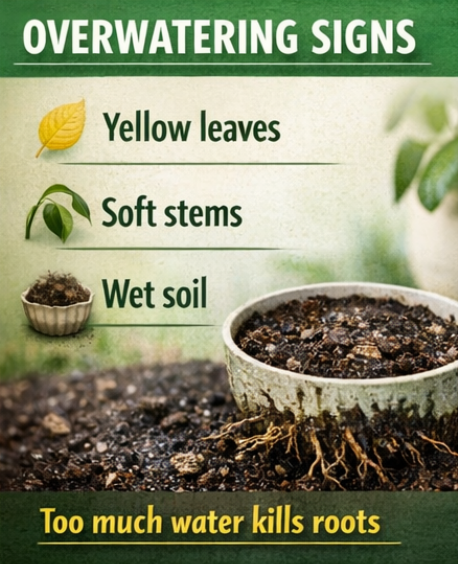
Overwatering is the most common mistake and can damage roots quickly.
Common signs include:
- Yellowing leaves
- Soft or mushy stems
- Soil staying wet for too long
- Fungus or mold on the soil
If you see these signs, reduce watering and let the soil dry out before watering again.
Signs of Underwatering
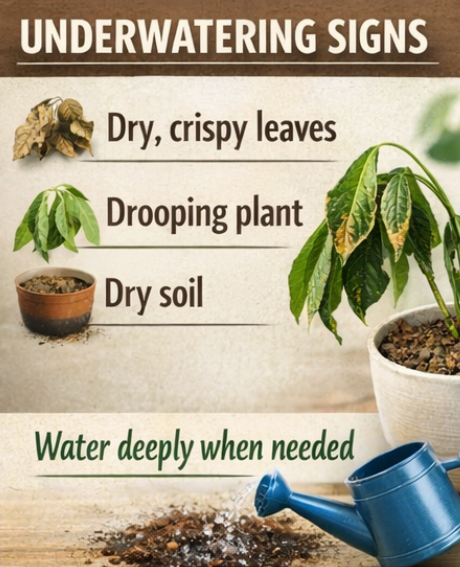
Underwatering is less common but still harmful over time.
Watch for:
- Dry, crispy leaves
- Drooping or wilting plant
- Soil pulling away from the pot
- Slow or stopped growth
👉 Think brown or crispy leaves always mean your plant needs water? That’s usually not the real cause — here’s what’s actually happening (and how to fix it)
If the soil is completely dry, water thoroughly until it drains out the bottom.
Best Watering Tips
- Always check soil before watering
- Use pots with drainage holes
- Water deeply, not lightly
- Avoid strict schedules
- Adjust based on season and environment
When in doubt, don’t water—overwatering kills more plants than underwatering.