
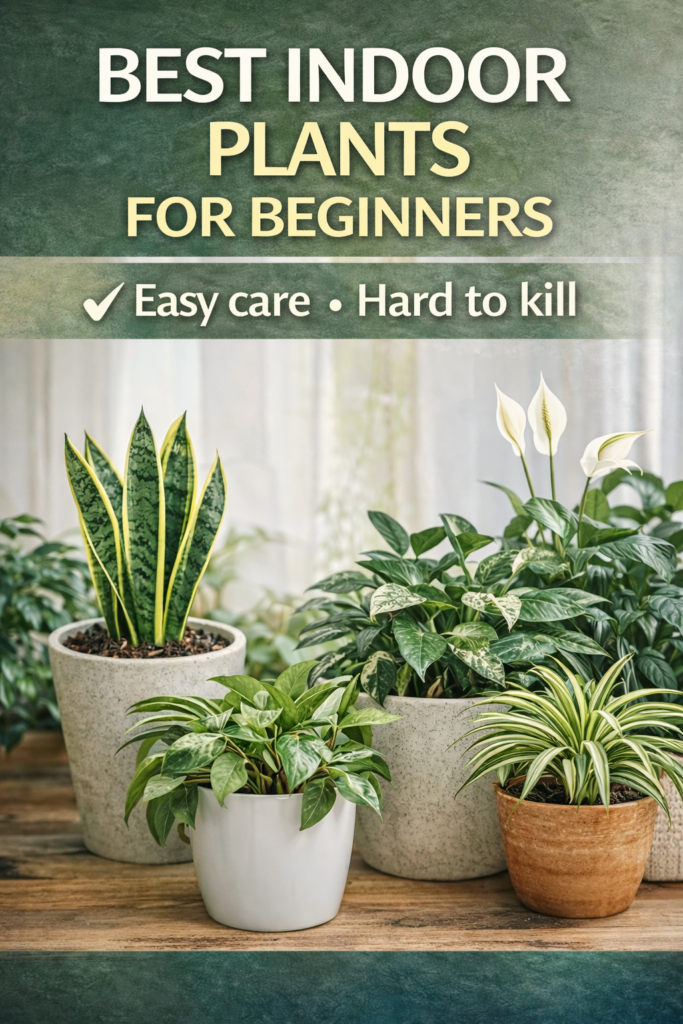
Choosing the right plant is the difference between success and frustration. Many beginners fail not because plants are difficult, but because they start with the wrong ones. In this guide, you’ll discover the best indoor plants for beginners—easy to care for, forgiving, and perfect to build confidence.
👉 See what the right plant choices can actually look like in a real space: Living Room Plant Makeover Ideas (Before & After)
Before choosing a plant, you need to understand one thing first: light.
Many “easy” plants fail simply because they are placed in the wrong lighting conditions.
👉 Start here:
Indoor Plant Light Requirements (Complete Guide That Actually Makes Sense)
If you’re new, check our complete indoor plant care guide
What Makes a Plant Beginner-Friendly
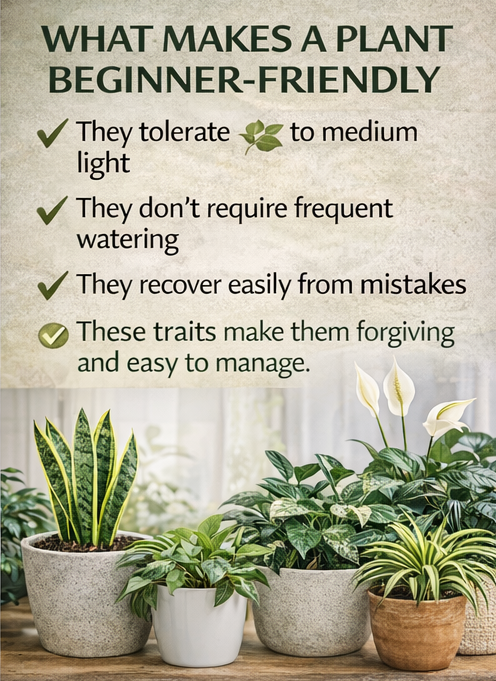
Not all plants are suitable for beginners. The easiest indoor plants share specific traits that make them more forgiving and adaptable to real-life conditions.
Beginner-friendly plants typically:
- Handle inconsistent watering → they don’t decline immediately if you forget once
- Adapt to lower light environments → important for indoor spaces without perfect sunlight
- Have strong root systems → less prone to rot and stress
- Show clear visual signals → like drooping or color changes when something is wrong
This last point is critical:
Plants that “communicate” problems clearly are much easier to learn from.
In contrast, sensitive plants require precise care and often decline without obvious warning—making them frustrating for beginners.
Top Indoor Plants for Beginners
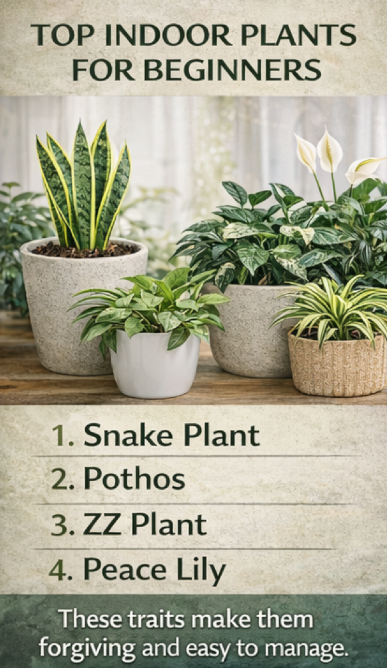
1. Snake Plant
Snake plants are one of the hardest plants to kill. They tolerate low light and irregular watering.
Perfect if you forget to water — and one of the best options for low light bedroom setups.
2. Pothos
Pothos grows quickly and adapts to different environments.
Great for beginners who want visible growth.
👉 Learn how to care for it step by step: Pothos Plant Care Indoors (Beginner Guide That Actually Works)
3. ZZ Plant
ZZ plants require very little water and survive in low light.
Ideal for low-maintenance care.
If your home doesn’t get much natural light, check these low light indoor plants that actually survive in darker spaces.
4. Peace Lily
Peace lilies show clear signs when they need water (they droop).
This makes them great for learning — but also easy to misinterpret if you water too often.
👉 Learn how to care for them correctly: Peace Lily Care Indoors (Beginner Guide That Actually Works)
Good for learning plant signals.
Quick Care Tips for Beginners
- Water only when soil is dry
- Use bright, indirect light
- Avoid overwatering
- Use pots with drainage holes
Simple habits make a big difference.
Common Beginner Mistakes
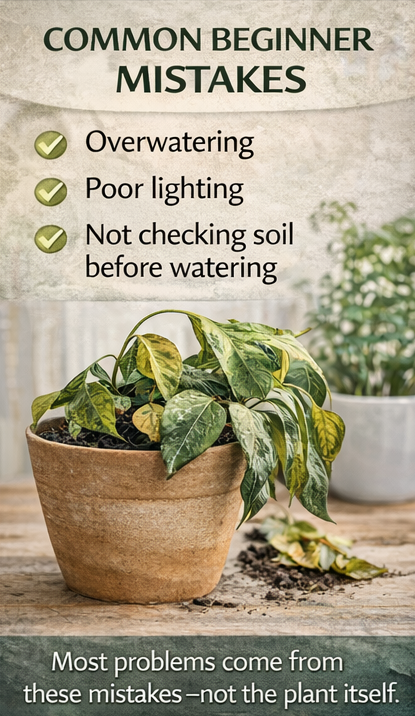
Most indoor plant problems are not caused by the plant itself, but by a few repeated mistakes in care.
The most common ones include:
- Overwatering
The #1 cause of plant death. Roots need oxygen, and constantly wet soil suffocates them, leading to rot. - Poor lighting
Plants placed too far from windows receive insufficient light, which slows growth and weakens the plant over time. - Watering on a fixed schedule
Following a routine instead of checking the soil often leads to overwatering or underwatering.
👉 Most people fix care… but ignore layout. That’s why spaces still look messy even with healthy plants.
See: Indoor Plant Decor Mistakes That Make Your Home Look Messy (Even If Your Plants Are Healthy)
👉 See how avoiding these mistakes completely changes a room: Living Room Plant Makeover Ideas (Before & After)
👉 Want a simple transformation you can copy right away?
Empty Corner to Plant Corner (Before & After Ideas)
👉 If your space still feels off even with the right plants, the issue might be the layout—not the plants.
See: First Apartment? 5 Plant Layout Fixes That Change Everything
A better approach is to observe the plant and environment instead of following rigid rules.
Small adjustments—like checking soil moisture or moving a plant closer to light—can prevent most issues before they become serious.