
TL;DR
If your plants keep dying and you don’t know why — you’re probably making the same mistake over and over.
Fix water, light, and environment early → your plant survives (and thrives).
Why Indoor Plants Don’t “Just Die”
Most people think:
“My plant just died out of nowhere”
That’s almost never true.
Indoor plants decline slowly.
👉 And most people don’t notice until it’s too late.
They give signals.
They try to adapt.
But when the conditions stay wrong long enough — they fail.
The real issue:
You’re not noticing the early warnings.
By the time the plant looks “dead”:
- roots are already damaged
- stress has accumulated
- recovery is harder
Plants don’t die suddenly
👉 They die from unresolved stress over time
👉 If your plant is already declining, here’s how to save a dying plant before it’s too late.
The 3 Main Reasons Indoor Plants Die
You don’t need to memorize dozens of problems.
Most plant care advice overcomplicates this.
Almost everything comes down to:
- Water
- Light
- Environment
And one hidden factor most people ignore: soil → read: Best Soil for Indoor Plants
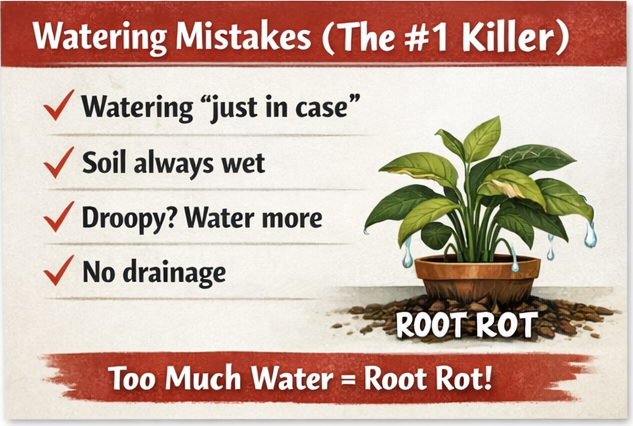
1. Watering Mistakes (The #1 Killer)
Most plants don’t die from neglect.
They die from too much care.
What goes wrong:
- watering every few days “just in case”
- watering the moment leaves look slightly droopy
This is a common mistake with peace lilies — they droop as a normal signal for water, but watering too early can lead to overwatering and root rot.
👉 Learn the correct approach: Peace Lily Care Indoors (Beginner Guide That Actually Works)
Pothos plants are another common case — they often look “fine” while being overwatered, which leads beginners to keep watering on a schedule until root rot develops.
👉 See how this mistake happens (and how to fix it): Pothos Plant Care Indoors (Beginner Guide That Actually Works) - keeping soil constantly wet
Many plant deaths are caused by poor pot choice, not just watering mistakes.
The wrong pot can trap moisture and make overwatering almost inevitable.
👉 Learn more: common indoor plant pot mistakes
If your plant is dying, it’s far more likely you’re overwatering — not underwatering.
Most beginners kill plants by trying to help them.
Why it kills plants:
Roots need oxygen.
If soil stays wet:
- oxygen disappears
- roots suffocate
- rot begins
Prevention:
- check soil before watering
- let soil dry between cycles
- always use drainage
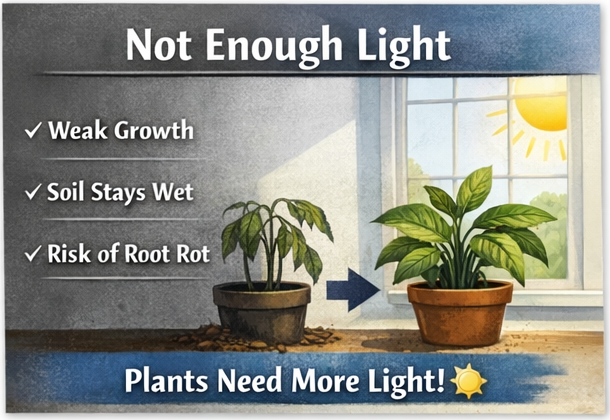
2. Not Enough Light (Silent Killer)
This is one of the most underestimated problems.
👉 And it silently makes every other mistake worse.
Many plant problems that look like watering issues are actually caused by poor light.
Before adjusting anything else, make sure your plant is getting the right amount of light:
Indoor Plant Light Requirements (Complete Guide That Actually Makes Sense)
What happens in low light:
- growth slows down
- water usage drops
- plant becomes weak
Then you water normally →
soil stays wet longer →
root rot risk increases
If light is the issue, here are the only low light plants that won’t decline as fast in darker rooms.
Prevention:
- place plants near natural light
- avoid dark corners
- adjust watering based on light
Light doesn’t just affect growth
👉 It affects everything else
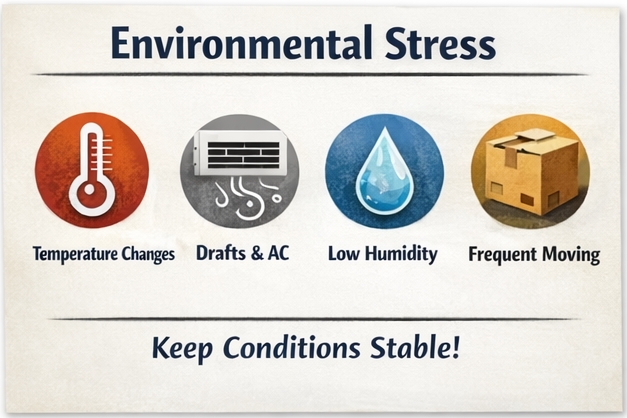
3. Environmental Stress (The Hidden Factor)
Even if water and light are correct:
Your plant can still struggle.
Common stressors:
- sudden temperature changes
- drafts (AC, heaters)
- low humidity
👉 One of the most common mistakes is misunderstanding humidity — especially relying on misting. Learn what actually works: How to Increase Humidity for Plants (Without Killing Them by Accident)
Brown leaf edges are often blamed on humidity — but that’s not always the real cause.
👉 Not all brown leaves mean the same thing — here’s what’s actually causing them:
Why Indoor Plants Turn Brown (It’s NOT What You Think) - frequent moving
👉 Low humidity is one of the most overlooked causes — most homes are too dry for indoor plants. Learn how to fix it: Indoor Plant Humidity (How Much Do Plants Really Need?)
What this causes:
- leaf drop
- stalled growth
- weak recovery
Prevention:
- keep conditions stable
- avoid moving plants frequently
- protect from extreme changes
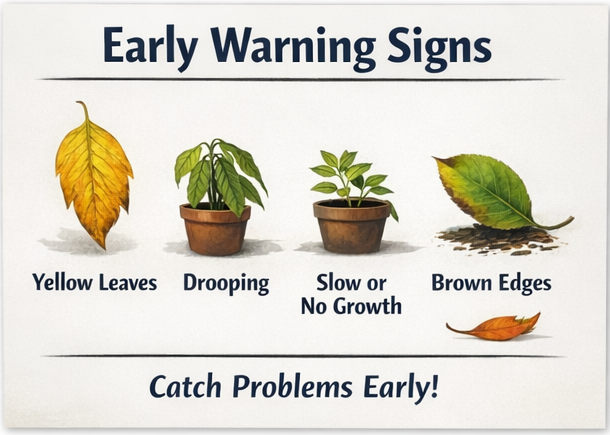
The Early Signs Your Plant Is in Trouble
Most people react too late.
You want to catch problems early.
Most people miss these signs until it’s too late:
- yellow leaves
- drooping
- slow or no growth
Before plants die, they usually stop growing first.
👉 Here’s how to read that signal:
Why your indoor plant is not growing (and what it’s trying to tell you) - brown edges
👉 Not all brown leaves mean the same thing — here’s what’s actually causing them (and how to fix it):
Why Indoor Plants Turn Brown (It’s NOT What You Think) - leaves falling
By the time yellow leaves appear, the damage has already been happening for days — sometimes weeks.
These are not random
They are signals
If you’re seeing multiple symptoms, read: common indoor plant problems and how to fix them
Why Most People Make It Worse
When something looks wrong, people react fast.
Typical reaction:
- water more
- move the plant
- add fertilizer
- repot
Brown tips are a perfect example of this — people try to fix them without understanding the cause, and end up making things worse.
This creates more stress, not less.
👉 If you’re dealing with brown leaves, here’s how to actually diagnose the real cause:
Why Indoor Plants Turn Brown (It’s NOT What You Think)
The real problem:
You’re changing multiple variables at once.
You can’t fix what you don’t understand
How to Prevent Most Plant Deaths (Simple System)
You don’t need complicated care routines.
You need consistency.
Step 1: Always check soil
Before watering:
- dry → water
- wet → wait
Step 2: Control light
- more light → more growth → more water needed
- less light → less water
Step 3: Keep environment stable
- avoid sudden changes
- don’t move plants constantly
Step 4: Change one thing at a time
If something is wrong:
- adjust one variable
- observe
- then adjust again
This is how you avoid making things worse
Can a “Dying” Plant Be Saved?
In many cases: yes.
If roots are still alive:
- fix watering
- improve light
- remove stress
recovery is possible
If roots are rotting badly:
- recovery becomes difficult
- but sometimes still possible with intervention
The earlier you act, the higher the chance
Final Thoughts: Plants Fail Slowly — Not Randomly
Your plant is not unpredictable.
It’s reacting exactly to what you’re doing — and the environment you create.
Once you understand:
- water
- light
- stability
You stop guessing
You prevent problems
Your plants start thriving
Want to Avoid These Problems Completely?
👉 Start here:
- Indoor Plant Watering Guide
- How to Tell If Your Plant Needs Water
- Overwatering Indoor Plants
- Underwatering Indoor Plants
These guides will help you build a system — not just react to problems