
TL;DR
Most indoor plants die from overwatering, not neglect.
Water only when the soil is dry, not on a schedule.
Why Watering Is the #1 Mistake (and How It Kills Your Plants)
If your plant is dying, there’s a high chance you’re doing too much, not too little.
Overwatering suffocates roots.
No oxygen = root rot = dead plant.
👉 If your plant is already declining, here’s how to save a dying plant before it’s too late.
And in many cases, the real problem is the soil itself → read: Best Soil for Indoor Plants
The tricky part?
Overwatered plants often look like they need more water:
- yellow leaves
- drooping
- slow growth
This is why guessing doesn’t work.
Watering is just one part of the problem — if your plants keep dying, you need to understand the full picture: water, light, and environment. Read: Why Indoor Plants Die (And How to Prevent It)
How to Know When Your Plant Actually Needs Water
Forget schedules. Your plant doesn’t care about your calendar.
Instead, use these signals:
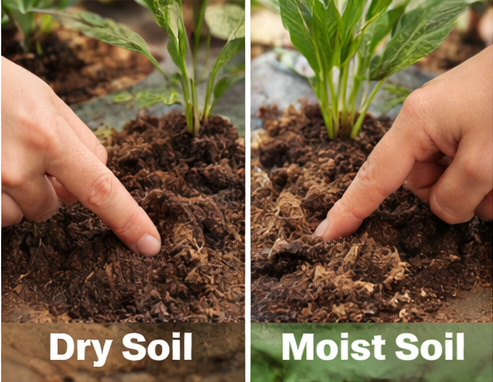
1. Check the soil
Stick your finger 2–3 cm into the soil.
- Dry → water
- Moist → wait
2. Look at the leaves
- Droopy + thin → needs water
Peace lilies are one of the clearest examples of this — they visibly droop when they need water and recover within hours.
👉 See the full guide: Peace Lily Care Indoors (Beginner Guide That Actually Works) - Yellow + soft → too much water
Pothos plants are a common case where watering mistakes are misread — yellow leaves are often caused by overwatering, not lack of water.
👉 Learn how to read these signals correctly: Pothos Plant Care Indoors (Beginner Guide That Actually Works)
👉 Not sure? Read: How to Tell If Your Plant Needs Water
3. Lift the pot
Dry soil = light pot
Wet soil = heavy pot
This is one of the most accurate methods once you get used to it.
How Often Should You Water Indoor Plants?
There is no fixed schedule.
But here’s a realistic baseline:
- Most indoor plants: every 7–14 days
- Low light: less often
- Bright light: more often
👉 Most watering mistakes come from misjudging light. Read this first: Indoor Plant Light Requirements (Complete Guide That Actually Makes Sense).
If your plant is not growing, watering alone won’t fix it.
👉 Start here:
Why your indoor plant is not growing (and what it’s trying to tell you) - Winter: less
- Summer: more
👉 Full breakdown: How Often to Water Indoor Plants
Signs You’re Overwatering (Most Common Killer)
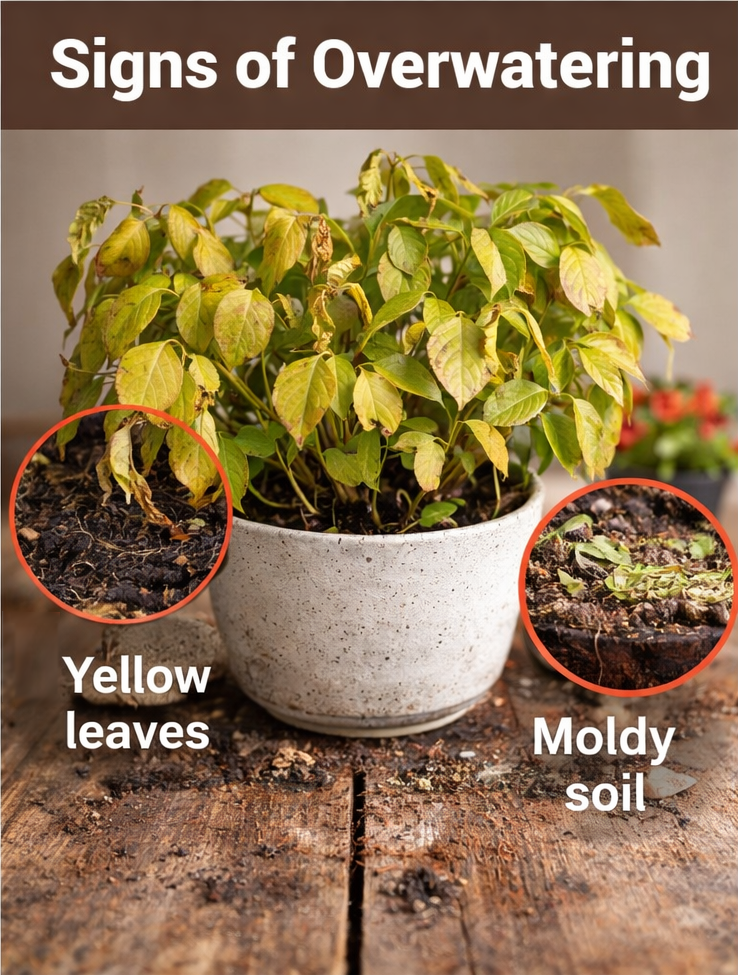
Overwatering is the fastest way to kill a plant.
Watch for:
- yellow leaves
- mushy stems
- moldy soil
- bad smell
If you see these, stop watering immediately.
Learn more: Overwatering Indoor Plants
Some plants are especially sensitive to overwatering.
ZZ plants, for example, store water in their roots and rot easily if watered too often.
👉 See exactly how to avoid this: ZZ Plant Care: Why It’s Slowly Dying (Even If It Looks Fine)
Signs You’re Underwatering (Less Common, Easier to Fix)
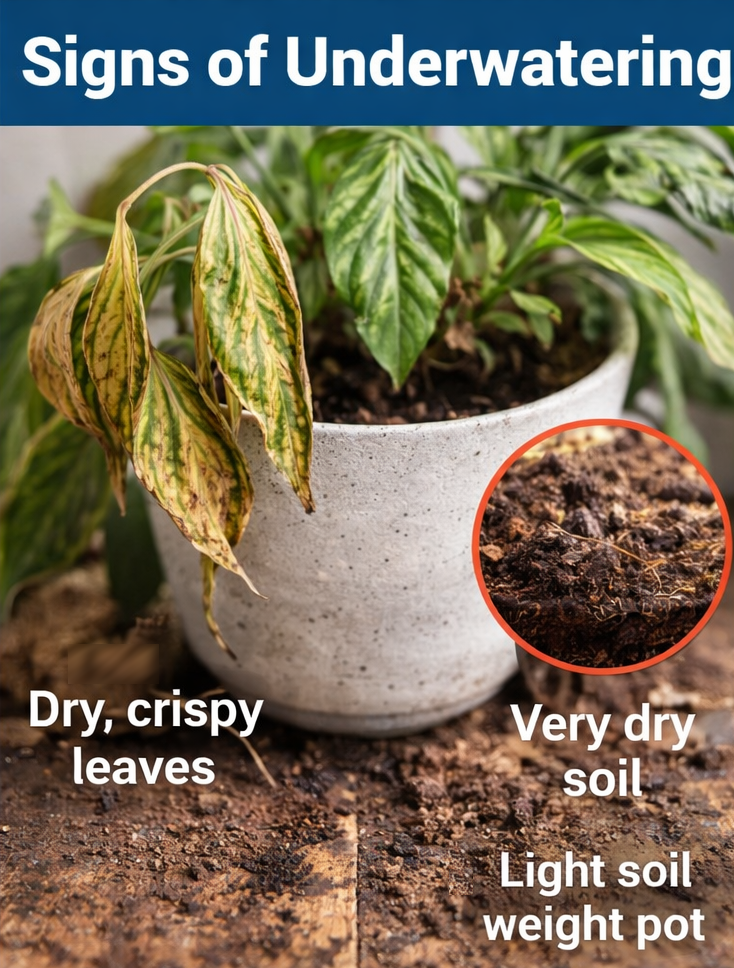
Underwatering is usually less dangerous.
Signs:
- dry, crispy leaves
- soil pulling away from the pot
- very light pot
👉 Think brown leaves always mean watering problems? That’s usually not the real cause — here’s what’s actually happening (and how to fix it)
The good news:
Most plants recover quickly after proper watering.
Learn the exact signs and how to fix it: Underwatering Indoor Plants.
The Right Way to Water (Most People Do This Wrong)
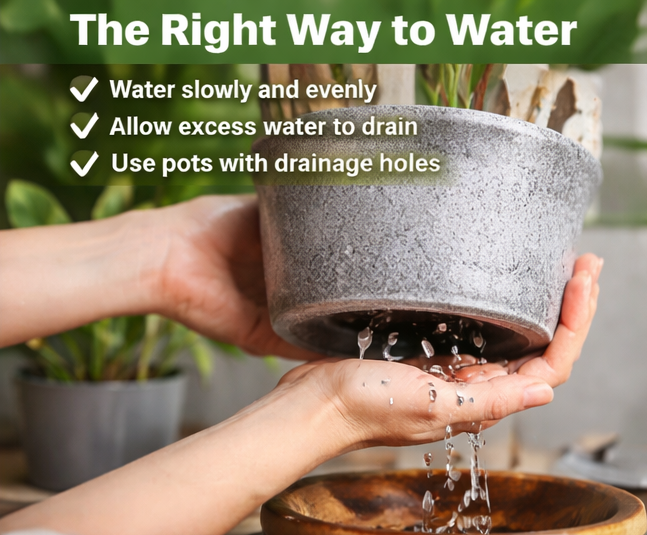
Watering is not just “add water”.
Do this instead:
- Water slowly and evenly
- Let excess water drain out
- Never leave the pot sitting in water
Roots need oxygen, not constant moisture.
This only works if your soil actually allows airflow → see: Best Soil for Indoor Plants
The Biggest Watering Mistakes to Avoid
Watering on a schedule
Leads to overwatering.
If your plant is already showing multiple symptoms (yellow leaves, drooping, slow growth), read this guide on common indoor plant problems and how to fix them.
Using pots without drainage
Water has nowhere to go → root rot.
👉 Before blaming watering, check your pot:
Do Indoor Plants Need Drainage Holes? (The Truth Most People Ignore)
Small sips of water
Encourages weak roots.
Ignoring environment
Light, humidity, and temperature change everything.
👉 Humidity especially changes how fast soil dries — and most homes are too dry. Learn how to fix it:
Indoor Plant Humidity (How Much Do Plants Really Need?)
Pro Tips to Master Watering (Beginner → Confident)
- Always check soil before watering
- Use pots with drainage holes
- Learn your plant type (some prefer dry soil)
- When in doubt → wait 1–2 more days
Slight underwatering is safer than overwatering.
Final Thoughts: Stop Guessing, Start Reading Your Plant
Watering isn’t about rules.
It’s about observation.
Once you stop guessing and start checking:
- your plants grow faster
- you avoid root rot
- everything becomes easier
If you’re still unsure, start here: How to Tell If Your Plant Needs Water