
TL;DR
👉 Most indoor plants need 40–60% humidity to thrive
👉 Brown tips, crispy edges, and slow growth = humidity problem (not just watering)
👉 Grouping plants + avoiding dry air spots beats misting
👉 If your plant keeps declining “for no reason” → humidity is usually the missing variable
Why Humidity Is the Hidden Reason Your Plants Struggle
You can water perfectly.
You can place your plant near the “right” window.
And it still declines.
👉 This is where most guides fail: they ignore humidity.
Indoor air—especially in apartments—is often too dry for tropical plants. What looks like:
- “overwatering”
- “underwatering”
- “random brown leaves”
…is often just low humidity stress.
👉 Key idea:
Your plant isn’t just using water from the soil.
It’s constantly losing moisture through its leaves.
If the air is too dry → it loses water faster than it can replace it.
What Humidity Level Do Indoor Plants Actually Need?
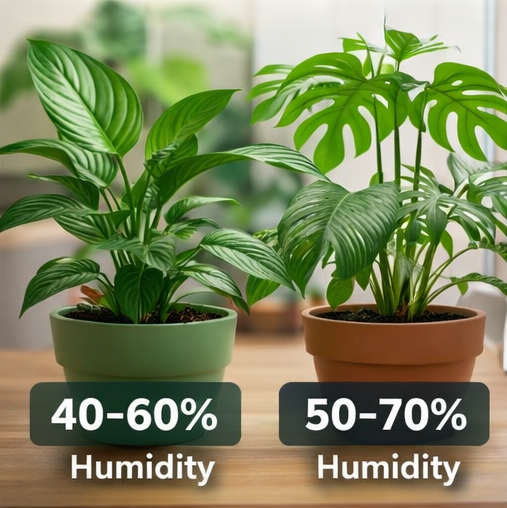
Let’s simplify it—no fluff:
🌿 Most common indoor plants:
👉 40–60% humidity (safe, stable range)
🌴 Tropical plants (Monstera, Calathea, Peace Lily):
👉 50–70% humidity (they’ll survive lower, but won’t thrive)
🌵 Low-humidity tolerant plants (Snake plant, ZZ):
👉 30–50% humidity (more forgiving)
The mistake most people make:
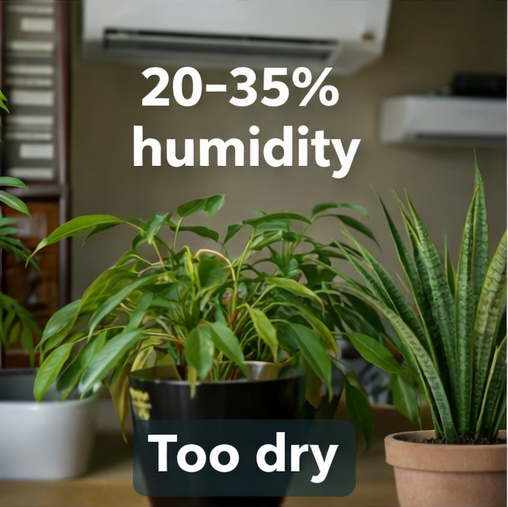
They assume “normal indoor air” is fine.
👉 Reality:
- Many homes sit at 20–35% humidity
- Especially with AC or heating
That’s desert-level dryness for a tropical plant.
Signs Your Plant Needs More Humidity (Not More Water)
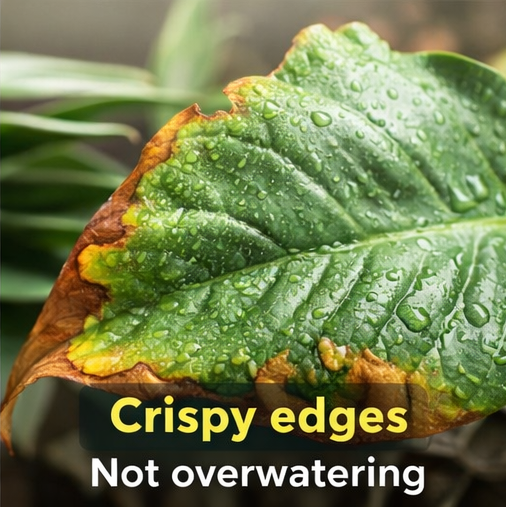
This is where people misdiagnose the problem.
🚫 Looks like watering issue—but isn’t:
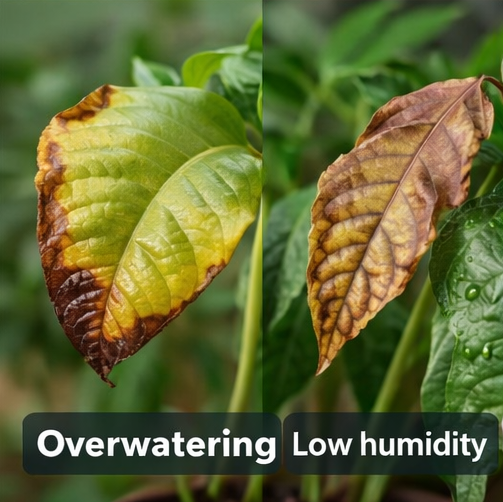
- Brown leaf tips (especially symmetrical)
- Crispy leaf edges
- Leaves curling inward
- New leaves smaller than usual
- Growth slowing down for no reason
👉 Critical distinction:
- Overwatering → yellow, soft, mushy leaves
- Low humidity → dry, brown, crispy edges
👉 Think brown or crispy leaves always mean a humidity issue? Not necessarily — here’s what’s actually causing them (and how to fix it)
👉 Not sure if it’s actually overwatering? Read:
Overwatering Indoor Plants: Signs, Causes, and How to Fix It
If it’s crispy, not soft → think humidity first.
Why Misting Doesn’t Work (And What Actually Does)
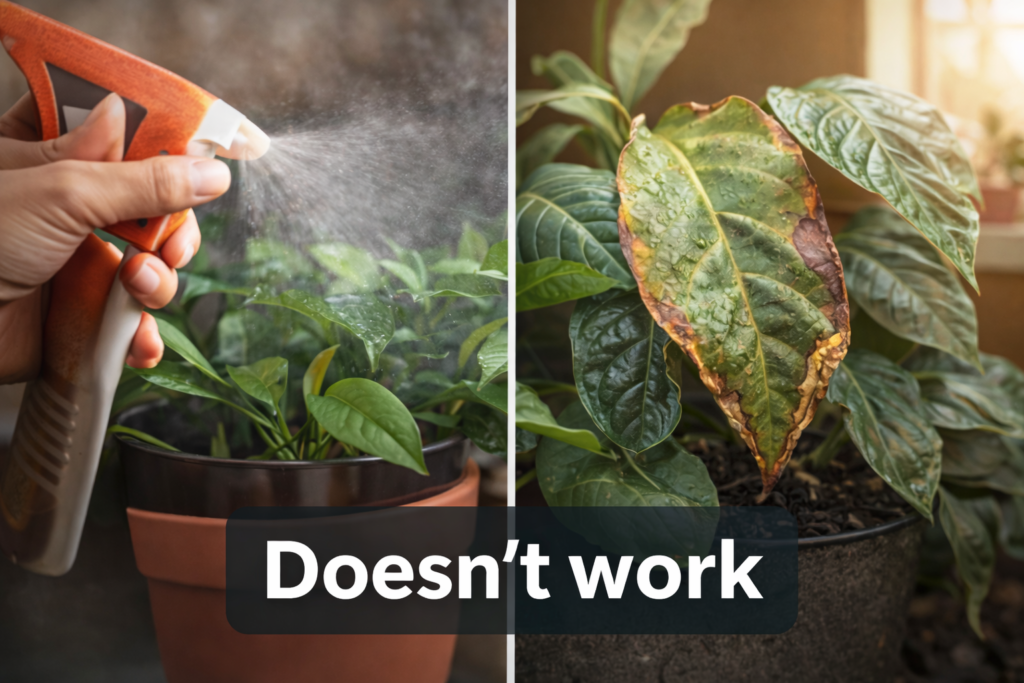
Let’s clear this up:
❌ Misting:
- Raises humidity for minutes
- Doesn’t change the environment
- Can even cause fungal issues
👉 It feels helpful—but it’s mostly cosmetic.
👉 Want to understand why misting doesn’t actually work long-term? Read this: How to Increase Humidity for Plants (Without Killing Them by Accident)
✅ What actually increases humidity:
1. Grouping plants together
Plants release moisture → they create a microclimate
👉 This is one of the most underrated tricks.
2. Avoiding “dry zones”
Keep plants away from:
- Air conditioners
- Heaters
- Drafty windows
👉 These spots destroy humidity instantly.
3. Strategic placement (not random)
Best locations:
- Bathrooms (with light)
- Kitchens
- Corners with less airflow
👉 Not all “bright spots” are equal.
4. Humidity trays (limited but useful)
Tray + water + pebbles:
👉 Helps slightly, but:
- Works best in small spaces
- Not enough alone for tropical plants
5. Humidifier (the only real control)
If you want consistency:
👉 This is the only method that gives predictable results
The Real Problem: Inconsistent Humidity
Most people don’t have “low humidity.”
They have unstable humidity.
Example:
- Day: AC running → dry air
- Night: cooler → higher humidity
👉 Plants hate this.
Why this matters:
Plants adapt slowly.
If conditions keep changing:
- They stay stressed
- Growth stalls
- Leaves degrade over time
👉 Stability > perfection
A consistent 45% is better than:
- 30% → 60% → 35% swings
How to Check Humidity (Without Guessing)
Stop guessing.
👉 Use a cheap hygrometer
What to do:
- Place it near your plant (not across the room)
- Check at different times of day
What you’ll usually discover:
👉 Your room is drier than you think.
How to Fix Low Humidity Fast (Practical Setup)
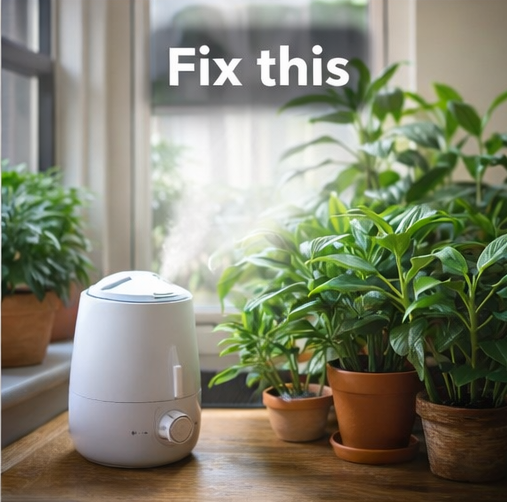
If your plant is struggling right now:
Step-by-step:
- Move it away from airflow (AC/heater)
- Group it with other plants
- Place it in a slightly more enclosed area
- Add a humidity tray (optional)
- If still struggling → use a humidifier
👉 Don’t change everything at once.
Fix the environment first, then observe.
The Connection Most People Miss (Humidity + Watering)
Here’s the insight most guides ignore:
👉 Humidity directly affects watering frequency.
Low humidity:
- Soil dries faster
- Plant drinks faster
High humidity:
- Soil stays wet longer
- Overwatering risk increases
This is why people get confused:
They follow a “watering schedule”…
…but the environment changed.
👉 Stop using fixed schedules. Use this instead:
How Often to Water Indoor Plants
👉 Result:
- Overwatering in humid conditions
- Underwatering in dry air
Final Insight: Humidity Is Not Optional
If your plant:
- looks “okay” but not great
- grows slowly
- keeps getting brown tips
👉 You’ve likely optimized everything except humidity
The reality:
Light gets attention
Water gets attention
👉 Humidity gets ignored—and quietly limits everything.
What to Do Next
If your plants still struggle after fixing humidity:
👉 Read next:
Why Indoor Plants Die (And How to Prevent It) (full diagnosis beyond humidity)
→ because humidity is just one piece of the system (light + water + environment)
Quick Self-Check (Before You Leave)
Ask yourself:
- Is my air below 40% humidity?
- Is my plant near AC or heating?
- Do I rely on misting?
If you answered “yes” to any:
👉 You’ve likely found the problem.