
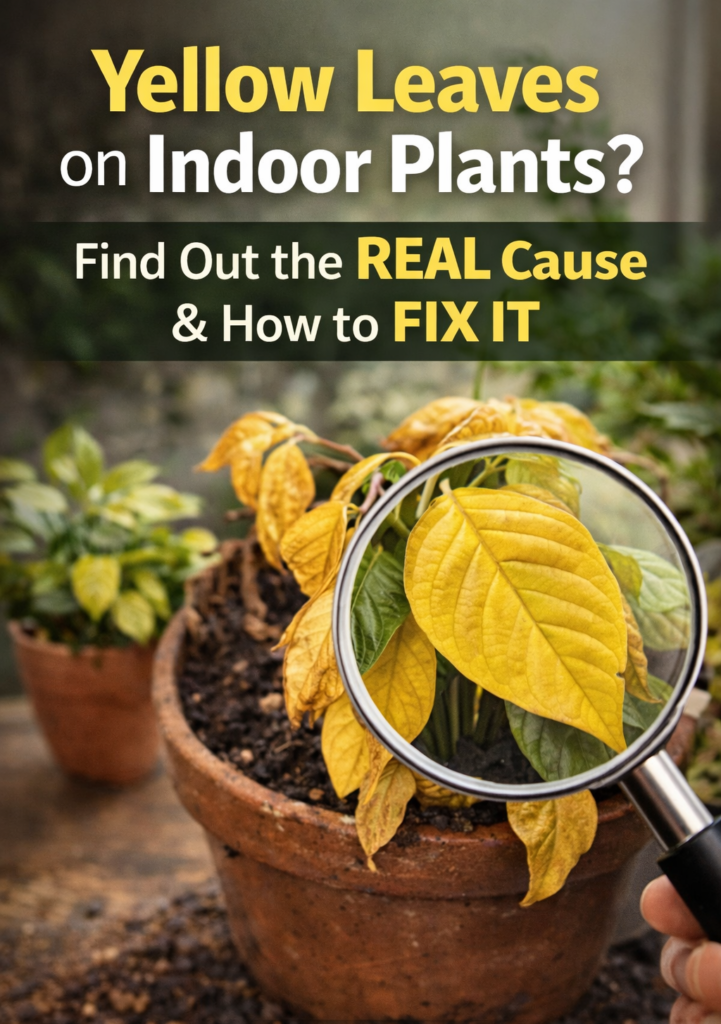
If your indoor plant is turning yellow, something is wrong.
Yellow leaves are one of the most common problems plant owners face, especially indoors. The difficulty is that several different issues can cause the same symptom, which often leads to confusion and wrong fixes.
If you’re not sure how often to water your plants, read our guide on how often to water indoor plants.
In many cases, the problem is already advanced by the time leaves start turning yellow.
In this guide, you’ll learn how to identify the real cause and fix it before your plant declines further.
Why Indoor Plant Leaves Turn Yellow
Yellow leaves are a sign that the plant is under stress.
This usually happens when the plant cannot maintain proper internal balance due to issues with water, light, or root health.
The most important thing to understand is this:
Yellow leaves are not the problem — they are the result of a deeper issue.
If you don’t fix the cause, the plant will continue to deteriorate.
👉 If your plant is already getting worse, here’s how to save a dying plant before it’s too late.
The Most Common Causes of Yellow Leaves
Overwatering
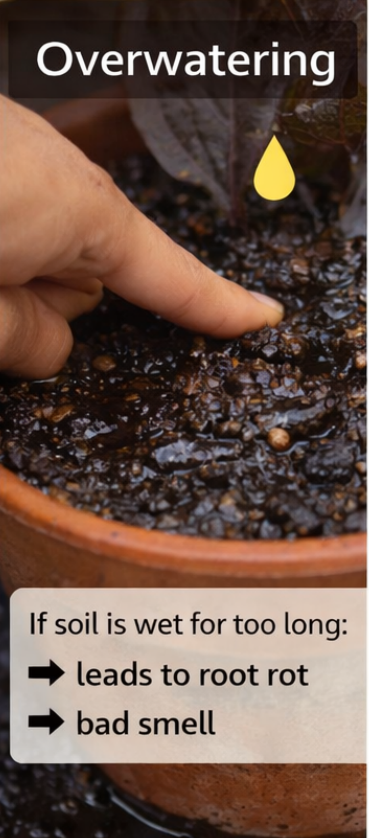
Overwatering is the most frequent cause of yellow leaves in indoor plants.
When soil stays wet for too long, roots cannot get enough oxygen. Over time, this leads to root damage and eventually root rot.
Typical signs include:
- soft yellow leaves
This is especially common in peace lilies, where overwatering quickly leads to yellowing leaves and root stress. 👉 Learn how to fix it: Peace Lily Care Indoors (Beginner Guide That Actually Works) - consistently wet soil
- slow or stalled growth
In more advanced cases, you may notice a bad smell coming from the soil.
If you’re new to plant care, this often happens due to poor watering habits. Start with our indoor plant care beginner guide.
Underwatering
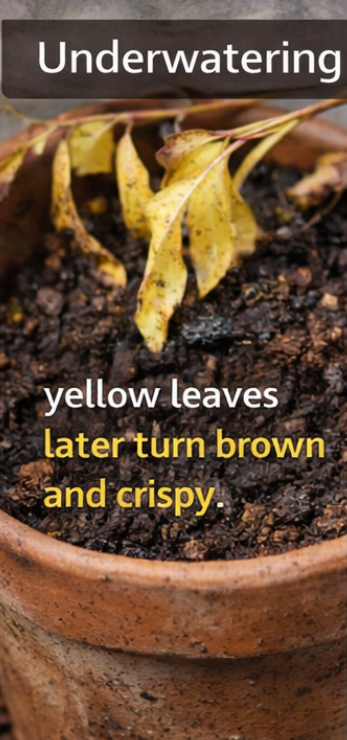
Lack of water can also cause yellow leaves, although it behaves differently.
When a plant doesn’t receive enough water, it cannot support all its leaves and begins to shed older ones.
Signs include:
- very dry soil
- yellow leaves that later turn brown and crispy
- drooping appearance
If you’re not sure whether yellow leaves are caused by too much or too little water, read our guide on how to tell if your plant needs water.
Light Issues
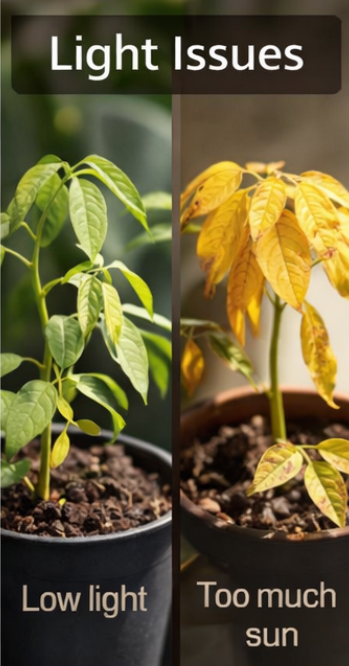
Light plays a critical role in plant health.
If a plant receives too little light, it cannot produce enough energy to maintain all its leaves.
On the other hand, too much direct sunlight can damage leaf tissue.
Light issues are one of the most overlooked causes of yellow leaves — and often misdiagnosed as watering problems.
Before adjusting your watering routine, make sure your plant is getting the right type and amount of light:
Indoor Plant Light Requirements (Complete Guide That Actually Makes Sense)
Signs of light problems:
- pale or weak growth (low light)
- yellow patches or burn marks (too much sun)
Choosing the right plant for your space is key. See our list of the best indoor plants for beginners.
Natural Aging
Not all yellow leaves indicate a problem.
It is normal for older, lower leaves to turn yellow and fall off over time.
However:
- if multiple leaves are turning yellow at once
- or new growth is affected
then it is likely a care issue, not natural aging.
How to Identify the Real Cause
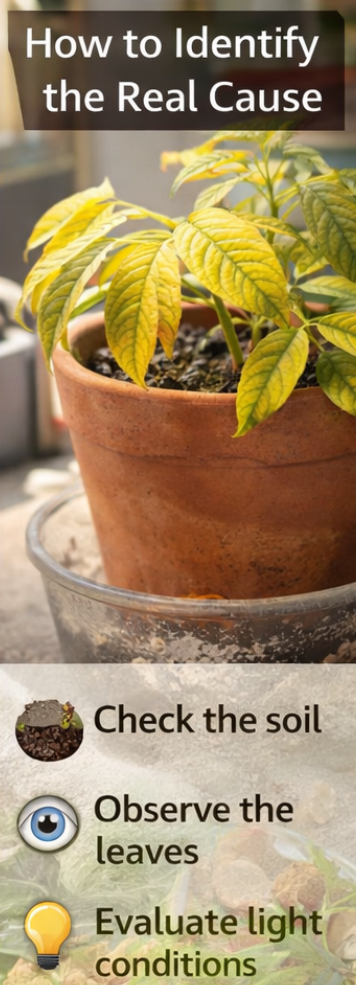
Before making any changes, check the following:
Check the soil
Insert your finger into the soil:
- if it feels wet → likely overwatering
- if it feels completely dry → likely underwatering
Observe the leaves
- soft and yellow → excess water
- dry and crispy → lack of water
Evaluate light conditions
- far from window or dark room → insufficient light
- direct harsh sunlight → possible leaf burn
This simple process will help you correctly diagnose most cases.
How to Fix Yellow Leaves
If the problem is overwatering
- stop watering immediately
- allow the soil to dry out completely
- ensure the pot has proper drainage
- consider repotting if roots are damaged
If the problem is underwatering
- water thoroughly until excess water drains out
- avoid giving small amounts of water frequently
- maintain a consistent watering routine
If the problem is light
- move the plant closer to a bright window
- avoid strong direct sunlight, especially during midday
Should You Remove Yellow Leaves?
Yes, but only if the leaf is fully yellow.
These leaves will not recover and continue to consume energy from the plant.
Use clean scissors and remove them at the base.
The Most Common Mistake
A common mistake is trying to fix yellow leaves by watering more.
If overwatering is the cause, this will make the problem worse and accelerate root damage.
Always identify the cause before taking action.
Conclusion
Yellow leaves are an early warning sign that your plant is under stress.
In most cases, the issue is related to watering or light conditions.
If you identify the cause early and correct it, your plant can recover fully.
Ignoring the problem, however, will usually lead to further decline.