
If your plant looks unhealthy and you’re not sure whether to water it or leave it alone, you’re not alone. This is one of the most common struggles for beginners.
The problem is simple: most people rely on schedules instead of actual plant signals.
In reality, your plant will tell you exactly when it needs water — you just need to know what to look for.
In this guide, you’ll learn how to read those signals, avoid overwatering, and make confident decisions every time.
Why Watering Schedules Don’t Work
A fixed watering schedule might seem helpful, but it often leads to problems.
Why?
Because indoor conditions are never constant:
- Light changes
- Temperature fluctuates
- Humidity varies
That means your plant’s water needs are always changing.
Watering every 7 days might be too much one week and not enough the next.
Instead of following a calendar, you need to base your decision on real-time signals from the plant and soil.
👉 If you’re looking for general guidelines, you can read our full guide on how often to water indoor plants — but always adjust based on real conditions.
The #1 Rule: Check the Soil First
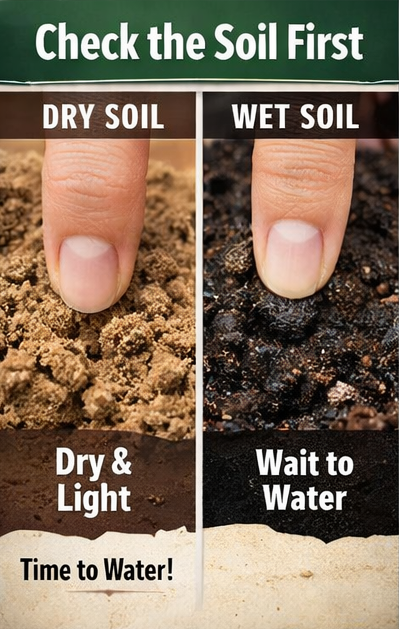
Before doing anything, always check the soil.
This is the most reliable way to know if your plant needs water.
How to do it:
- Stick your finger 2–3 cm into the soil
- If it feels dry → water
- If it still feels moist → wait
That’s it.
This simple habit will prevent most watering mistakes.
If you want more accuracy, you can also lift the pot:
- Dry soil = lighter pot
- Wet soil = heavier pot
Over time, this becomes instinctive.
Clear Signs Your Plant Needs Water
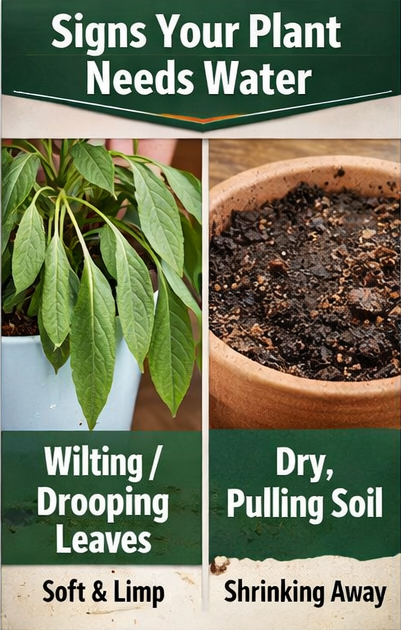
Plants show visible signs when they’re thirsty — but you need to recognize them early.
1. Dry Soil
The most obvious and reliable signal.
If the top layer is dry and crumbly, your plant likely needs water.
2. Drooping Leaves (Soft, Not Crispy)
Leaves may start to droop or look tired.
Important:
- Underwatering droop = soft, flexible leaves
- Not dry or crispy
This is an early warning sign — don’t ignore it.
Some plants make this especially obvious — peace lilies, for example, dramatically droop when thirsty and quickly recover after watering.
👉 See exactly how it works: Peace Lily Care Indoors (Beginner Guide That Actually Works)
3. Slower Growth
If your plant suddenly stops growing, lack of water could be one reason.
While this isn’t always caused by underwatering, it’s a signal worth checking alongside soil moisture.
4. Dry, Pulling Soil
If the soil is shrinking and pulling away from the edges of the pot, it’s a strong sign it’s too dry.
At this point, water thoroughly.
👉 Think brown or dry-looking leaves mean your plant needs water? That’s often not the real cause — here’s what’s actually happening (and how to fix it)
Signs You Should NOT Water (Very Important)
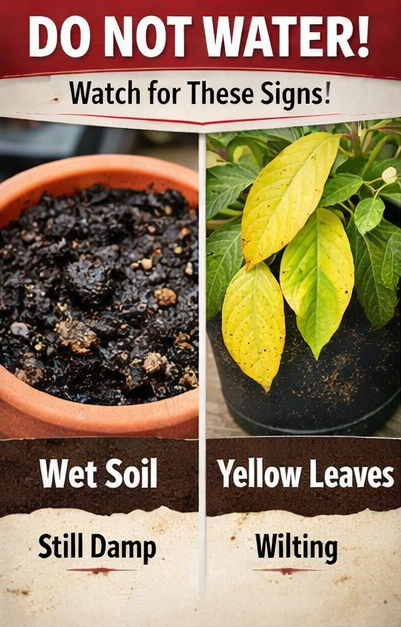
Many plants die not from lack of water, but from too much.
Do NOT water if:
- Soil is still moist below the surface
- Leaves are yellowing (learn what causes this in our guide on yellow leaves on indoor plants)
- The pot feels heavy
- The soil looks dark and compact
👉 These are often signs of overwatering, not thirst — learn the full causes and how to fix it in our guide on overwatering indoor plants.
Watering in this situation makes the problem worse.
👉 If your plant is already declining, here’s how to save a dying plant before it’s too late.
A Simple 3-Step Check (Never Guess Again)
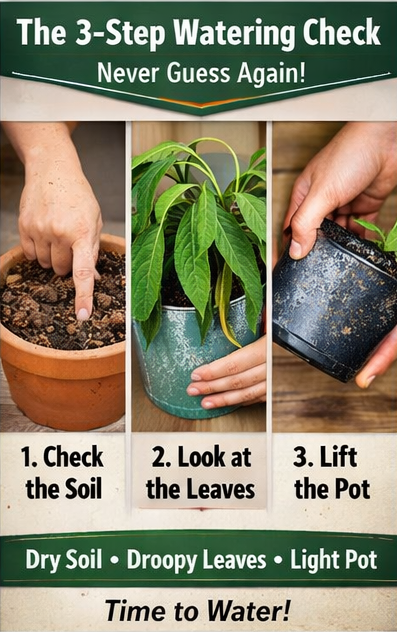
If you’re unsure, follow this quick system:
- Check the soil (2–3 cm deep)
- Look at the leaves (droopy or firm?)
- Lift the pot (light or heavy?)
Only water if:
- Soil is dry
- AND at least one other signal confirms it
This removes guesswork completely.
Common Mistakes Beginners Make
1. Watering on a Schedule
Leads to overwatering or underwatering depending on conditions.
2. Only Looking at Leaves
Leaves can be misleading — always confirm with soil.
3. Watering “Just in Case”
This is the fastest way to kill a plant.
If you’re unsure, it’s safer to wait than to overwater.
Final Thoughts
Learning when to water is the most important skill in plant care.
Once you stop guessing and start reading the signs, everything becomes easier:
- Fewer problems
- Healthier plants
- More confidence
Always remember:
Check the soil first, then decide.
Your plant is already telling you what it needs — now you know how to listen.