
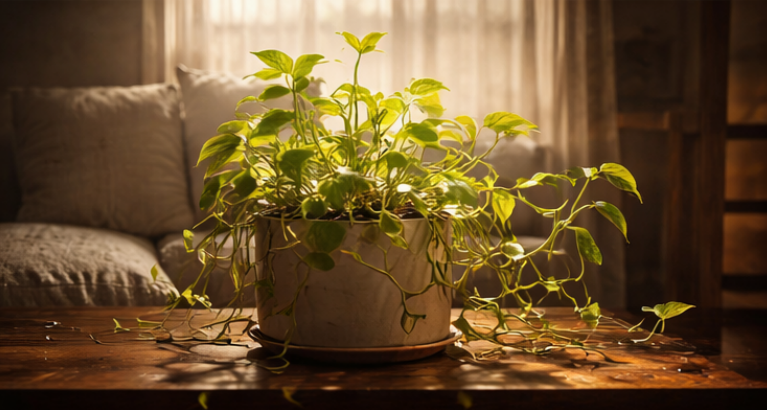
TL;DR
“Low light plants” don’t love low light—they just tolerate it better. If your space is dark, these are the only plants that have a real chance of surviving without turning weak, leggy, and ugly.
If you’re looking for the best low light indoor plants or plants that can survive in dark rooms, you need to understand one thing first: most “low light houseplants” don’t actually thrive—they just survive.
The Truth About “Low Light Plants” (No One Says This)
Most content online is misleading.
“Low light plant” sounds like:
“this plant will thrive in a dark corner”
Reality:
it means “this plant won’t die as fast”
In low light:
- Growth slows down (sometimes almost stops)
- Stems stretch (leggy growth)
- Leaves get smaller and duller
- The plant becomes more sensitive to mistakes
You’re not choosing plants that thrive. You’re choosing plants that tolerate.
What “Low Light” Actually Means (And Why Most Homes Fail)
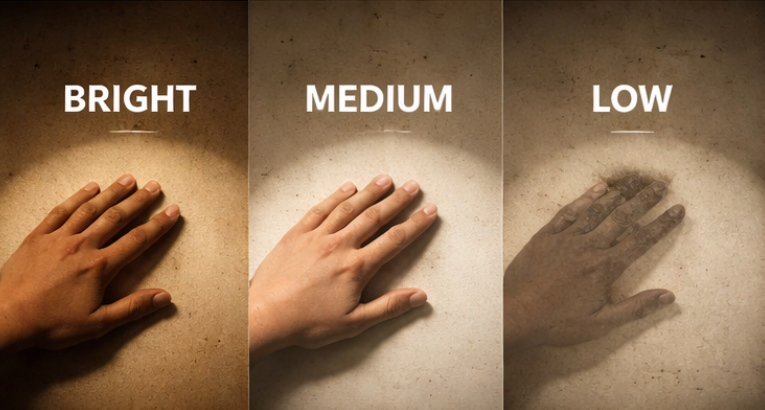
Low light ≠ dark.
Real reference:
- Bright light → strong, sharp shadow
- Medium light → soft shadow
- Low light → barely any shadow
If you want a deeper breakdown of how indoor light actually works, read this complete guide on indoor plant light requirements.
Most homes looking for plants for dark rooms or low light houseplants fall into this trap:
- More than 1–2 meters from a window
= not enough light—even for “low light plants”
Key rule:
If you can’t see a clear shadow of your hand → your plant is struggling.
Low Light Plant Lists
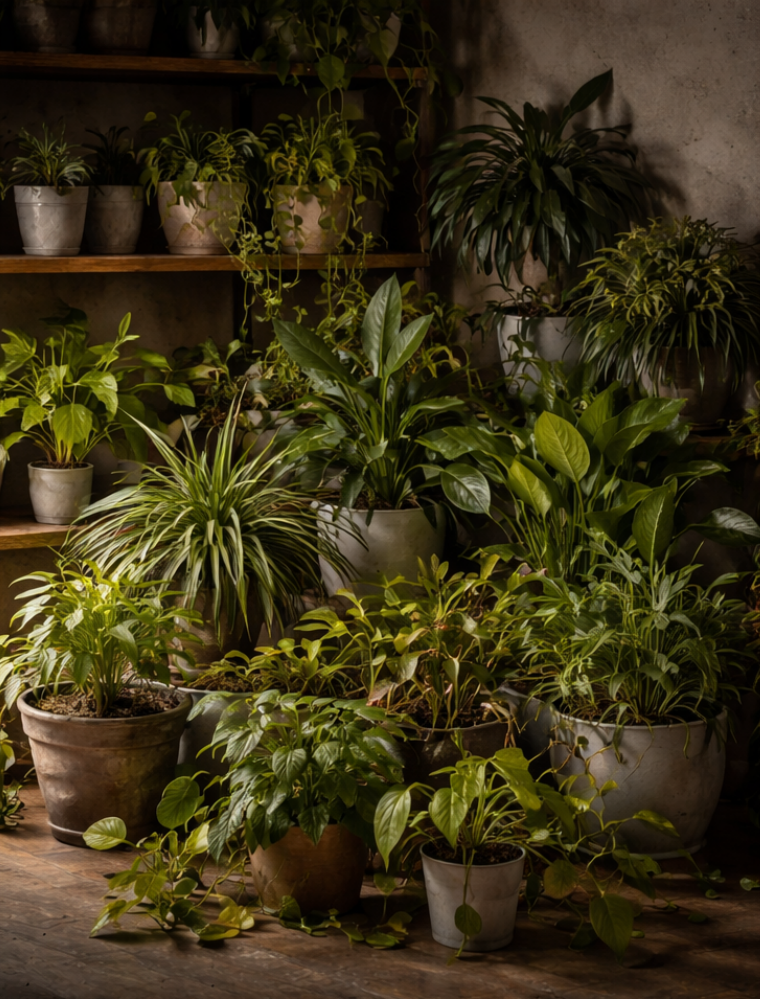
Most lists give you 15–20 plants.
That’s not helpful—that’s dilution.
If a plant truly handled low light well, you’d see it everywhere indoors thriving.
You don’t.
That’s why this list is short.
The Only Low Light Plants Worth Buying
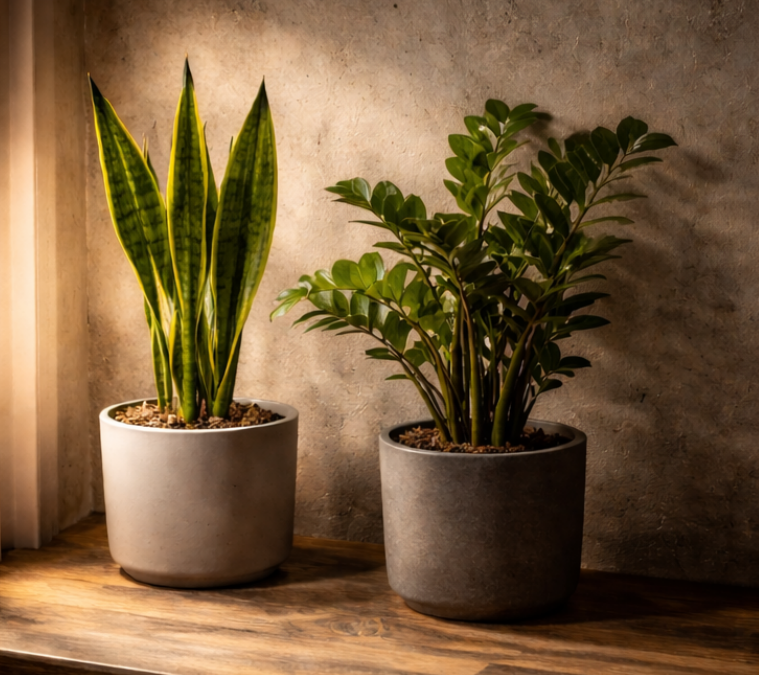
These are the only easy indoor plants for low light that consistently outperform the rest.
1. Snake Plant (Sansevieria)
Why people think it works:
- Extremely tolerant to low light and drought
- Keeps its structure longer than most plants
Where it fails:
- Growth is almost zero in very low light
It survives. It doesn’t thrive.
2. ZZ Plant (Zamioculcas zamiifolia)
Why it works:
- Stores energy in thick roots (rhizomes)
- Handles neglect very well
Where it fails:
- Very slow growth in low light
- Can “look fine” while doing nothing
For full care instructions, check this ZZ plant care guide for beginners.
3. Pothos (Epipremnum aureum)
Why it works:
- Adapts quickly
- Forgiving with care mistakes
What actually happens in your home:
- Loses variegation in low light
- Becomes long and sparse
If it’s stretching, it needs more light.
If you’re planning to keep one, here’s a complete pothos plant care guide for indoor conditions.
4. Cast Iron Plant (Aspidistra elatior)
Why it works:
- Known for surviving dark interiors
Where it fails:
- Extremely slow growth
- Not visually “full” or lush
5. Peace Lily (Spathiphyllum)
Why it works:
- Tolerates lower light than most tropical plants
Where it fails:
- Stops flowering in low light
- Declines if conditions are too dim
If you want it to actually thrive, follow this complete peace lily care guide for indoors.
Plants You Should NOT Buy for Low Light (Even If Pinterest Says So)
These plants are constantly recommended as “low light”—and they’re the reason most people think they’re bad with plants.
This is where most people fail.
Monstera
Fiddle Leaf Fig
Succulents / Cactus
Rubber Plant
If your plants keep struggling, here’s exactly why indoor plants die and how to prevent it.
👉 These need way more light than you think
Typical result:
- Small leaves
- Weak growth
- Leaf drop
It’s not that you’re bad with plants
it’s the wrong environment.
👉 And even when your plants survive, your space can still look messy if the layout is wrong.
See: Indoor Plant Decor Mistakes That Make Your Home Look Messy (Even If Your Plants Are Healthy)
The Only 3 Real Strategies (If Your Space Is Dark)
No fluff. Just reality.
Option 1: Move the plant closer to the window
Most effective and free
Even 50–100 cm closer makes a real difference.
👉 If you’re not sure where that “better spot” actually is, this explains it clearly:
Better Ways to Place Indoor Plants (Where to Place Plants So They Actually Thrive, Not Just Look Good)
Option 2: Accept slower, worse growth
It works—but adjust expectations
Your plant:
- Survives
- But won’t look like Pinterest
👉 But even in low light, you can still make your space look good—here’s how: Living Room Plant Makeover Ideas (Before & After)
👉 Start with the easiest upgrade possible:
Empty Corner to Plant Corner (Before & After Ideas)
👉 If your space still feels awkward even after adding plants, the issue is usually layout—not light.
See: First Apartment? 5 Plant Layout Fixes That Change Everything
Option 3: Use a grow light
The only way to truly fix low light
Not optional if:
- Your space is genuinely dark
- You want real growth
Early Signs Your Plant Is Struggling (Don’t Ignore These)
Don’t wait until it dies.
Watch for:
- Long, weak stems
- Smaller leaves
- Faded color
- Leaning toward the window
That’s not normal growth
That’s lack of light
Bottom Line
Low light plants don’t solve low light.
They just tolerate it better.
If you want plants that:
- Grow
- Look full
- Stay healthy
Light is the #1 variable. Always.
If you’re just getting started, this complete indoor plant care guide will help you avoid the most common mistakes.