
TL;DR
- Most plants don’t die — they’re just in the wrong spot
- Light drops fast with distance from the window
- Height and obstruction matter more than plant type
- If a plant looks “off”, placement is usually the reason
- Fix placement first — styling comes after
If you’ve ever wondered where to place indoor plants so they actually grow (not just sit there looking “okay”), the answer is simpler than it seems.
It’s not usually watering.
It’s not fertilizer either.
It’s where the plant lives.
This applies whether you’re figuring out where to place indoor plants in a small apartment or just trying to find the best spot for light in your home.
When Everything Seems “Right”… But Nothing Improves
You water on time.
You picked a plant that was supposed to be “easy.”
Maybe you even repotted it.
And still:
A plant that hasn’t grown in months.
Another that looked great at first… then slowly declined.
Leaves drop. Growth stalls. The whole thing feels off.
At some point, it starts to feel like you’re the problem.
Like you’re just bad with plants.
The plant is just not getting what it needs from that spot — even if it looks fine.
Where Is the Best Place to Put Indoor Plants?
The short answer if you’re wondering where to put plants indoors for light:
👉 The closest place to a window where the plant still fits naturally.
Not the prettiest corner.
The place where light actually reaches the leaves.
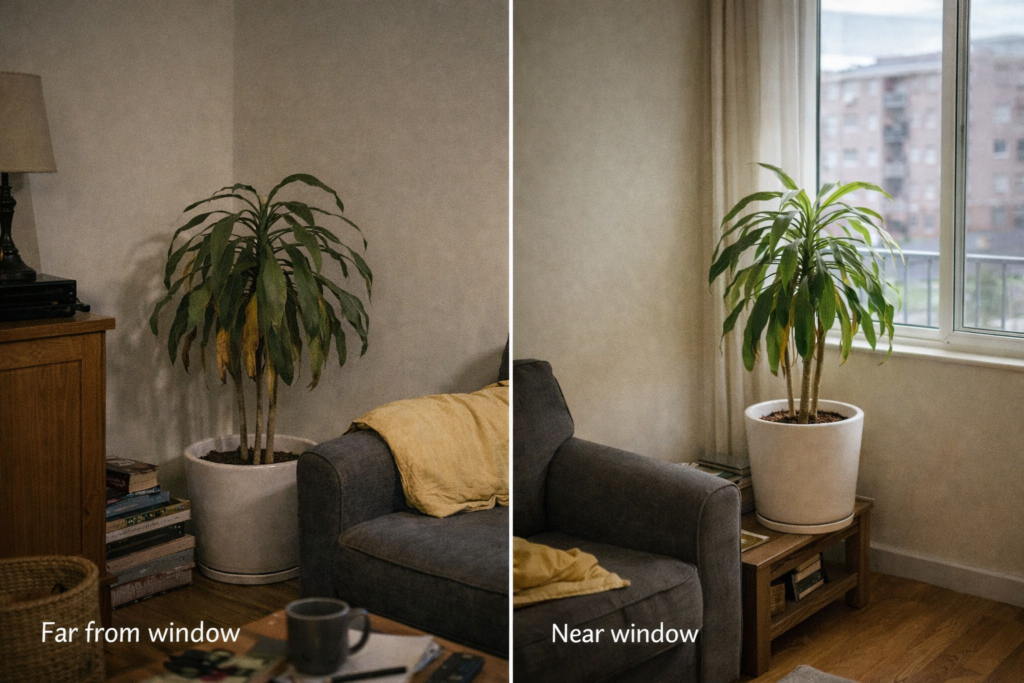
This is where a lot of setups quietly fail:
we choose the location first, then try to make the plant work there.
That works visually — but not biologically.
How Far From a Window Should Plants Be?
Light weakens faster than most people expect.
Even moving a plant 1–2 ft (30–60 cm) closer to a window can noticeably change how it grows.
Stand where your plant is.
Can it clearly “see” the window without walls, furniture, or decor blocking the view?
If not, that spot functions as low light — even if the room itself feels bright.
This is why “best place for indoor plants in low light” often leads to frustration:
many of those spots aren’t truly low-light-friendly — they’re just far from usable light.
This is one of the biggest factors behind how far from a window plants can actually survive — and still grow.
The Shelf Trap
Shelves look like the perfect place for plants — but they often cause the same issues explained in Indoor Plant Decor Mistakes That Make Your Home Look Messy (Even If Your Plants Are Healthy).
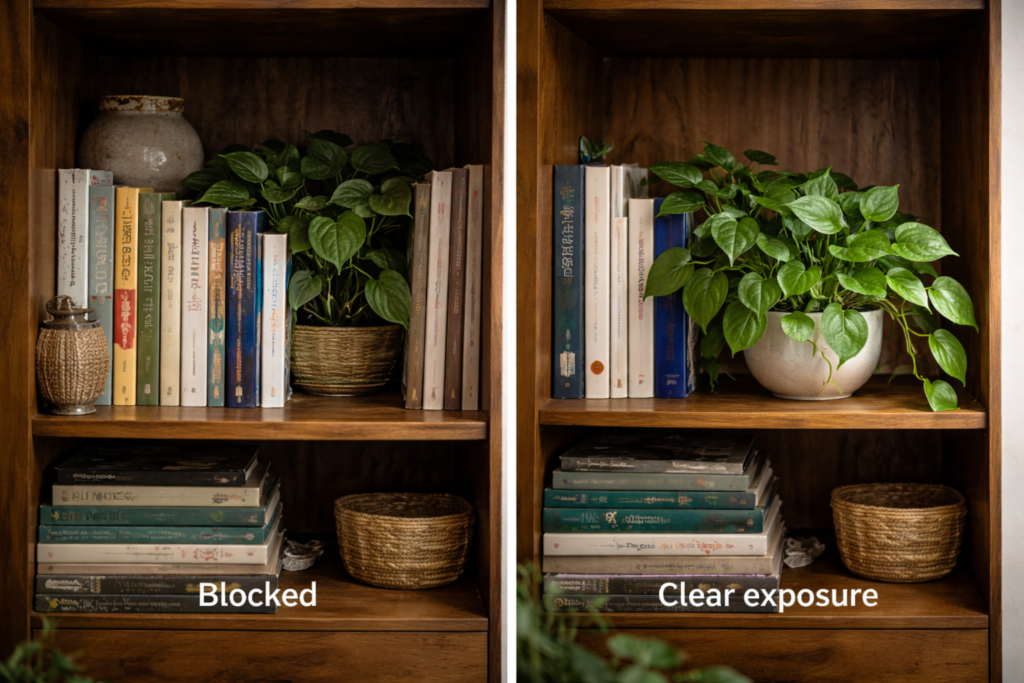
In practice, they often push plants too far from the window or block light from the sides.
What usually goes wrong:
❌ plants placed deep inside shelves
❌ decor sitting in front of leaves
❌ upper shelves getting more light than lower ones
What works better:
✅ plants near the front edge
✅ clear space around the leaves
✅ only true low-light plants further back
If a plant looks good on a shelf for a few weeks and then slowly weakens, placement is usually why.
This is especially common in apartments where shelves end up being the default place for plants.
Why Height Changes Everything
This is something most people don’t notice until they move a plant and suddenly it starts growing again.
In the same room:
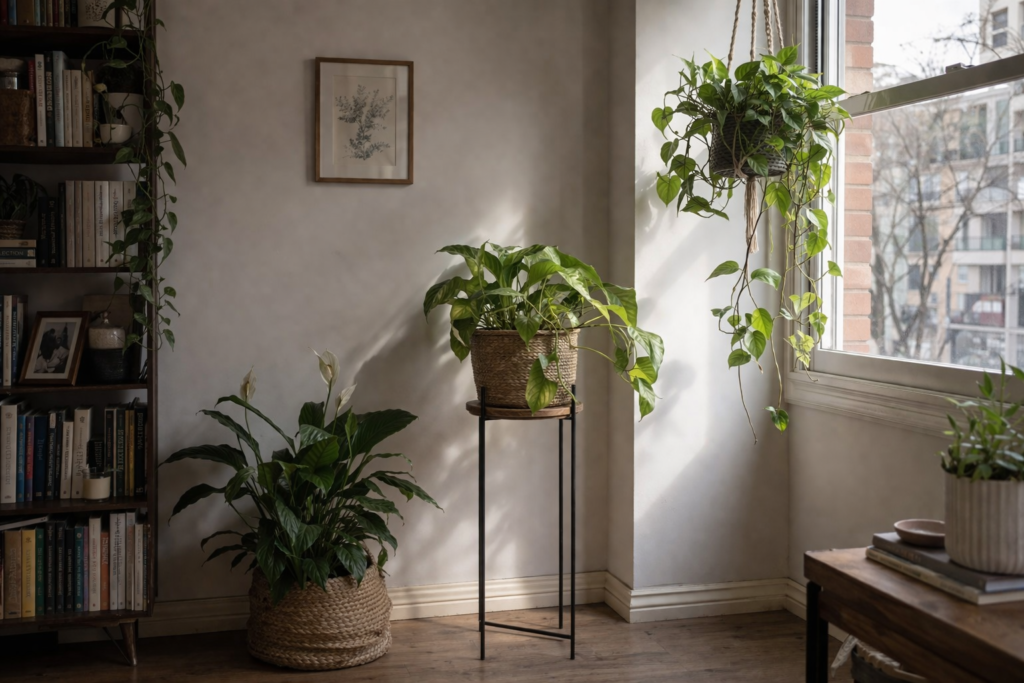
- a plant on the floor can sit below the light path
- the same plant on a stand gets clearer exposure
- a hanging plant can receive the most consistent light
If a plant looks weak, lifting it 12–24 inches (30–60 cm) is often enough to change how it responds.
Why Room Layout Matters More Than You Think
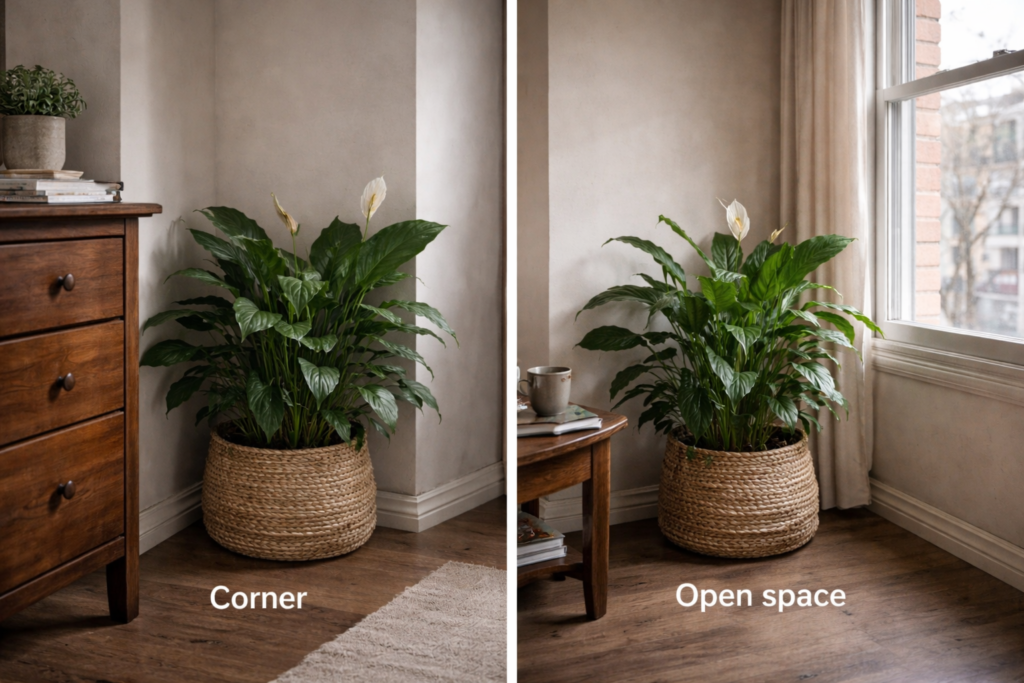
Two spots with the same light can still produce different results.
Airflow, nearby walls, and how open the space is all affect how a plant grows.
A plant next to a wall corner behaves differently than one near an open window area.
This is why copying plant placement from photos often doesn’t work —
the surrounding space changes everything.
The “Looks Fine But Isn’t” Setup
Some placements don’t fail dramatically.
They just… never improve.
You don’t get new growth.
Leaves stay small.
Color looks slightly dull.
Over time, the plant looks tired — even though it’s still alive.
Common signals:
- leaning toward light
- little or no new growth
- smaller leaves than before
- faded or dull color
👉 These are placement signals, not random issues.
Wrong vs Right Placement
A good placement doesn’t always look “perfect” at first —
but the plant improves instead of slowly declining.
❌ Usually leads to decline
- dark corners
- far from windows
- blocked by furniture or decor
- chosen for symmetry
✅ Supports actual growth
- near natural light
- adjusted height
- space around leaves
- chosen based on conditions, not just looks
A Better Way to Think About It
Instead of asking:
“Where can I put this plant?”
Flip it to:
“Which spots in my home actually support a plant?”
Then choose plants based on those conditions.
That one shift avoids a lot of trial and error — and a lot of wasted plants.
The 3-Step Placement Fix (Do This Today)
If something feels off, start here:
Step 1 — Improve light access and positioning within the space
Move the plant closer to a window or into a clearer line of sight
Step 2 — Adjust height
Use a stand, shelf position, or hanging spot to improve exposure
Step 3 — Remove obstructions
Make sure leaves aren’t blocked by objects nearby
No new plants needed — just a better setup.
Common Placement Mistakes
- treating all spots in a room as equal
- underestimating how fast light drops with distance
- prioritizing symmetry over plant health
- leaving plants where they “fit” instead of where they grow
Fixing these usually solves more than tweaking care routines.
If Your Plants Still Struggle
If you’ve already adjusted placement and nothing changes, the plant may be stressed from before.
Start here:
- Why Indoor Plants Die (And How to Prevent It)
- Indoor Plant Light Requirements (Complete Guide That Actually Makes Sense)
Final Thought
A lot of plant problems look like care issues.
But often, the plant has been slowly struggling in the same spot for weeks or months.
Once you change that:
- growth becomes visible again
- leaves look healthier
- the whole space feels more natural
If something isn’t working, don’t replace the plant right away.
Change the conditions first.