
TL;DR
- Clutter—not plants—is what makes your space look messy
- Bigger plants + fewer pieces = cleaner look instantly
- Random placement kills aesthetics more than “bad styling”
- Matching pots isn’t required—but visual balance is
- Most “ugly plant setups” are actually layout problems, not plant problems
Stop Blaming Your Plants—This Is Why Your Home Still Looks Messy
Most people think their home looks messy because:
- they chose the wrong plants
- they don’t have a “decor eye”
- or they need better pots
That’s not it.
👉 This is NOT the problem.
The real issue is how plants are arranged in space.
And if this sounds familiar, you’re not alone:
You bought more plants.
You tried to make it feel cozy.
But somehow…
👉 it started to look worse.
You can have beautiful plants—perfectly healthy—and still make your room feel chaotic.
And the worst part?
You won’t notice it… until you fix it.
The Worst Setup I See All the Time (And Why It Fails)
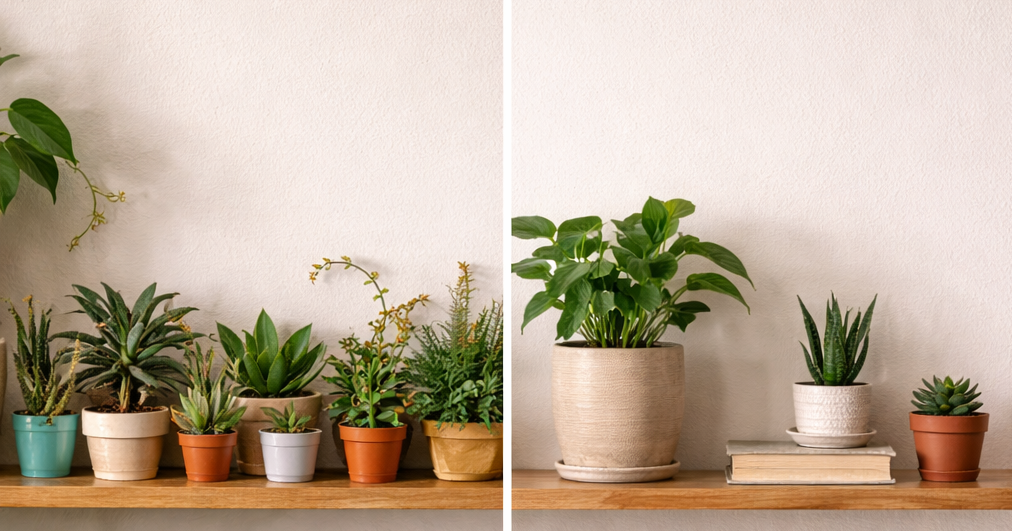
Before we get into the mistakes, look at this:
A shelf.
10 small plants.
Different pots.
All lined up.
At first, it feels like:
👉 “This looks full and lively.”
But stay there for 5 seconds.
Your eyes don’t land anywhere.
Nothing stands out.
Everything blends together.
👉 That’s clutter.
Not because the plants are bad—
but because there’s no structure.
Now imagine instead:
- 1 slightly larger plant
- 2 smaller ones offset at different heights
- empty space around them
Same plants.
Completely different result.
👉 If this already feels familiar, you’ll probably recognize even more of these patterns here: Indoor Plant Styling Mistakes That Make Your Home Look Messy (And You Don’t Even Notice)
1. Too Many Small Plants (Why Plants Make Your Room Look Cluttered)
Why it makes your space look messy
A bunch of small plants scattered everywhere = visual noise.
It breaks flow.
It feels accidental.
It looks like you ran out of space—not designed it.
What most people do
- 8–12 small pots across shelves, tables, windowsills
- No focal point
- Everything fighting for attention
What actually works
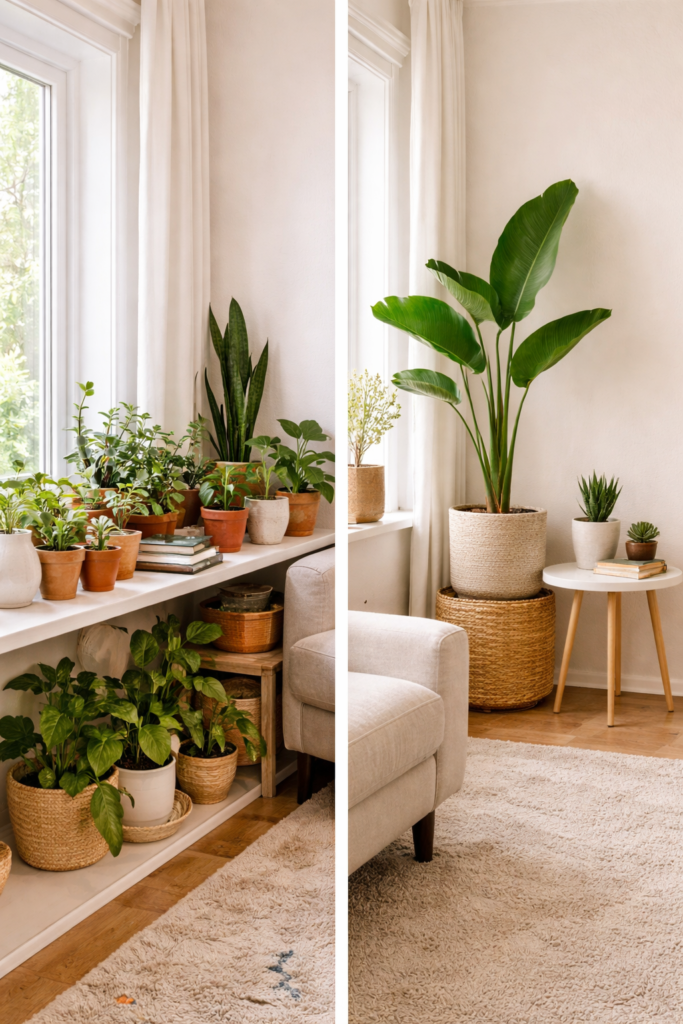
👉 Fewer plants, stronger presence
- 1 larger plant (2–4 ft / 60–120 cm)
- 2–3 supporting plants at different heights
Quick fix
- Group small plants together into one cluster
- Or remove half of them (yes, really)
2. No Focal Point (Everything Feels Random)
Here’s where most people get it wrong:
They place plants based on empty spots, not visual structure.
Why this fails
Without a focal point:
- your eye doesn’t know where to land
- everything feels scattered
- the room looks unfinished
What to do instead
👉 Every plant setup needs a “main character”
Examples:
- A tall plant in a corner (see how a single snake plant can fix a small corner setup)
- A statement plant near a window
- A larger pot anchoring a space
Then:
- Smaller plants support it
- Not compete with it
Think like this:
👉 One plant leads. The rest follow.
3. Pots That Don’t Relate to Each Other
This is subtle—but powerful.
The mistake
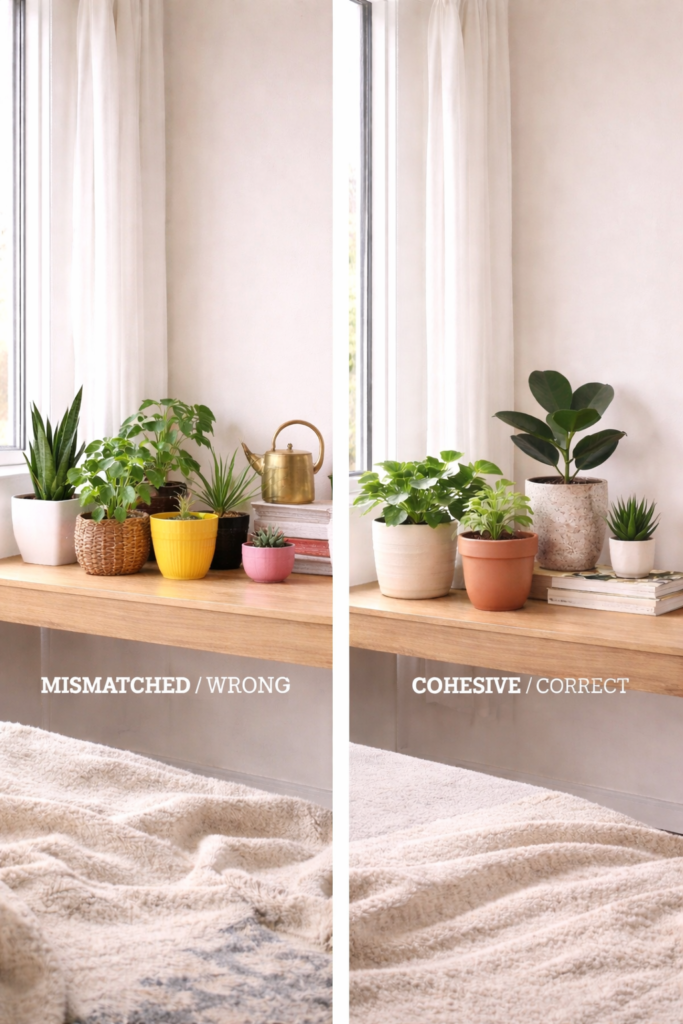
Mixing:
- random colors
- random materials
- random sizes
Result:
👉 It looks chaotic, even if each pot is “nice”
This is NOT the problem:
You don’t need perfectly matching pots.
The real rule:
👉 They need to feel connected
Easy ways to fix it
Pick ONE of these:
- Same color family (all neutrals, all earthy tones)
- Same material (ceramic, terracotta, matte)
- Same style (modern, rustic, minimal)
Quick example
Wrong:
- shiny white pot + woven basket + neon planter
Right:
- matte white + off-white + light wood tones
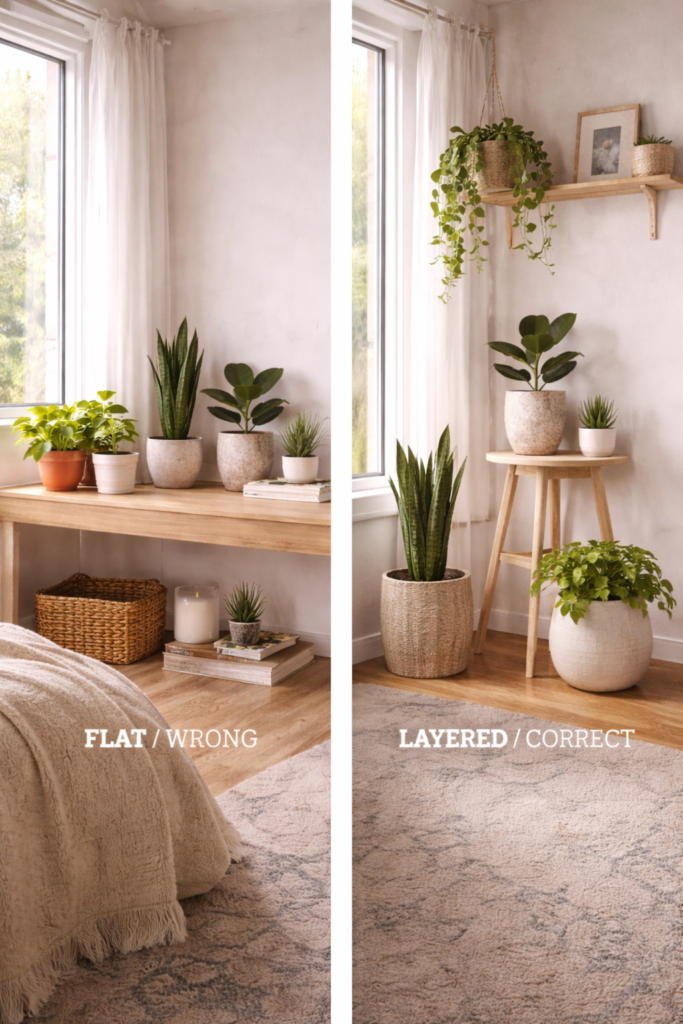
4. Plants Placed at the Same Height (Flat = Boring + Messy)
This is the part no one tells you:
👉 Flat layouts feel cluttered—even when they’re minimal.
What this looks like
- all plants on one shelf
- all pots on the same surface
- no vertical variation
Why it fails
Your eye scans horizontally only → feels dense and crowded.
Quick reality check (try this right now)
Walk into your room.
Look at your plants.
Do your eyes know where to go first?
Or do they just… wander?
👉 That’s a layout problem.
What works instead
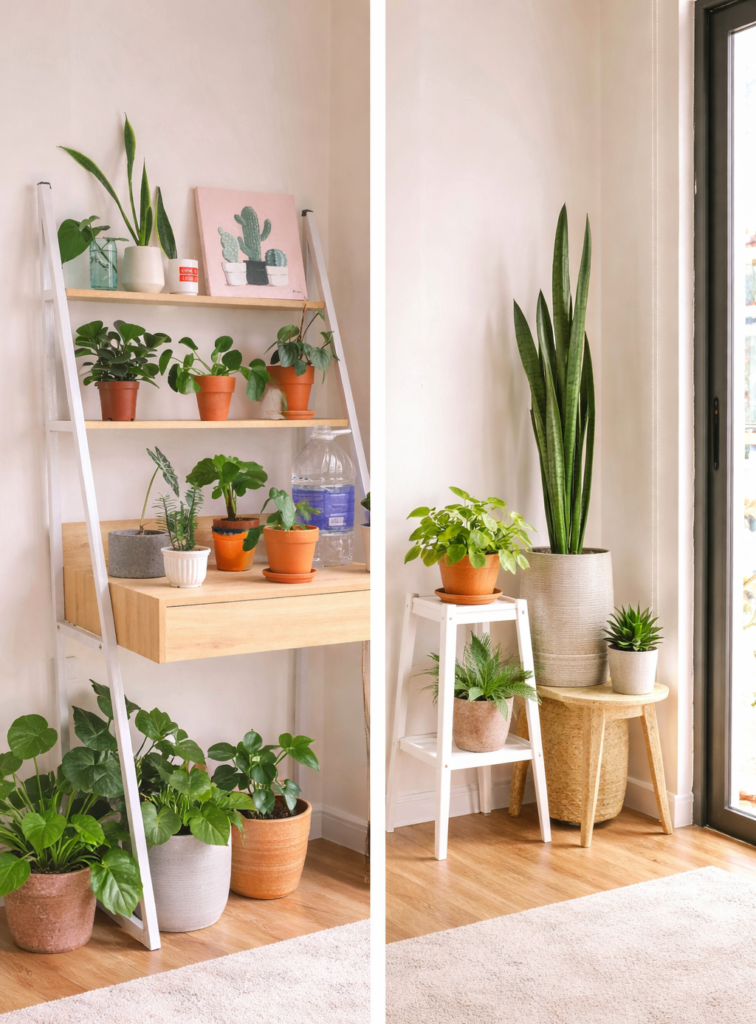
👉 Create vertical layers
- Floor plant
- Mid-level (stand / stool)
- Shelf or hanging plant
Rule of thumb
At least 3 height levels in any plant setup.
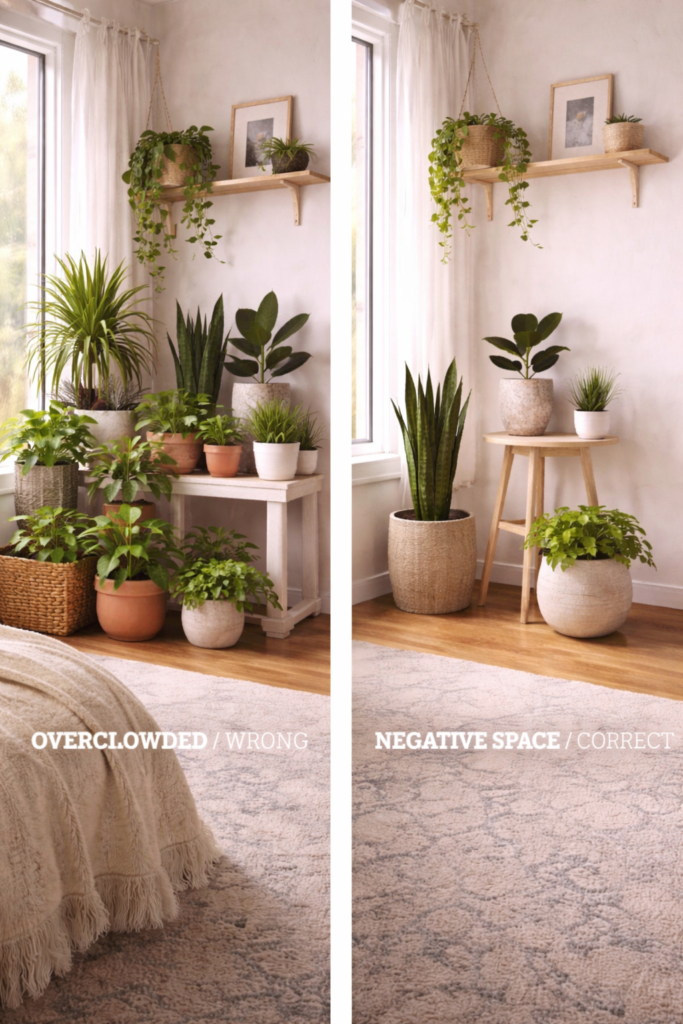
5. Ignoring Negative Space (The Biggest Hidden Mistake)
Most people think:
👉 “More plants = better”
Wrong.
This is NOT the problem:
You don’t need more plants.
The real issue:
👉 No breathing room
Why it matters
Negative space:
- makes plants stand out
- creates calm
- reduces visual stress
Without it:
👉 everything blends into clutter
Mini scenario
You add one more plant.
Then another.
Then one for that empty corner.
Now step back.
👉 It doesn’t feel cozy anymore. It feels crowded.
Quick fix
- Leave empty areas on purpose
- Don’t fill every corner
- Let each plant “exist”
6. Plants in the Wrong Place (Looks Bad and Kills Them)
This one is sneaky.
A plant in the wrong spot:
- grows poorly
- leans awkwardly
- drops leaves
And suddenly your space looks messy… even if layout is good.
Common mistake
Choosing location based on decor—not light.
👉 If you want to fix this properly (not just guess), this guide shows exactly how placement affects plant growth and how to choose the right spot:
→ Better Ways to Place Indoor Plants (Where to Place Plants So They Actually Thrive, Not Just Look Good)
👉 If your plants keep struggling no matter what you do, read: Why Indoor Plants Die (And How to Prevent It)
What to do instead
- Place plants where they actually thrive
- Then style around that
If you’re unsure:
👉 Read: Indoor Plant Light Requirements (Complete Guide That Actually Makes Sense)
7. Treating Every Spot Separately (How to Arrange Indoor Plants Without Clutter)
Here’s a quick story:
You fix your shelf.
You fix your corner.
You fix your desk.
Individually? They look good.
Together?
👉 Still messy.
Why?
Because they don’t connect visually.
What creates flow
- Repeating colors
- Repeating pot styles
- Repeating plant types or shapes
Simple rule
👉 Every setup should feel like part of the same system
8. Dead or Struggling Plants (Instant Mess Signal)
Even one unhealthy plant can ruin everything.
Why?
Your brain reads it as:
- neglect
- decay
- disorder
Quick signs to watch
- yellow leaves
- brown edges
- drooping stems
👉 If you see these:
Fix the plant—or remove it temporarily.
Helpful guides:
- Why Indoor Plants Turn Brown (It’s NOT What You Think)
- Yellow Leaves on Indoor Plants: Causes and How to Fix Them
Final Thought: Clean Plant Decor Isn’t About Perfection
It’s about intention.
You don’t need:
- expensive pots
- rare plants
- perfect styling
You need:
- structure
- spacing
- hierarchy
👉 That’s what turns “random plants” into a clean, styled space.
Quick Reset Checklist
If your space feels messy, fix this first:
- Remove 30–50% of small plants
- Create 1 clear focal point
- Use 2–3 consistent pot styles
- Add height variation
- Leave empty space
Do just that…
…and your space will look completely different within minutes.