
TL;DR
- Most empty corners don’t need furniture — they need vertical plant layering
- The #1 mistake isn’t lack of plants… it’s bad placement
- Use 3-height structure (floor + mid + hanging) for instant transformation
- Small corners work better with fewer, larger elements (not clutter)
- Light direction matters more than plant type — always design around light first
- These ideas work especially well for small apartments and tight spaces
Why Your Empty Corner Still Looks “Off” (Even After Adding Plants)
You bought a plant. Maybe two. Put them in the corner.
And it still looks… empty.
You tried fixing it… and somehow it made it worse
Here’s the truth:
This is NOT a plant problem. It’s a composition problem.
Most people treat plants like objects.
Designers treat them like layers.
👉 If you want to see how these styling mistakes show up in real homes, read: Indoor Plant Styling Mistakes That Make Your Home Look Messy (And You Don’t Even Notice)
That’s why your corner feels flat.
This Is Why Your Corner Still Looks Empty (And How to Fix It Instantly)
If your corner has only one height level, it will always look unfinished.
The structure:
- Low layer → floor plant (anchor)
- Mid layer → stool, stand, or shelf
- Top layer → hanging or trailing plant
This creates depth — not clutter.
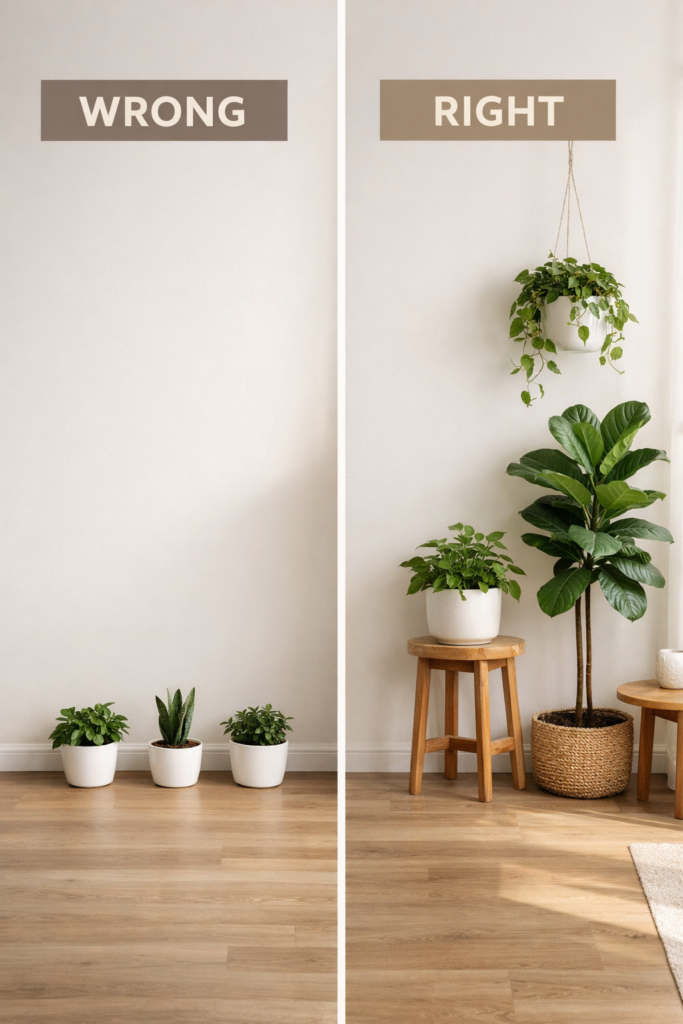
Wrong vs Right
Wrong:
- 3 small pots on the floor
- Same height, all look equally small and insignificant
Right:
- 1 tall plant (floor)
- 1 elevated plant (stand)
- 1 trailing plant (above)
This is where most people get it wrong:
They add more plants instead of more levels
1. The “Single Statement Plant” Transformation
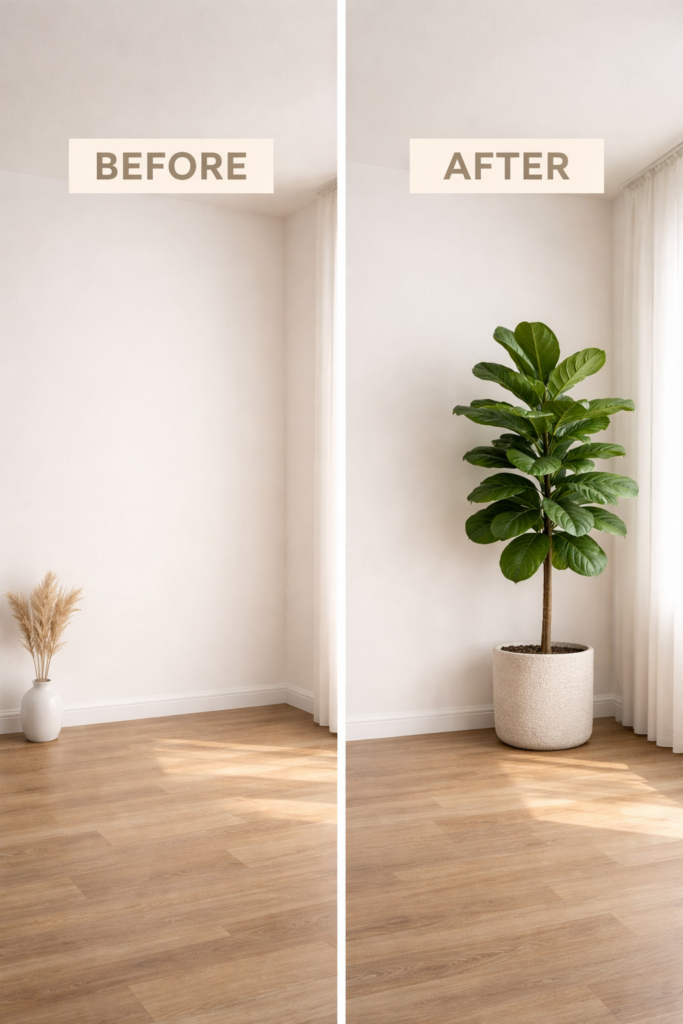
Before:
- Empty corner
- Maybe a small decor item
After:
- One large plant (5–6 ft / 150–180 cm) — especially effective in tight corners when placed correctly (see this snake plant corner fix)
👉 if you’re not sure which plants are beginner-friendly, start here - Clean pot, neutral tones
Why it works:
- Creates a focal point
- No visual noise
👉 Best for: minimal, modern spaces
Counterintuitive truth:
One big plant > five small ones
2. The Cozy Reading Corner Upgrade
Before:
- Dead space next to a chair
After:
- Armchair + floor lamp
- 1 tall plant behind
- 1 small plant on side table
Why it works:
- Plants soften the space
- Makes the corner usable
3. The Vertical Shelf + Plants Combo
Before:
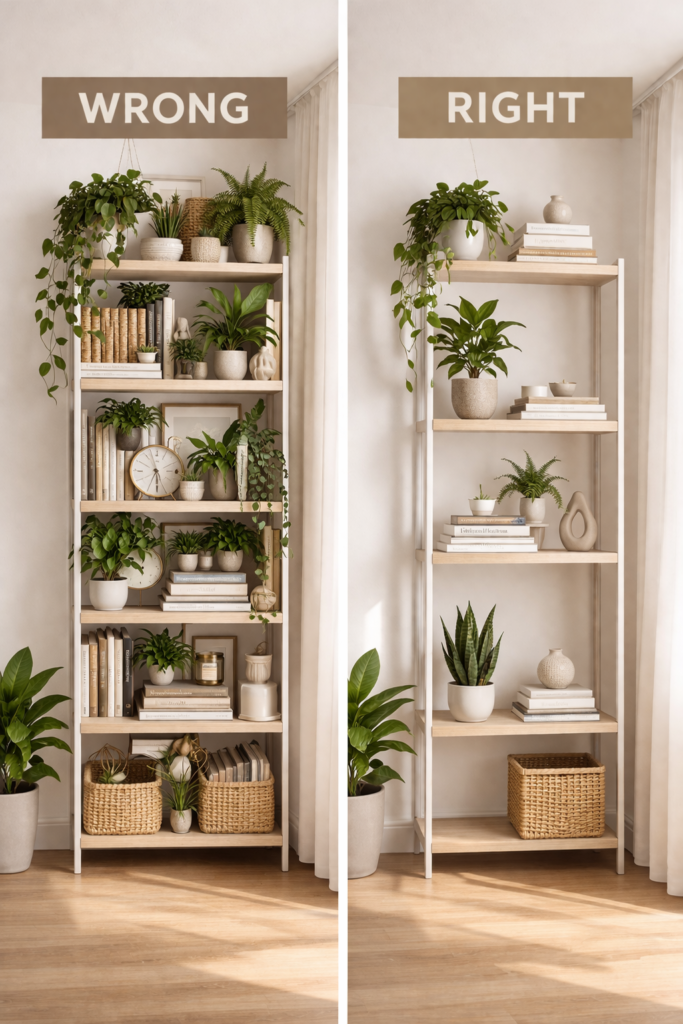
- Shelf filled with too many items
After:
- Slim vertical shelf
- Mix of plants + books + decor
Mistake to avoid:
- Filling every shelf
This is NOT about adding more items
It’s about creating breathing space
4. The Hanging Plant Illusion Trick
Before:
- Small, awkward corner
After:
- Ceiling hook
- Trailing plant cascading down
Why it works:
- Draws the eye upward
- Makes the space feel taller
👉 Especially powerful in small apartments
5. The “Plant Cluster” Done Right
Most people get this completely wrong.
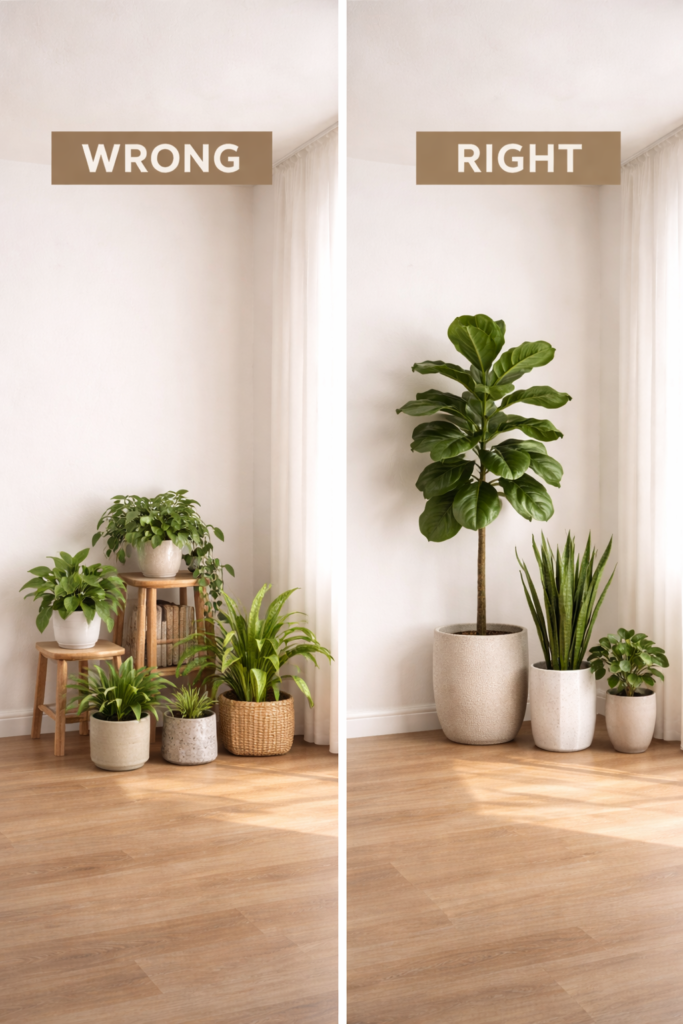
Wrong:
- 5+ small plants scattered randomly
Right:
- 3 plants max
- Different heights
- Same color palette
Rule:
If everything stands out, nothing stands out
Most people skip this next part… and regret it later
6. The Light-Driven Layout (Game Changer)
This is the part no one tells you:
Your layout should follow light — not aesthetics
👉 If you’re not sure how to actually choose the right spot for each plant based on light, distance, and positioning, this guide explains it step by step:
Better Ways to Place Indoor Plants (Where to Place Plants So They Actually Thrive, Not Just Look Good)
👉 If you’re not sure how to read light in your space, see our full guide on indoor plant light requirements
Before:
- Plants placed based on symmetry
After:
- Plants positioned based on window direction
Example:
- Bright window → tall plant beside it
- Low light corner → use low-light plants (like snake plant or ZZ plant)
👉 see the full list of low-light plants that actually survive
This prevents:
- dying plants
- awkward repositioning later
7. The Minimal + Warm Corner
Before:
- Cold, empty space
After:
- 1 plant
- 1 warm light source (lamp or candle)
- 1 textured element (rug or basket)
Why it works:
- Plants alone don’t create warmth
- Texture + light complete the look
8. The “Before/After Illusion” Trick Designers Use
Designers don’t just add plants.
They remove distractions.
Before:
- random decor
- visual noise
After:
- fewer objects
- stronger plant presence
Subtraction creates impact faster than addition
9. The Budget-Friendly Transformation (Under $50)
You don’t need a full redesign.
Simple setup:
- 1 medium plant
- 1 plant stand
- 1 hanging planter (optional)
Result:
- layered look
- intentional space
Common Mistakes That Kill the Look
- Plants all at the same height
- Ignoring natural light (this is one of the biggest reasons plants die indoors)
- Too many small pots
- No contrast (everything looks the same)
- Treating plants as decoration instead of structure
👉 Want to see how these mistakes make your space look messy (and how to fix them step by step)?
Read: Indoor Plant Decor Mistakes That Make Your Home Look Messy (Even If Your Plants Are Healthy)
Quick Setup Formula (Steal This)
If you don’t want to overthink it:
- Pick one tall plant
- Add one mid-height element
- Add one trailing plant
- Adjust based on light
👉 use this watering guide to avoid overcorrecting once you place them
Done.
Final Thought
An empty corner isn’t empty.
It’s unfinished.
And the difference between “random plant” and
“designed plant corner” is just structure.