
An empty corner can be one of the hardest spaces in a home to use well. It may have plenty of floor area but still feel disconnected from the rest of the room, or it may simply become a place where furniture and plants are added without a clear purpose.
The better approach is to treat the corner as a space to design rather than a space to fill. A plant corner can become a reading retreat, a compact workspace, a display area, a quiet place to reset, or a dedicated creative space. The plants then become part of the structure of the corner instead of being an afterthought.
The ideas below use different combinations of furniture, built-in elements, shelving, planters, seating, and vertical structures to turn an unused corner into something that feels intentional and connected to the room.
18 Plant Corner Ideas for Different Spaces and Needs
Not every empty corner needs the same solution. Some benefit from layers of plants at different heights, while others work better when a strong architectural element defines the space. The most successful arrangements give the corner a clear role while using plants to connect that role to the rest of the room.
Sculptural Plant Corners
Create a Sculptural Plant Display with Columns
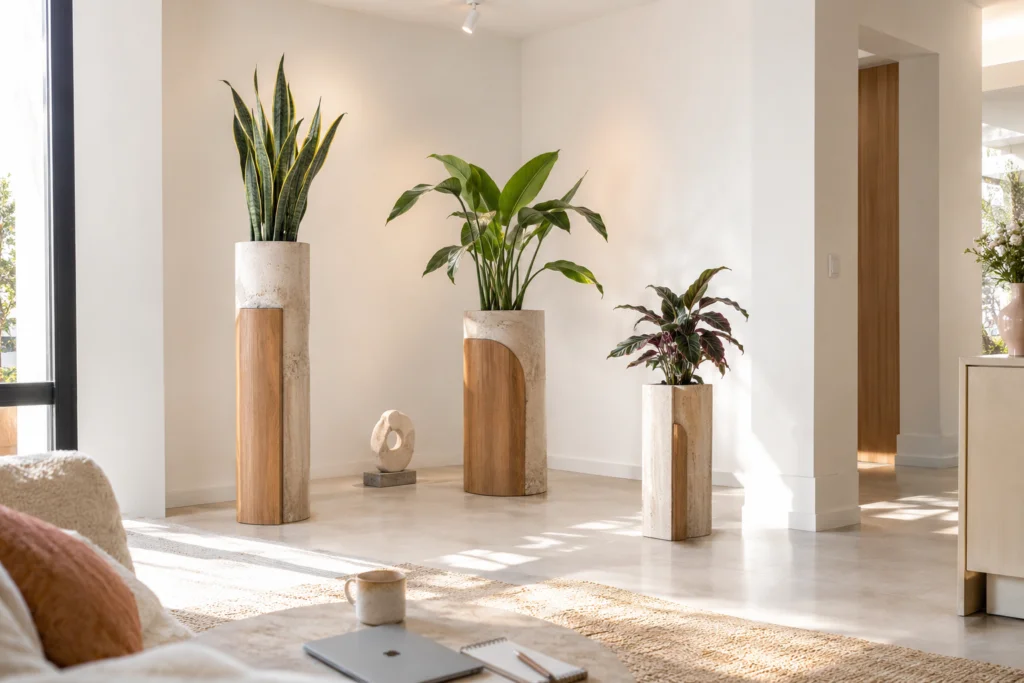
This corner turns individual plants into sculptural objects by placing them on tall wooden columns at different heights. Instead of creating a dense collection of greenery, each specimen has enough space around it to stand out as part of the composition.
The variation in height gives the corner a strong vertical rhythm while keeping the floor area open. The columns also make the plants feel intentionally displayed rather than simply arranged around the room.
Best for: Large empty corners where individual plants can be given plenty of visual space.
DIY Ease:
Affordability:
Turn a Corner into a Framed Plant Display
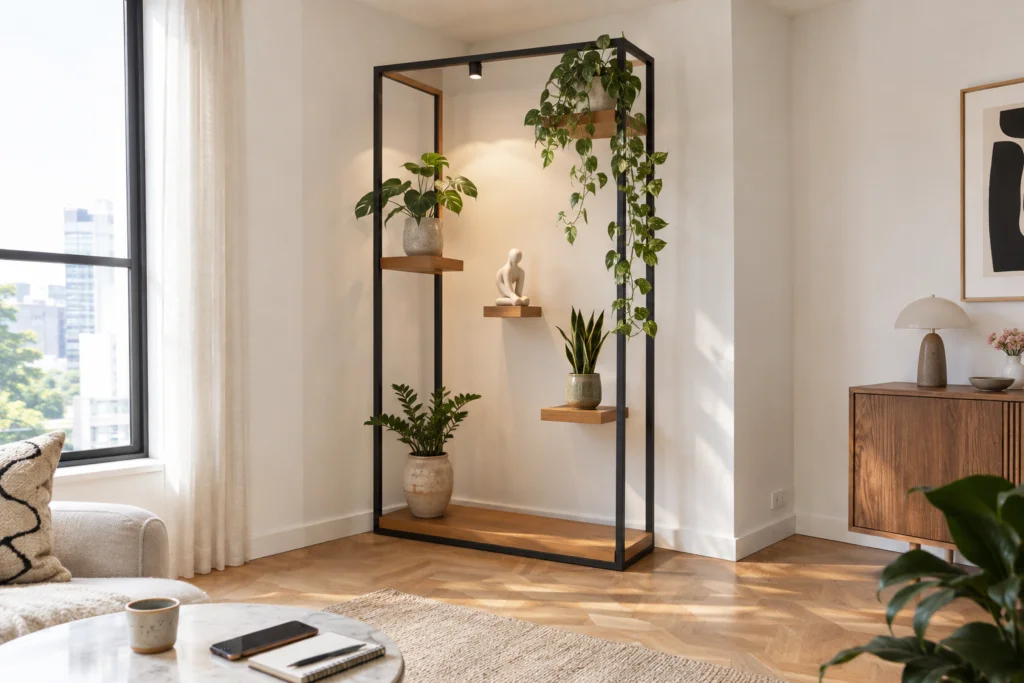
A tall open frame can turn an otherwise ordinary corner into a defined botanical display. Here, individual shelves and hanging plants are integrated into the frame, creating several levels for plants and small objects without visually closing off the space.
The structure gives the arrangement a clear architectural boundary, while the open sides preserve the sense of depth and natural light. The result feels more like a freestanding interior installation than a conventional plant shelf.
Best for: Corners that need a strong vertical focal point without a solid wall or built-in structure.
DIY Ease:
Affordability:
Build a Layered Plant Gallery into the Wall
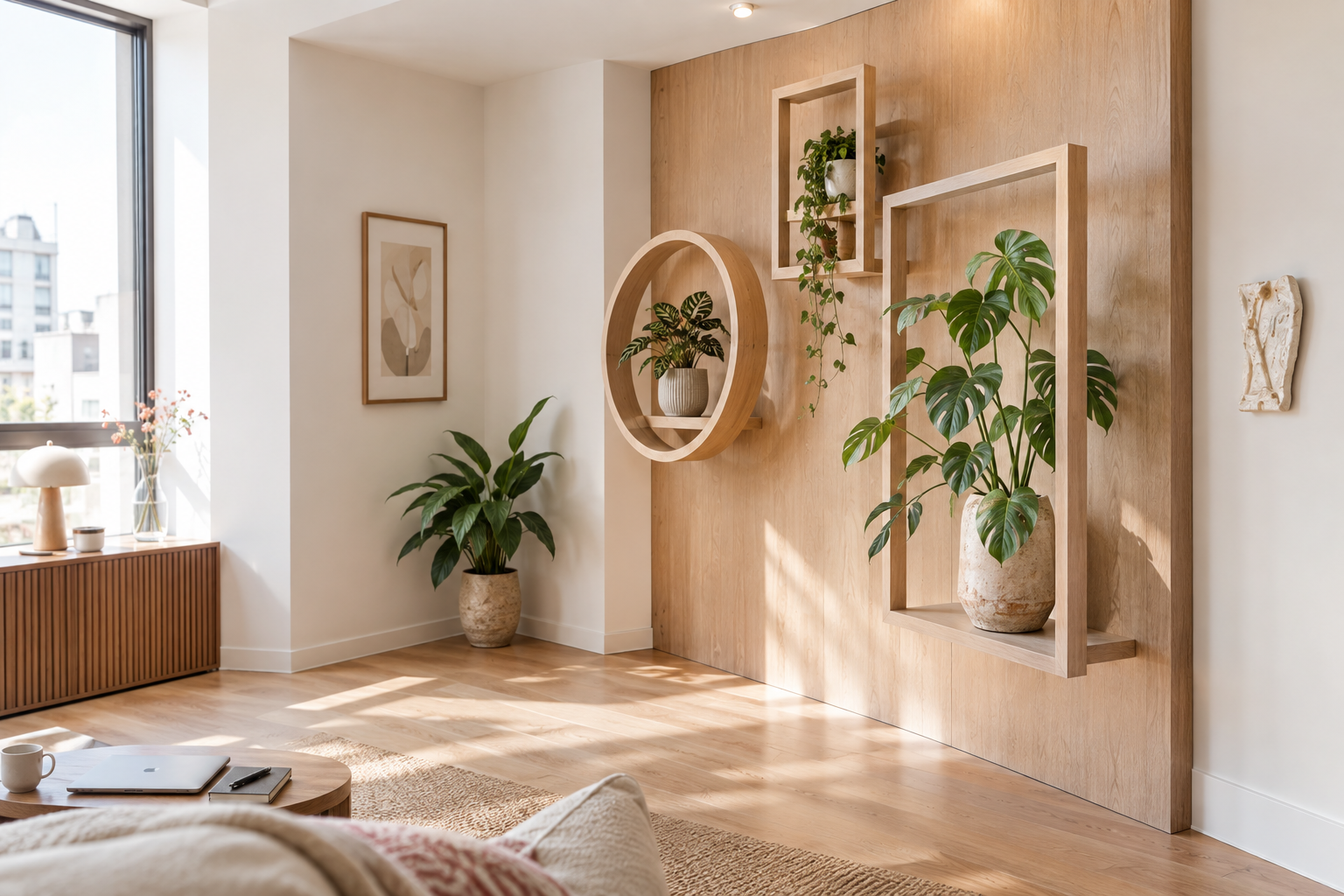
This corner uses framed wall-mounted boxes at different depths to create a three-dimensional plant gallery. Instead of concentrating the greenery on the floor, the installation extends across the wall and gives individual plants their own visual position.
The different frame sizes and depths create layers against the wood wall, turning a previously unused surface into the main feature of the corner. A few floor plants reinforce the composition without overwhelming the wall display.
Best for: Empty wall corners where the vertical surface can become the main display area.
DIY Ease:
Affordability:
Reading Retreats Built Around Plants
A corner can become much more useful when it is designed around a specific activity. For reading, that may mean a comfortable chair or built-in daybed, a small table, appropriate lighting, and plants that frame the space without taking over the seating area.
The goal is not simply to put plants beside a chair. The plants, furniture, and lighting should work together so the corner reads immediately as a place to sit and read.
Frame the Reading Nook with Plant Shelves
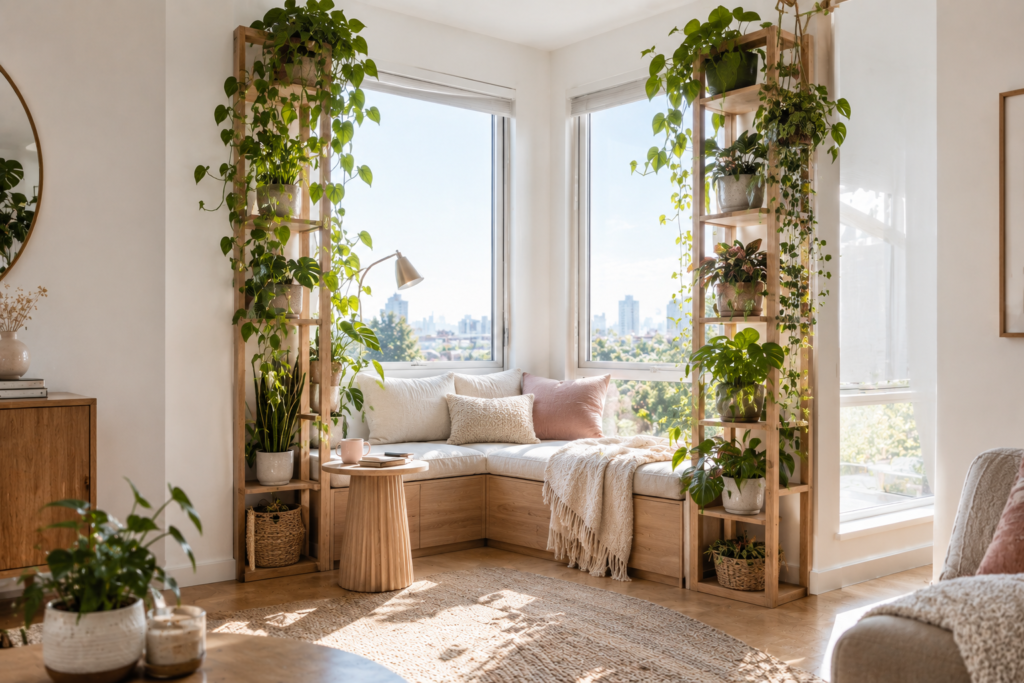
This reading nook uses two tall open plant shelves to frame a built-in window seat, turning the corner into a defined retreat rather than simply placing plants around existing furniture. The shelves rise vertically on both sides of the seating area, creating a clear botanical frame while keeping the center open and usable. For more ways to use windows as planting space, see our window plant shelf ideas.
The plants also reinforce the architecture of the nook. Trailing foliage softens the vertical shelving, while taller specimens give the composition enough height to connect the seating area with the surrounding windows. A small side table and focused lamp complete the reading function without competing with the planting structure.
Best for: bright corners with a deep window seat or built-in seating.
DIY Ease:
Affordability:
Turn an Empty Alcove into a Reading Nook
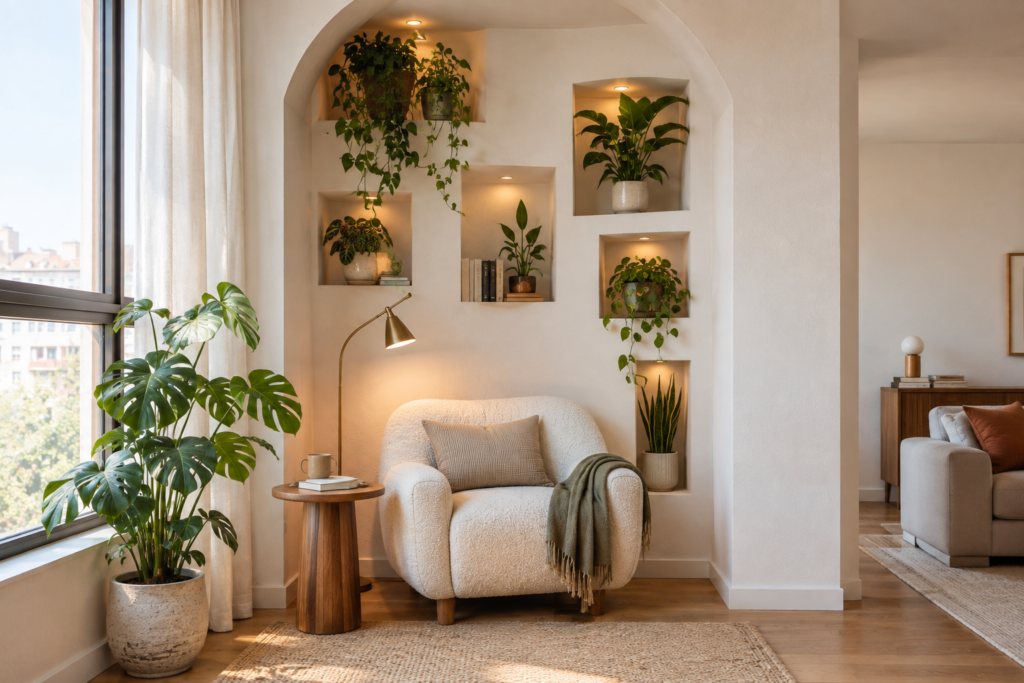
This reading corner uses built-in recessed niches to turn an otherwise empty wall into a dedicated plant display around the seating area. Each niche gives an individual plant its own defined position, creating a structured composition without filling the floor with pots or furniture.
The recessed lighting adds another layer to the design, drawing attention to the plants while reinforcing the feeling that the greenery is part of the architecture. A comfortable chair, small side table, and reading lamp complete the corner without competing with the built-in display.
Best for: Existing alcoves or walls where built-in niches can be added.
DIY Ease:
Affordability:
Create a Hanging Plant Canopy
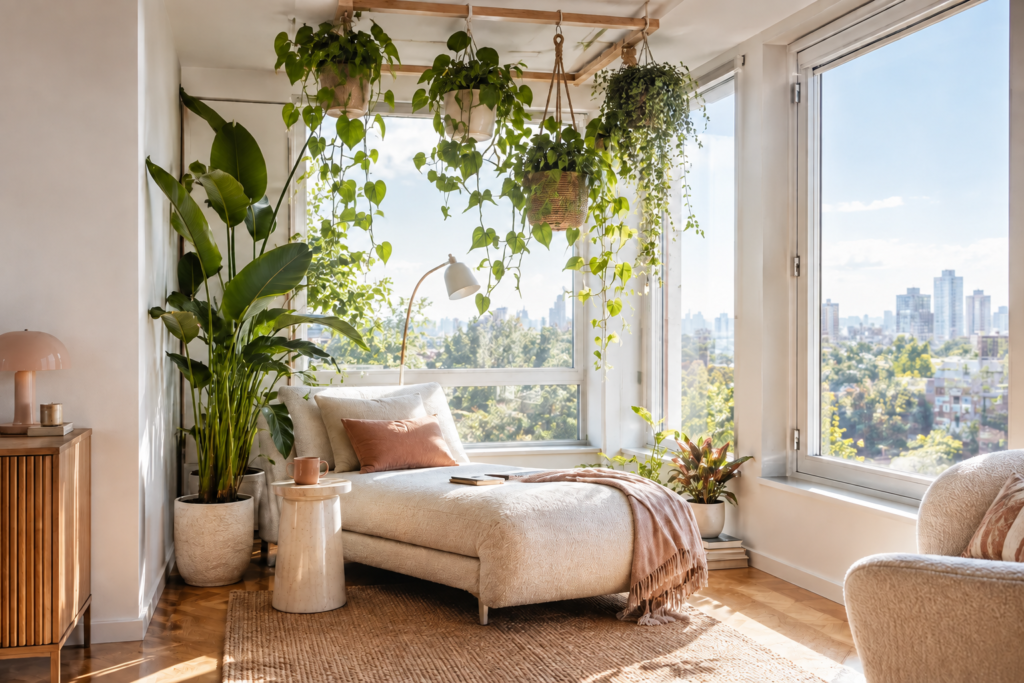
This reading retreat uses a suspended framework of hanging plants to create a canopy over the daybed. For more ways to bring plants overhead, explore our indoor plant canopy ideas. The plants occupy the overhead space rather than taking up additional floor area, making the seating feel visually separated from the rest of the room.
The combination of tall floor plants and trailing foliage creates layers from the floor to the ceiling, while the open sides preserve the bright, airy character of the corner. A focused reading lamp and small side table complete the setup without interrupting the botanical frame.
Best for: Bright corners with enough ceiling height for suspended plants.
DIY Ease:
Affordability:
Compact Workspaces with Integrated Greenery
An unused corner can also provide enough space for a compact workspace. The key is to make the working area clearly functional while using plants to define or soften it.
A desk alone can look like furniture that was pushed into an awkward spot. When greenery is incorporated into the surrounding structure, the workspace becomes a deliberate part of the room instead.
Frame a Workspace with Trellis Plant Panels
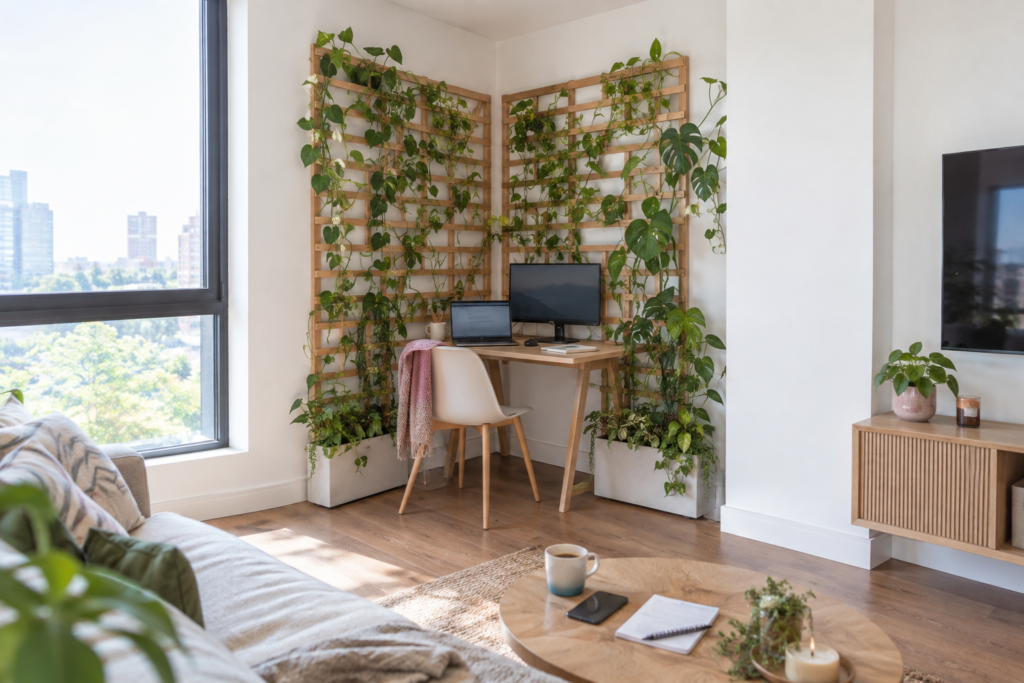
This compact workspace uses two tall trellis panels to define the corner around a small desk, turning an otherwise empty area into a dedicated work zone. The open grid keeps the structure visually light while giving climbing and trailing plants a clear vertical framework.
Because the greenery grows directly through the trellis, the plants become part of the workspace structure rather than decoration placed beside the desk. The result creates a strong botanical backdrop while keeping the work surface and circulation area open.
Best for: Corners where a vertical plant screen can define a workspace without fully closing it off.
DIY Ease:
Affordability:
Use a Pegboard as a Living Workspace Screen
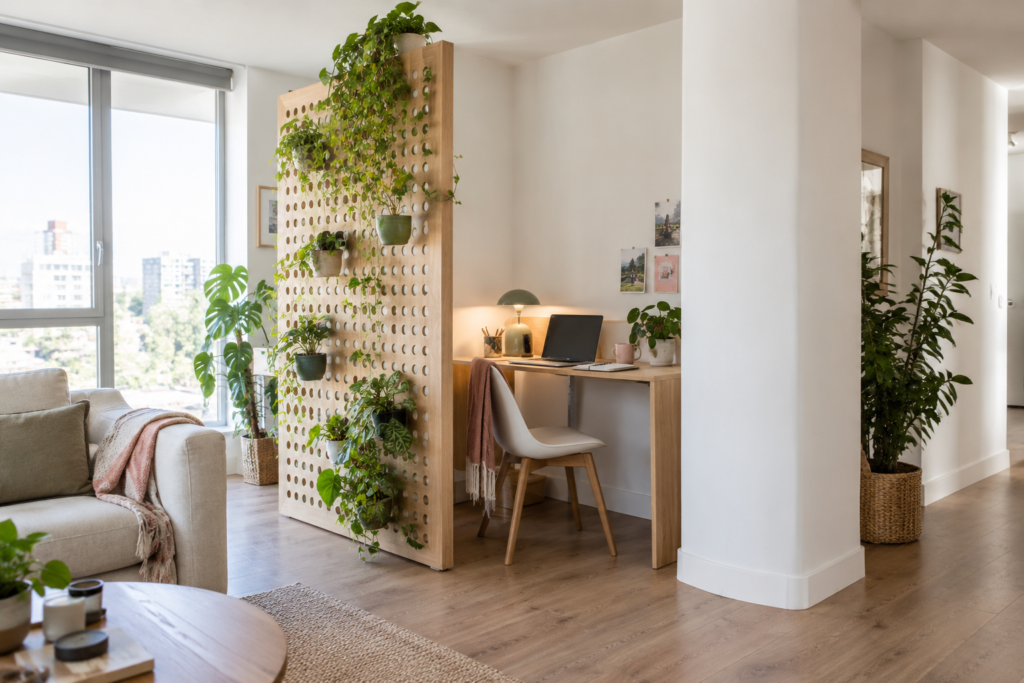
This workspace uses a full-height perforated panel as both a plant display and a visual screen between the living area and the desk. Instead of separating the two spaces with a solid wall, the open panel creates a softer boundary while giving plants multiple positions to occupy.
The desk sits directly behind the botanical screen, so the planting structure defines the work area without taking additional floor space. Similar approaches can work throughout open-plan rooms; see our indoor plant divider ideas for more examples. The repeated openings also make the greenery feel integrated into the architecture of the corner.
Best for: Open-plan rooms where a workspace needs visual separation without becoming enclosed.
DIY Ease:
Affordability:
Build an Overhead Plant Structure Above the Desk
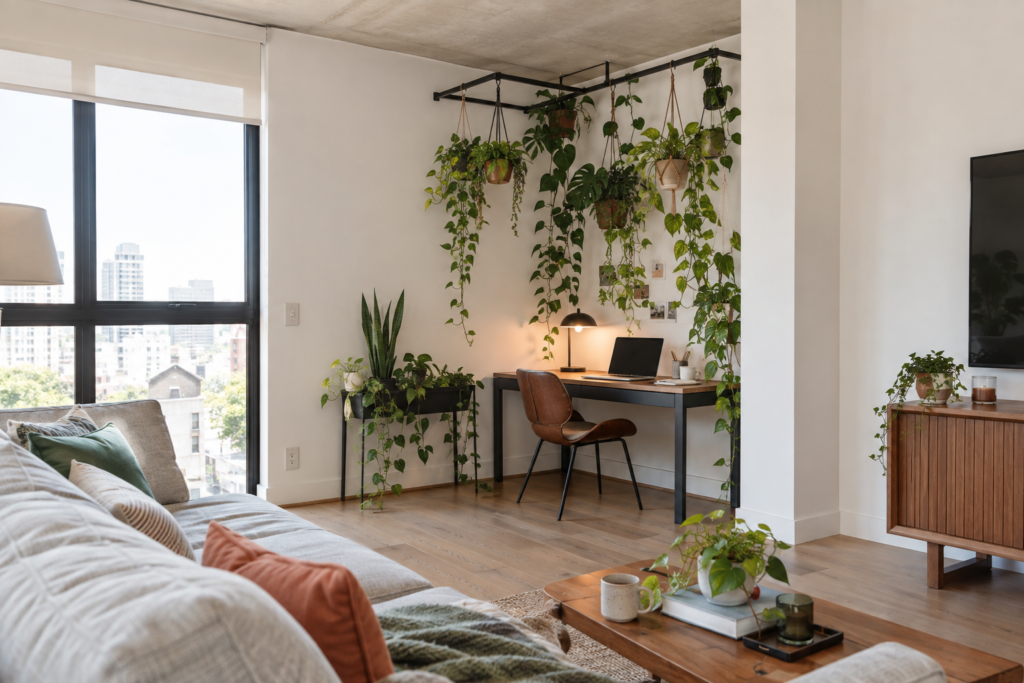
This workspace uses a suspended metal framework to bring plants above and around the desk, transforming the ceiling plane into part of the corner design. Hanging plants create a strong vertical frame while leaving the floor and work surface largely unobstructed.
The overhead structure makes the workspace feel visually contained without requiring a wall or bulky divider. The combination of hanging and upright plants also connects the desk to the surrounding room while giving the corner a distinctly botanical identity.
Best for: Bright corners with enough ceiling height to support a suspended planting structure.
DIY Ease:
Affordability:
Social Corners Built Around Plants
A corner can become a natural gathering point when the seating and planting are designed together. Instead of treating plants as decoration around a seating area, the greenery can help define the space and give the corner its own identity.
These arrangements use built-in seating, shelving, walls, and surrounding plants to create comfortable places for conversation without making the corner feel isolated from the rest of the room.
Build a Plant-Framed Conversation Nook
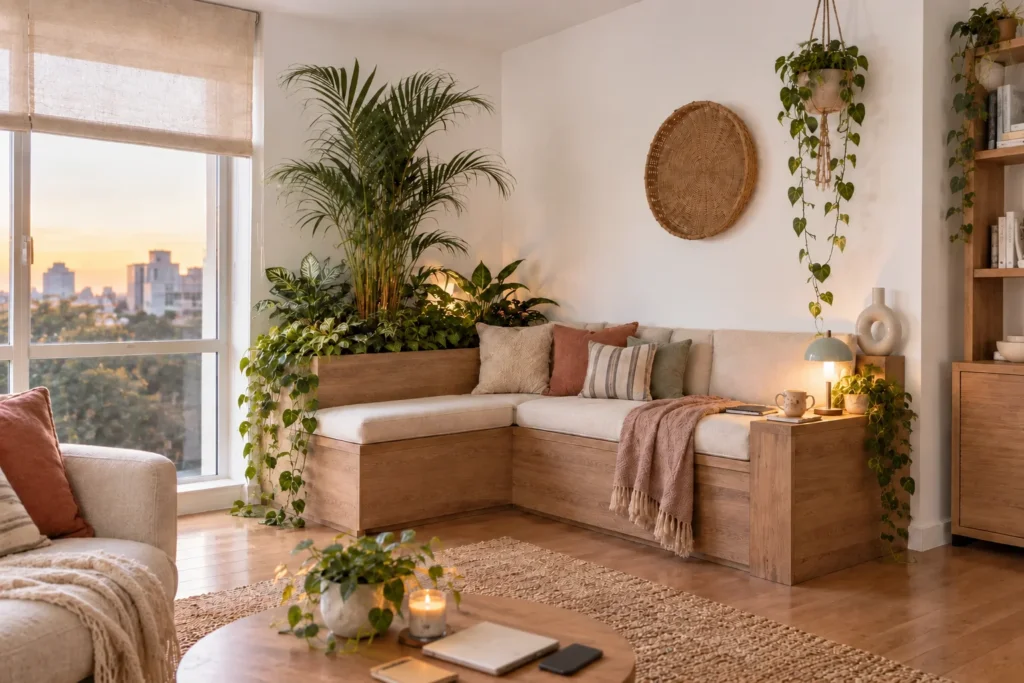
This corner turns a built-in window seat into a dedicated place for conversation by surrounding it with integrated planting. A long planter forms the back of the seating area, while trailing plants extend down from the adjacent shelving to create a continuous botanical frame.
The plants define the seating without enclosing it, so the nook remains visually connected to the rest of the room. The combination of built-in seating, greenery, and a small side table makes the corner feel designed as a destination rather than leftover space.
Best for: Large window corners where built-in seating can anchor a social space.
DIY Ease:
Affordability:
Turn the Space Beneath the Stairs into a Plant-Filled Seating Area
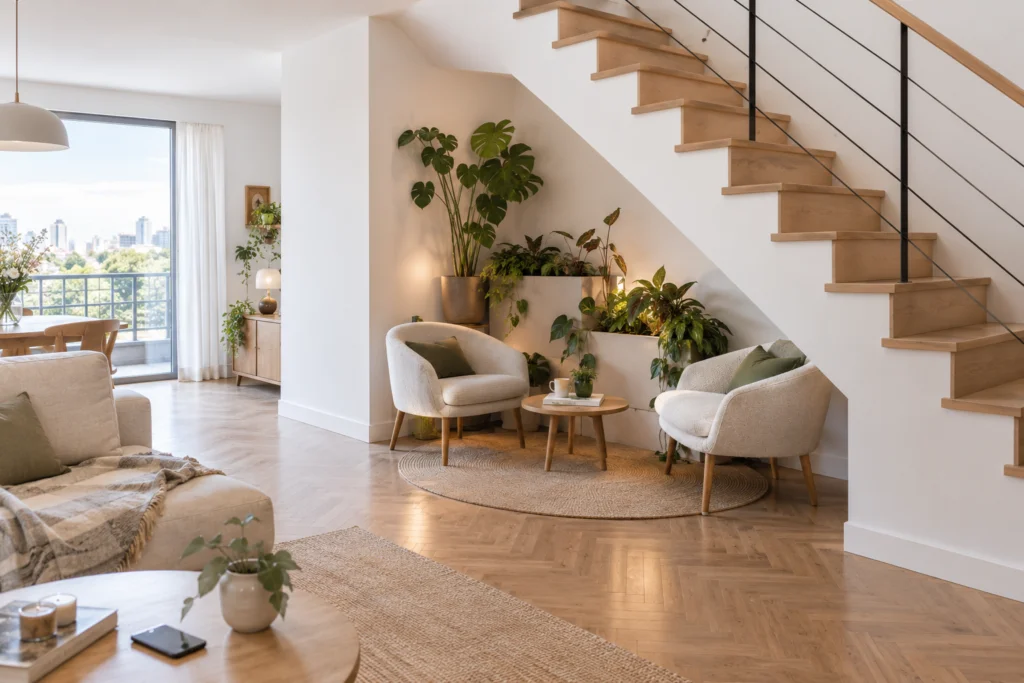
The unused space beneath this staircase becomes a compact social area by combining two chairs, a small table, and layered plants. The planting follows the available geometry of the corner rather than requiring a separate room or enclosure.
Using the underside of the stairs as the backdrop makes the seating feel naturally tucked into the architecture. Plants at different heights soften the hard edges of the staircase while keeping the conversation area open and accessible.
Best for: Under-stair corners that have enough depth for compact seating.
DIY Ease:
Affordability:
Create a Botanical Seating Alcove with Wall Shelving
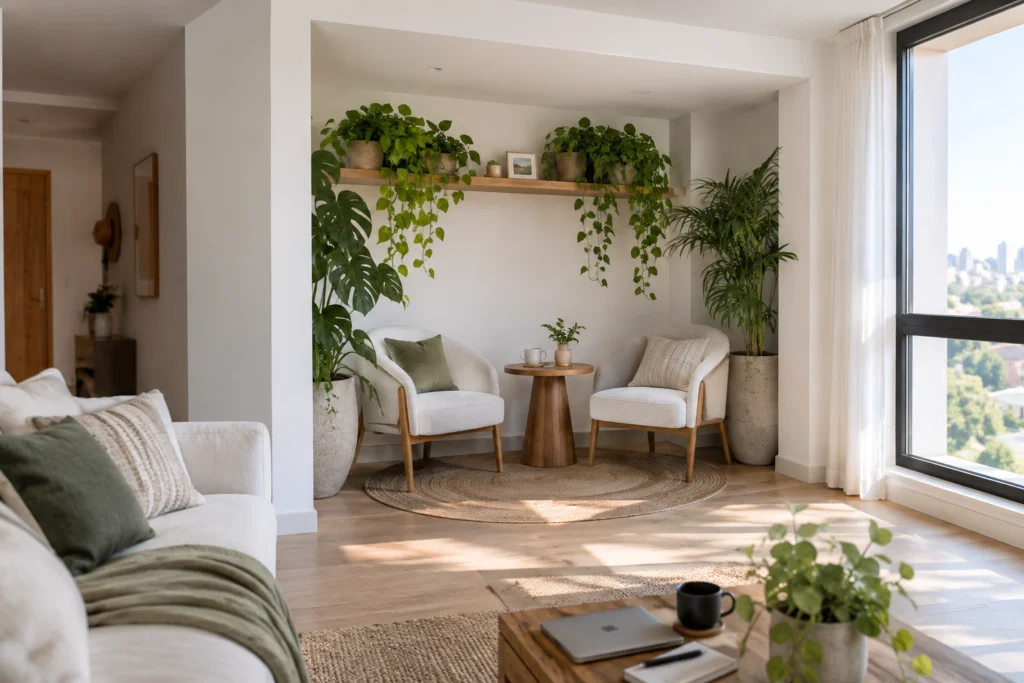
This seating arrangement uses a long wall-mounted plant shelf to visually anchor the corner behind two chairs. The shelf creates a horizontal botanical backdrop, while trailing plants soften its edges and connect the greenery to the seating below. For more ways to use walls for planting, see our indoor plant wall shelf ideas.
Because the planting remains concentrated along the wall, the center of the corner stays open for people to move and sit comfortably. The result is a defined social area without adding a bulky divider.
Best for: Open corners where a wall-mounted planting structure can define the seating area.
DIY Ease:
Cost Affordability:
Define a Social Corner with a Continuous Plant Border
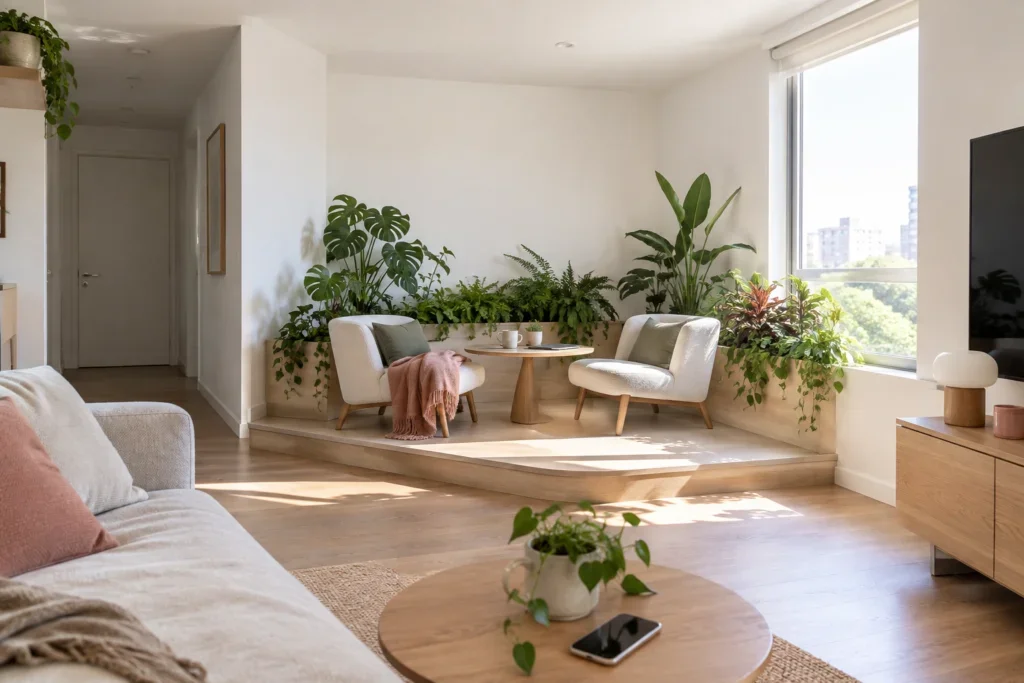
A continuous band of plants can give a large open corner a clear social function without closing it off from the rest of the room. Here, greenery runs behind and beside the seating, creating a soft boundary around the chairs and coffee table.
The arrangement works because the plants define the perimeter while the center remains open. This creates a comfortable gathering zone that feels visually distinct without requiring walls or a freestanding divider.
Best for: Spacious open-plan corners where a soft boundary is needed around a seating area.
DIY Ease:
Affordability:
Pet Corners Integrated Into the Room
An empty corner can also become a permanent part of a pet’s environment without looking like a separate pet zone. The most effective solutions integrate resting spaces, storage, platforms, or sheltered areas directly into the room’s existing architecture.
Plants can soften and frame these structures while keeping the pet area connected to the rest of the space. The goal is to create something that works for the pet while still looking intentional as part of the room.
Integrate a Pet Retreat into Built-In Furniture
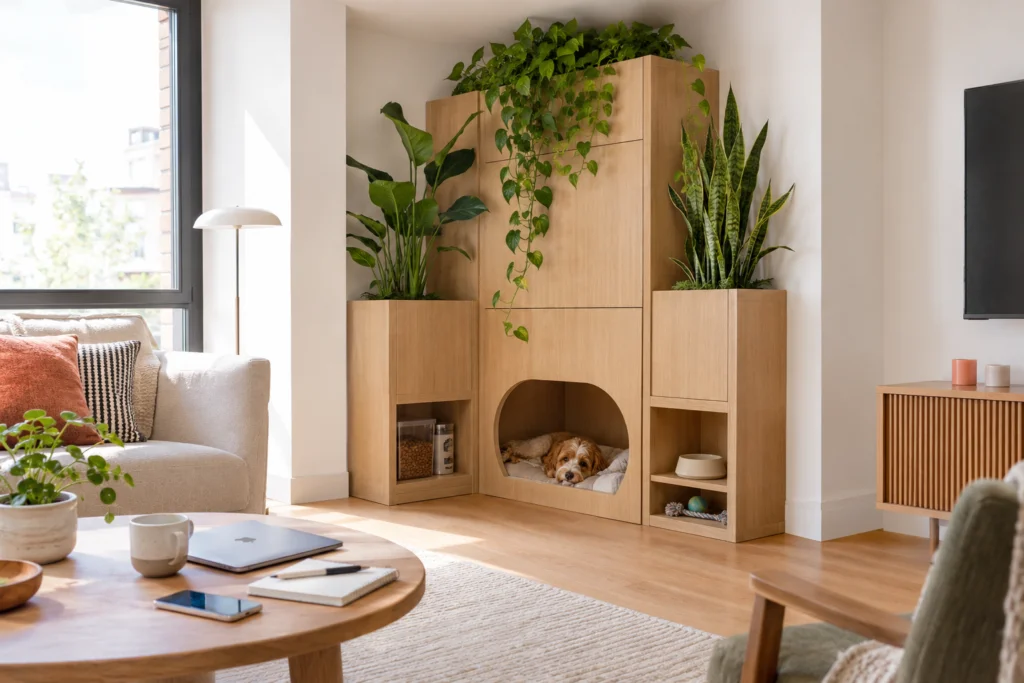
This corner combines a built-in pet bed with enclosed storage and integrated planters, turning an unused section of the room into a dedicated pet retreat. The wooden structure uses the full height of the corner, so the pet area feels like part of the furniture rather than an object added afterward.
Plants are incorporated directly into the upper and side sections of the structure, bringing greenery around the pet’s resting space without interfering with its use. The result gives the corner a clear function while maintaining the visual language of the surrounding room.
Best for: Corners where custom cabinetry or built-in furniture can combine pet space, storage, and plants.
DIY Ease:
Affordability:
Turn a Window Corner into a Botanical Pet Bay
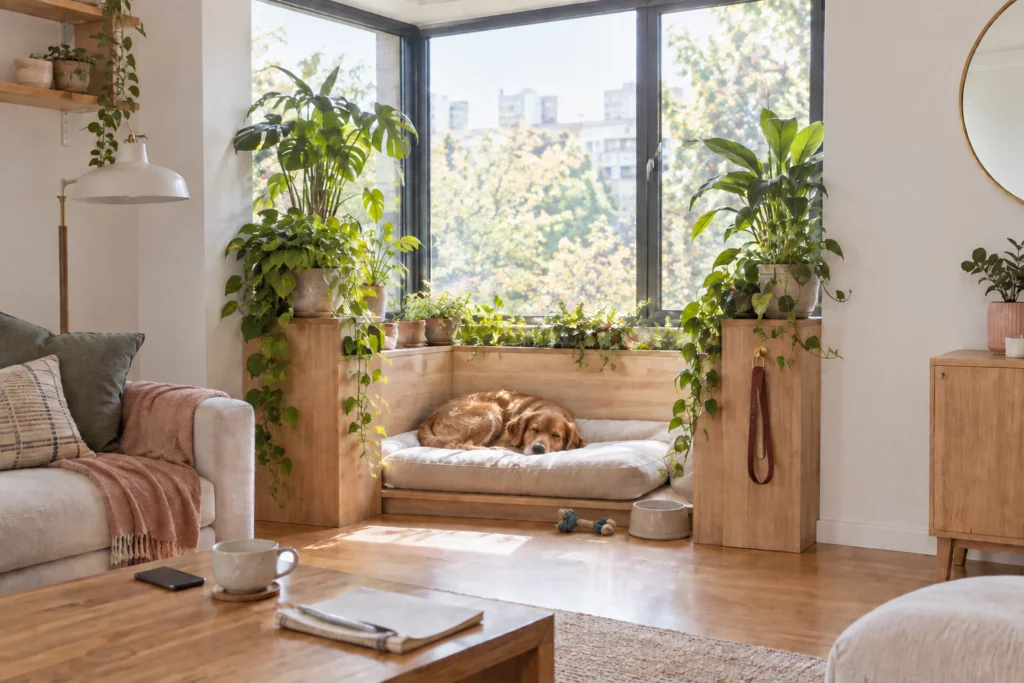
This window corner creates a dedicated pet resting area by building a cushioned platform into the base of the window. Tall planters and trailing plants frame the bed on both sides, creating a sheltered retreat while keeping the pet connected to the bright room around it.
The planting also makes use of the vertical space around the window rather than occupying the floor independently. This allows the pet area, plants, and existing seating to read as one coordinated corner.
Best for: Bright window corners where a built-in or raised pet bed can take advantage of the available light.
DIY Ease:
Affordability:
Meditation & Quiet Corners
A quiet corner does not need much furniture to become a place for slowing down. A defined floor area, natural materials, plants, and a simple seating element can create a visual transition away from the rest of the room.
The key is to keep the center of the space relatively open. Instead of filling the corner with objects, the planting and surrounding structure establish the boundary while the open area becomes the place to sit, pause, or reset.
Create a Raised Meditation Platform
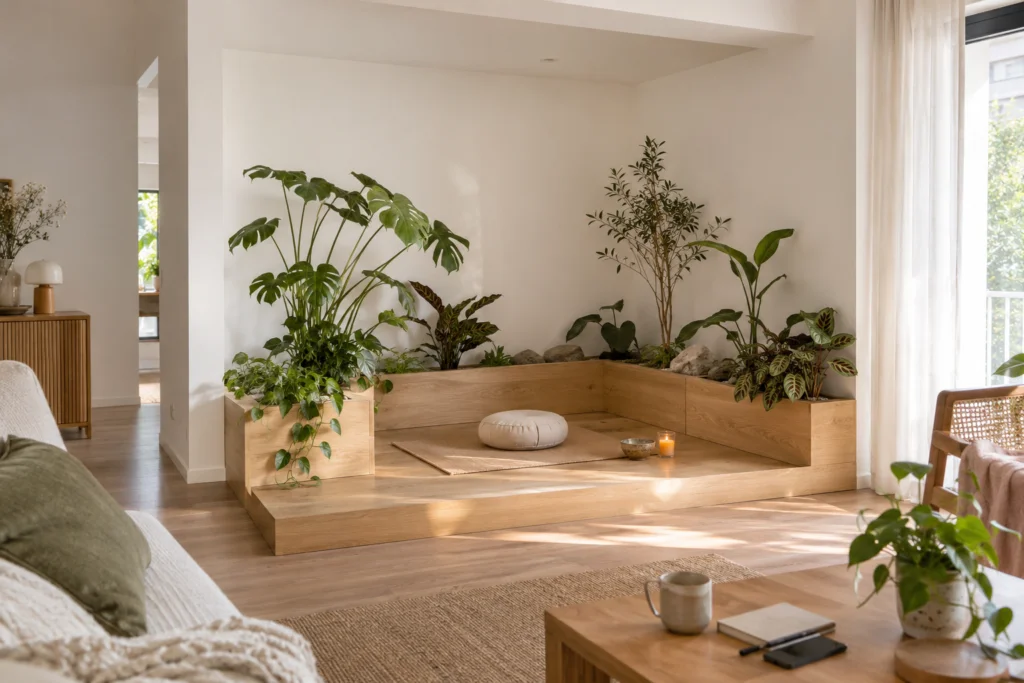
This corner uses a raised wooden platform and a continuous planter to create a dedicated meditation area within the room. The plants wrap around the back and sides of the platform, giving the space a clear boundary without enclosing it.
Keeping the center of the platform open makes the purpose of the corner immediately apparent. A simple floor cushion and a few natural elements complete the space without competing with the surrounding planting.
Best for: Spacious corners where a raised platform can create a permanent quiet zone.
DIY Ease:
Affordability:
Build a Dry Zen Garden Around a Meditation Space
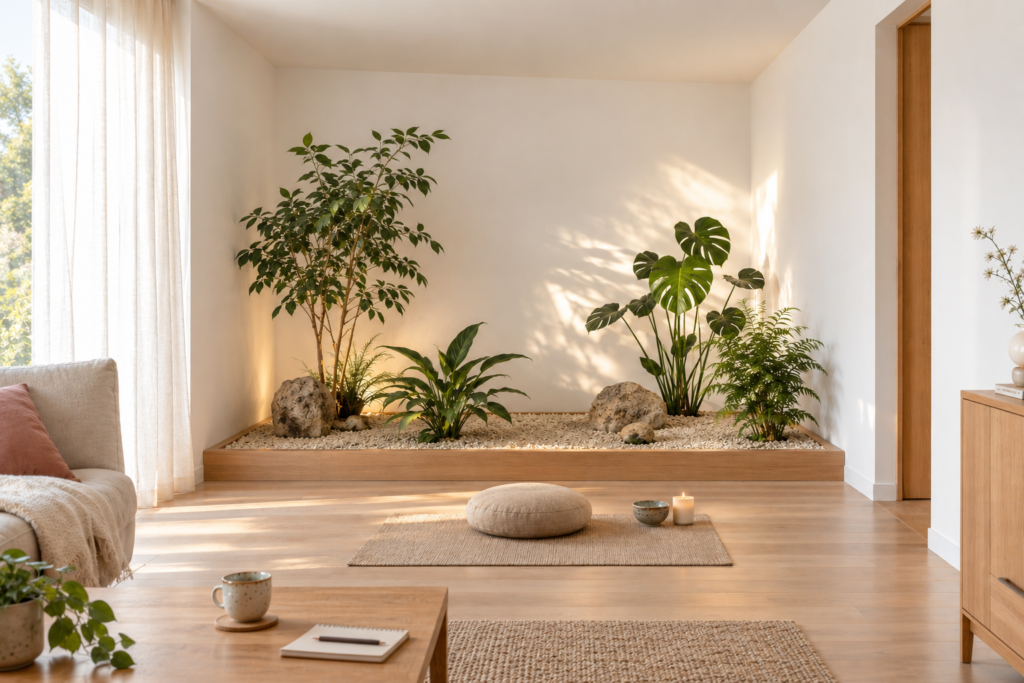
A low wooden planter filled with gravel and carefully positioned plants turns this corner into a compact dry garden. The planting is concentrated around the perimeter, leaving an open area in the center for a meditation cushion.
Stones, gravel, and varied plant heights create a simple natural composition without requiring much furniture. The low profile also keeps the corner visually open while giving it a distinct purpose.
Best for: Bright corners where a low, open meditation garden can remain visible from the rest of the room.
DIY Ease:
Affordability:
Creative Hobby Corners
Build a Mobile Craft Station with Integrated Planters
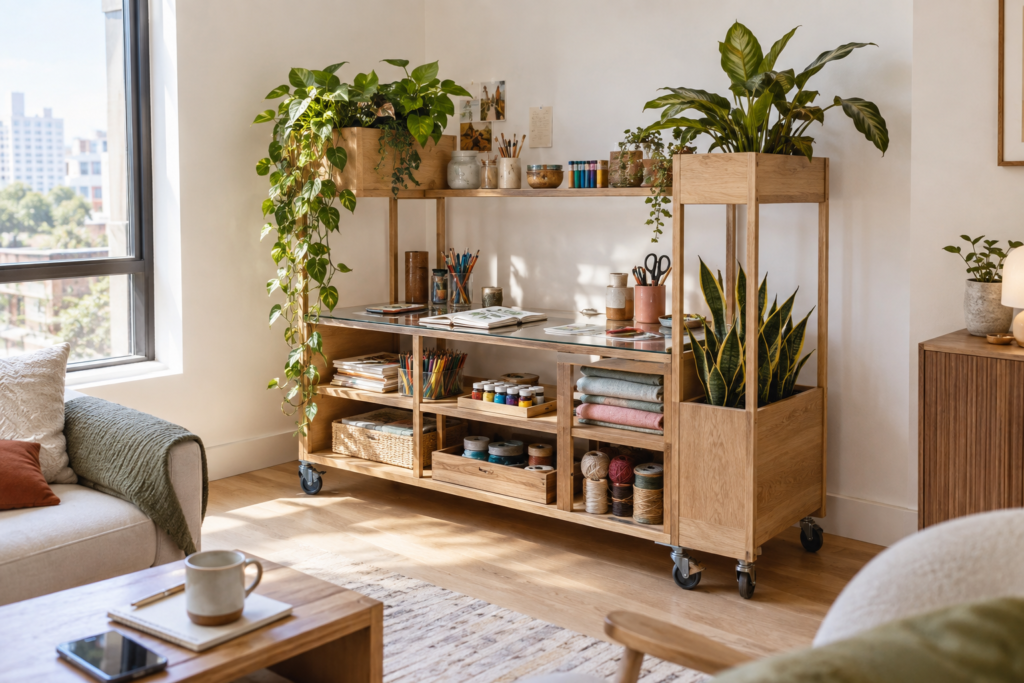
This mobile craft station turns an empty corner into a dedicated place for making and organizing supplies. The open shelving keeps tools, materials, and finished projects accessible, while the integrated planter boxes bring plants directly into the structure rather than treating them as separate decoration.
Because the entire unit sits on casters, the workspace can be moved when the corner needs to serve another purpose. The combination of storage, a continuous work surface, and built-in planting makes the corner feel like a compact creative studio rather than a desk placed against a wall.
Best for: Craft corners that need substantial storage and a workspace without becoming a permanent built-in installation.
DIY Ease:
Affordability:
Which Plant Corner Idea Is Right for Your Space?
Choose the idea based on the corner’s size, light, permanence, and intended use.
Start With the Space You Have
Narrow corners usually benefit from vertical structures, while deeper spaces can accommodate seating, work surfaces, or built-ins. Use the room’s height too: tall plants and structures can add impact without taking more floor space.
Consider the Available Light
Let the light conditions guide both the plant selection and the placement. Our guide to indoor plant light requirements explains how to match plants to different light conditions. Bright window corners can support larger or more light-demanding plants, while darker areas may need a simpler arrangement.
Decide How Permanent You Want the Transformation to Be
Freestanding furniture and modular shelving keep the corner flexible. Built-in structures, integrated planters, and custom cabinetry create a more permanent architectural change.
Match the Solution to How You Use the Room
Start with the function. A reading nook needs comfortable seating, a workspace needs a usable surface, and a meditation corner needs room to stay open. If the goal is primarily visual, a sculptural plant display may be enough.
Decide How Prominent You Want the Plants to Be
Plants can act as accents, become the main focal point, or form part of the architecture itself. Decide which role they should play before choosing the structure and arrangement.
How to Make an Empty Corner Feel Intentional
A successful plant corner combines a clear purpose, a strong focal point, and a connection to the rest of the room.
Give the Corner a Purpose
Choose one primary function—a reading nook, workspace, display, meditation area, or creative station. This gives the entire design a clear direction.
Build Around One Focal Point
Let one element lead the composition: a large plant, seating area, built-in planter, or vertical structure. The other elements should support it rather than compete for attention.
Use Plants as Part of the Structure
Whenever possible, integrate plants into the design instead of treating them as finishing touches. They can frame seating, grow through a trellis, occupy built-in planters, or shape a shelving system.
Work With Height and Scale
Combine tall, medium, and low elements to give the corner visual depth. Use vertical space without filling every level, so individual plants and structural elements remain visible.
Keep the Corner Connected to the Room
Repeat materials, shapes, or finishes from the surrounding space, and protect normal circulation. The corner should feel like part of the room, not an isolated installation.
Choosing Plants for a Corner
Choose plants according to the corner’s conditions, proportions, and design rather than simply selecting the largest specimens.
Choose Plants for the Available Space
Consider mature size as well as current size. Leave enough room for foliage to develop without blocking furniture, windows, or circulation.
Match Growth Habit to the Design
Use upright plants to emphasize height, trailing plants to soften edges, broad plants to fill larger areas, and compact plants for smaller structures. The growth habit should reinforce the shape of the corner.
Create Visual Layers
Vary plant heights and forms to create depth. A tall specimen can establish the upper scale, while medium and lower or trailing plants connect the arrangement to the furniture and floor.
Match Plants to the Available Light
Choose species that can thrive in the actual conditions of the corner. A visually balanced arrangement only works long-term if the plants remain healthy. If the corner gets limited natural light, see our guide to low-light indoor plants.
Final Thoughts
An empty corner does not always need more decoration. It often needs a clear purpose.
A plant corner can become a reading retreat, workspace, social area, quiet escape, creative station, or architectural focal point. The strongest results come when function, architecture, and plants work together as one space.