
TL;DR
- Check roots first → mushy = overwatering, dry = underwatering
- Stop guessing watering → water based on soil dryness, not schedule
- Fix light immediately → wrong light = slow death
- Cut losses → prune dead parts to redirect energy
- Repot only if needed → root rot or compacted soil = yes, otherwise no
You’re Probably Trying to Save It the Wrong Way
Most people panic-water.
They see a droopy plant → they add more water → the plant gets worse.
Here’s the truth:
👉 Watering is often the cause of the problem, not the solution.
If your plant is dying, don’t “care harder.”
Diagnose first. Act second.
Step 1: Check the Roots (This Changes Everything)
This is the part no one tells you:
Leaves lie. Roots don’t.
What to do:
- Gently remove the plant from the pot
- Look and smell
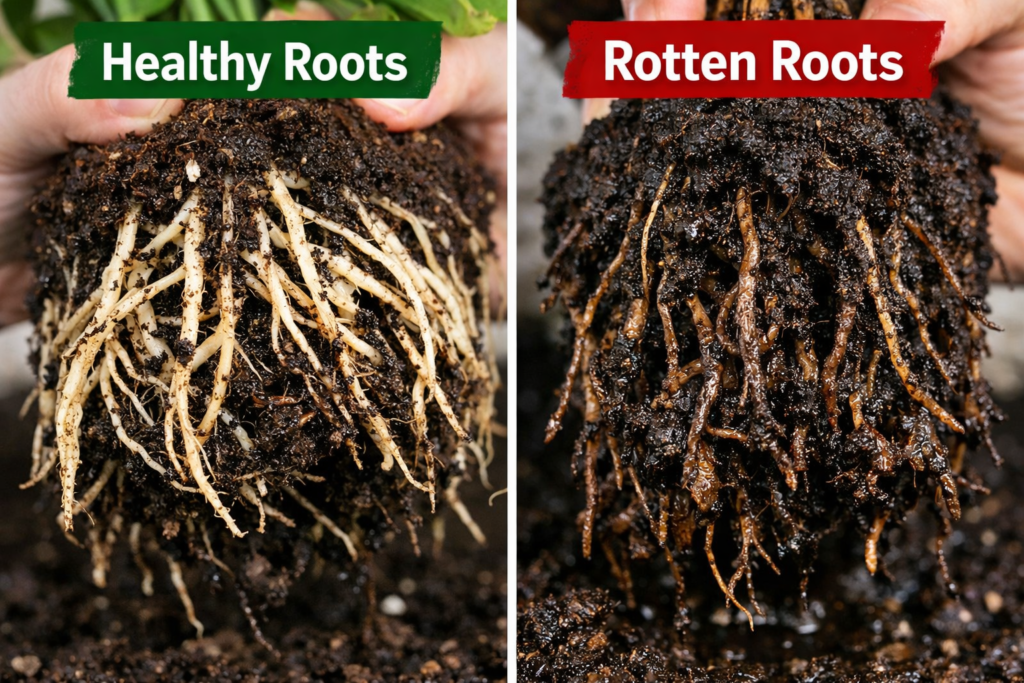
What you’re looking for:
Healthy roots
- Firm
- White or light tan
- Neutral smell
Unhealthy roots (root rot)
- Brown/black
- Mushy
- Smell like rot
If roots are rotting:
- Cut off all mushy parts (clean scissors)
- Repot in fresh, well-draining soil
- Use a pot with drainage holes
If roots are dry:
- Soil likely became hydrophobic
- Soak the pot in water for 20–30 minutes (bottom watering)
Step 2: Fix Your Watering (Not Your Schedule)
This is NOT the problem:
“Watering too little” is rarely the issue.
The real problem:
👉 Watering on a schedule is a common mistake instead of checking soil..
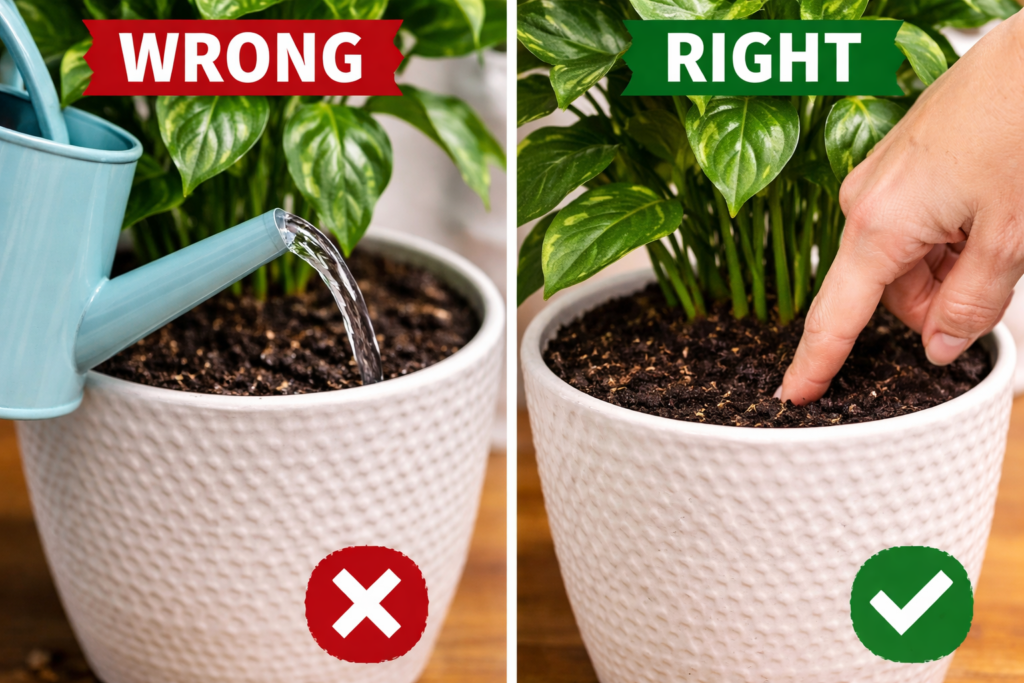
Wrong vs Right
❌ Wrong
- “I water every Sunday”
- Adding water when top soil looks dry
✅ Right
- Stick your finger 2 inches (5 cm) into the soil
- Water only if it feels dry at that depth
Pro tip:
Use a moisture meter if you want consistency without guessing.
Step 3: Light — The Silent Killer
You can water perfectly… and still kill your plant with bad light.
Here’s where most people get it wrong:
They assume “bright room = enough light.”
It’s not.
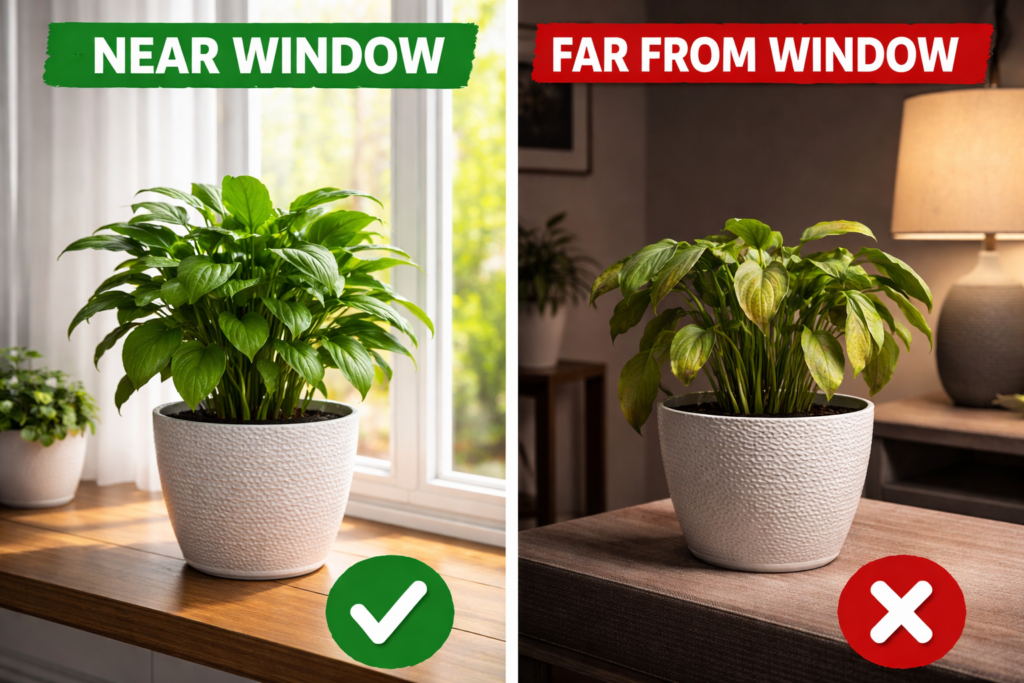
Signs of incorrect light:
Too little light
- Leggy growth
- Small leaves
- Yellowing
Too much light
- Crispy edges
- Bleached spots
- Sudden drooping
Quick fix:
- Move plant closer to a window (but not direct sun unless required)
- Rotate weekly for even growth
Step 4: Cut the Dead Weight (Yes, Literally)
Dead leaves don’t “recover.”
They drain energy.
What to do:
- Remove yellow, brown, or fully damaged leaves
- Cut above a node if possible
Counterintuitive truth:
👉 Pruning a struggling plant actually helps it recover faster.
Step 5: Repot — But Only If Necessary
Repotting is NOT always the solution.
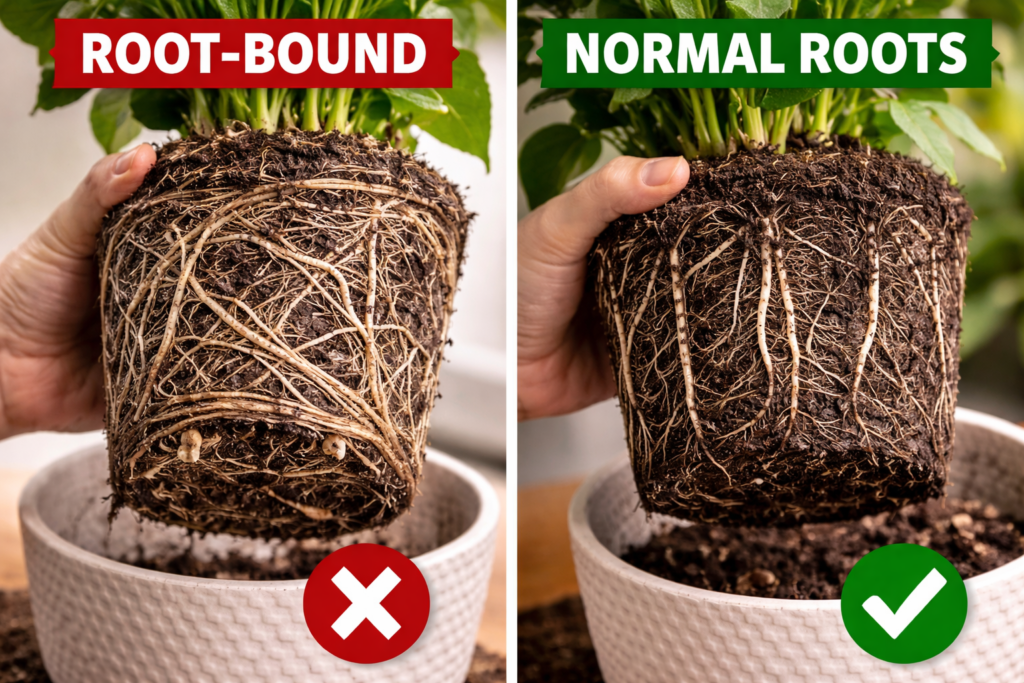
Only repot if:
- Roots are circling tightly (root bound)
- Soil stays wet for too long
- You found root rot
Do NOT repot if:
- The plant is already stressed but roots are fine
- You just watered heavily
👉 Repotting adds stress. Use it strategically.
Step 6: Stop Doing These Common Mistakes
🚫 Misting to “increase humidity”
Does almost nothing long-term.
🚫 Fertilizing a dying plant
You’re feeding a sick system.
🚫 Moving it constantly
Plants need stability to recover.
This is the part no one tells you:
👉 Recovery comes from removing stress, not adding more care.
Real Example (Quick Story)
A peace lily looked completely dead—droopy, yellow, lifeless.
Owner watered more. It got worse.
We checked roots → half rotten.
Solution:
- Cut rot
- Fresh soil
- Less frequent watering
Two weeks later? New growth.
The issue wasn’t neglect. It was overcare.
What to Do Next (Action Plan)
- Check roots today
- Fix watering method (not frequency)
- Adjust light within 24 hours
- Remove dead leaves
- Repot only if roots demand it
Internal Linking Opportunities
- Link to: “How Often Should You Water Houseplants?”
→ Anchor: “watering on a schedule is a common mistake” - Link to: “Best Soil Mix for Indoor Plants”
→ Anchor: “well-draining soil”
Final Thought
Saving a dying plant isn’t about doing more.
It’s about doing less — but correctly.
And once you see the pattern…
you’ll start catching problems before they become fatal.