
TL;DR
👉 Most plants don’t die from repotting — they die from repotting wrong or at the wrong time
👉 Repot only when roots demand it (not on a schedule)
👉 The biggest mistake = oversizing the pot → leads to root rot
Why Repotting Isn’t “Routine Maintenance”
Most beginner advice treats repotting like a yearly task.
That’s wrong.
Plants don’t follow calendars — they respond to root space, soil condition, and growth rate.
👉 Repotting too early can:
- stress the plant
- slow growth
- increase overwatering risk
👉 Repotting too late can:
- choke roots
- stunt growth
- cause nutrient deficiency
Repotting is not maintenance — it’s a correction.
When Your Plant Actually Needs Repotting
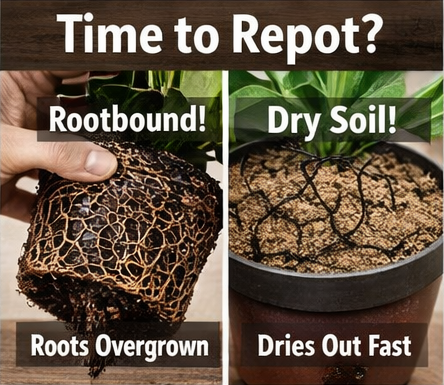
Forget schedules. Look for signals.
Clear signs you need to repot:
- Roots growing out of drainage holes
- Soil dries out unusually fast (1–2 days)
Not sure if it’s dryness or watering issues? Read How to Tell If Your Plant Needs Water (Stop Guessing and Get It Right Every Time) - Water runs straight through the pot
- Plant stops growing during active season
- Roots circling tightly inside the pot (root-bound)
👉 If you don’t see at least 2 of these, don’t repot.
The #1 Mistake: Choosing a Bigger Pot “Just in Case”
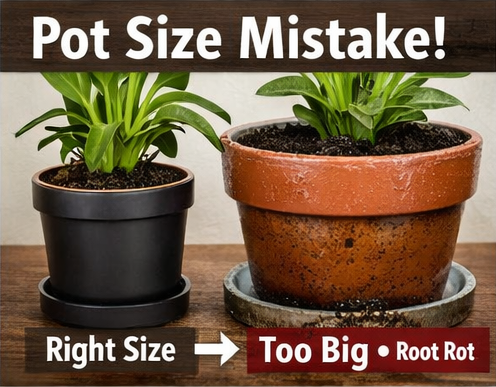
This kills more plants than not repotting at all.
👉 What people do:
- jump 2–3 pot sizes up
- “give roots room to grow”
👉 What actually happens:
- excess soil holds too much water
- roots can’t absorb it fast enough
- oxygen drops
- root rot begins
Learn how to recognize early signs of root rot in Overwatering Indoor Plants: Signs, Causes, and How to Fix It
The rule (non-negotiable):
👉 Increase pot size by ONLY 2–5 cm (1–2 inches)
No exceptions.
Root-Bound Isn’t Always a Problem
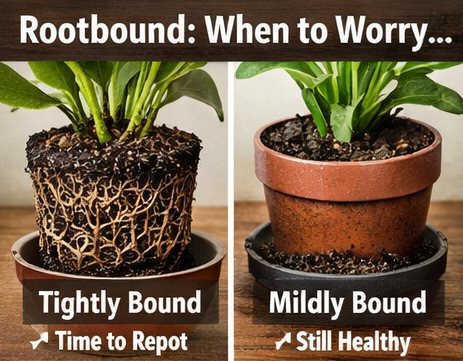
This is where most advice gets it wrong.
👉 Slightly root-bound plants:
- grow faster
- use water more efficiently
- are often healthier
👉 You only repot when:
- roots are dense + circling aggressively
- OR growth has clearly stalled
Not all root-bound plants need fixing.
The Best Time to Repot (Most People Get This Wrong)
Timing matters more than technique.
Ideal timing:
- Early growing season (spring / early summer)
Avoid repotting:
- winter (low light, slow growth)
- right after buying (plant is already stressed)
- when plant is unhealthy
👉 Repotting at the wrong time = double stress
(environment + roots)
Step-by-Step: How to Repot Without Causing Shock
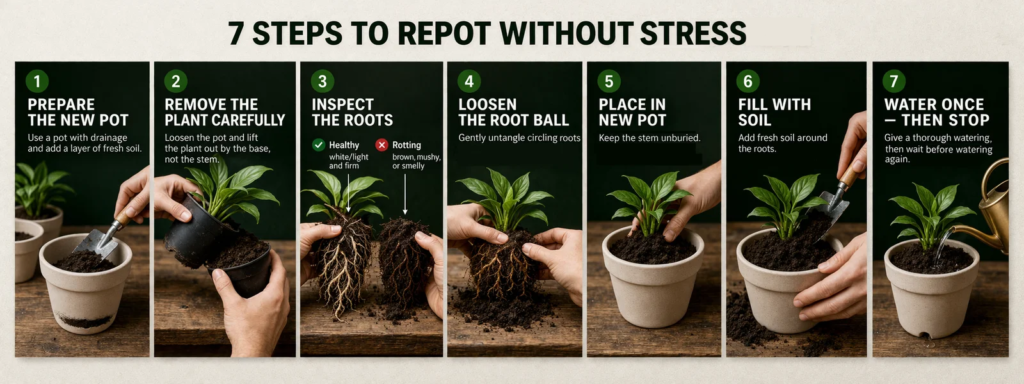
1. Prepare the new pot
- Make sure it has drainage holes
Before repotting, make sure you’re using the right pot size and type.
Choosing the wrong size can lead to overwatering and root problems.
👉 Learn more: what size pot for indoor plants - Add a small base layer of fresh soil
2. Remove the plant carefully
- Squeeze the pot or tap edges
- Never pull by the stem
3. Inspect the roots
- Healthy = white/light + firm
- Rotting = brown, mushy, smelly
👉 Trim only dead roots (don’t over-prune)
👉 If your plant already has root damage, here’s how to save a dying plant before it’s too late.
4. Loosen (but don’t destroy) the root ball
- Gently untangle circling roots
- Avoid aggressive tearing
5. Place in new pot
- Keep same depth as before
- Don’t bury the stem
6. Fill with soil
- Lightly firm it (not compacted)
7. Water once — then stop
- Let excess drain completely
- Don’t keep watering “to help it settle”
Repotting Shock: What It Is (And What It Isn’t)
After repotting, plants often:
- droop
- stop growing
- look “worse” temporarily
👉 This is normal.
What’s NOT normal:
- rapid yellowing
- mushy stems
- persistent wilting
👉 If that happens → problem is usually:
- overwatering
- wrong soil
- pot too big
Soil Matters More Than the Pot
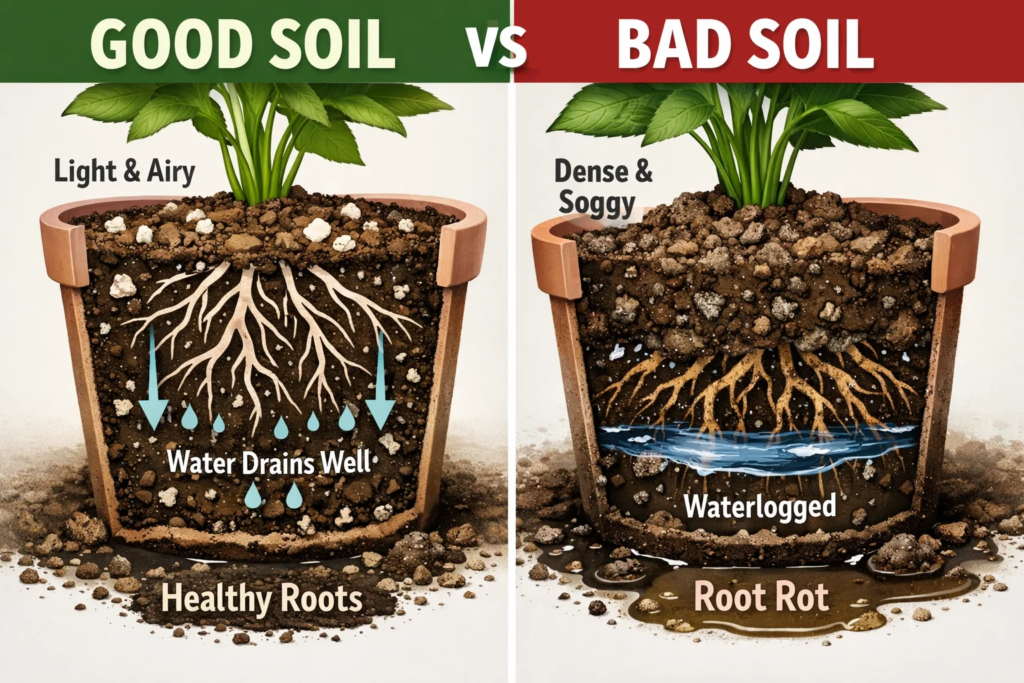
Most people focus on the container.
Big mistake.
👉 The real factor:
soil structure = airflow + drainage + moisture balance
Here’s what good soil actually looks like and how to choose it: Best Soil for Indoor Plants (That Actually Keeps Them Alive)
Bad soil can:
- suffocate roots
- trap water
- undo a perfect repot
👉 Good soil:
- drains well
- holds some moisture
- allows oxygen flow
Repotting into bad soil = starting the problem over again.
Aftercare: What Actually Helps (And What Hurts)
Do:
- place in bright, indirect light
- leave it alone for a few days
- monitor soil before watering again
Don’t:
- fertilize immediately
- move it around constantly
- water on a fixed schedule
👉 The plant needs stability, not attention.
Should You Repot After Buying a Plant?
Most people do it immediately.
👉 That’s usually wrong.
Plants from stores are already stressed:
- new environment
- transport
- light changes
👉 Repotting immediately = stacking stress
Better approach:
- wait 1–2 weeks
- let plant acclimate
- THEN evaluate roots and soil
Final Insight: Repotting Doesn’t Fix Problems
This is the biggest misconception.
👉 Repotting is NOT a cure.
If your plant is struggling, start here: Indoor Plant Problems (Common Issues & How to Fix Them Fast)
If your plant is struggling due to:
- bad light
- overwatering
- unstable environment
👉 Repotting won’t fix it — it can make it worse.
Final Thoughts
Repotting is one of the most misunderstood parts of plant care.
Most plants don’t need it as often as you think.
And when they do — doing it correctly matters more than doing it quickly.
👉 Learn to read the plant, not follow a schedule.
That’s what separates plants that survive from plants that thrive.