
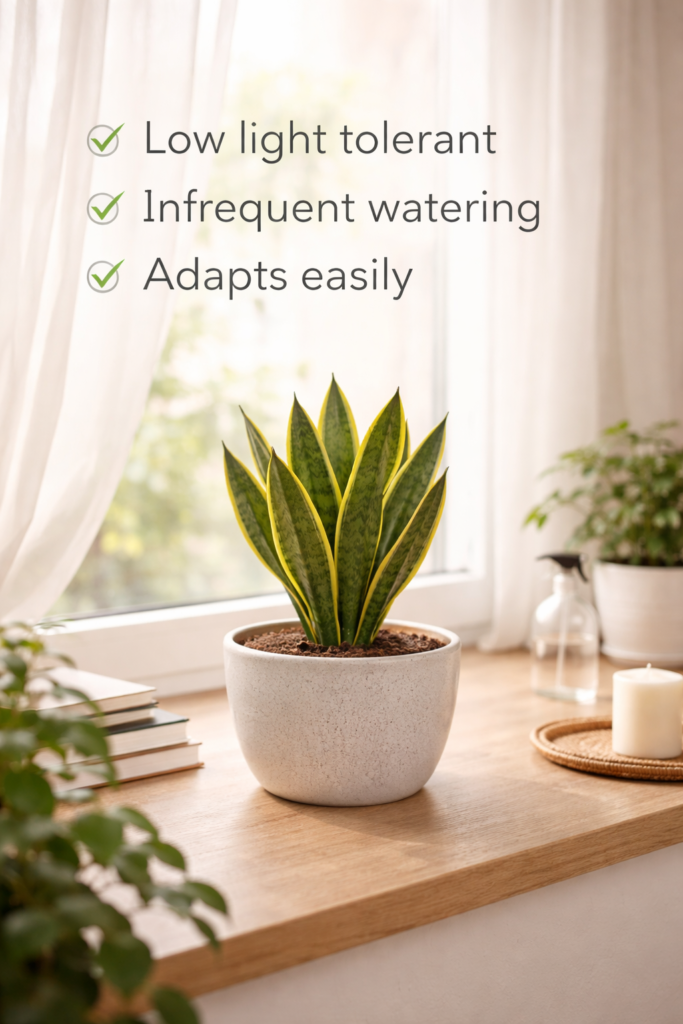
You might be killing your snake plant without realizing it.
Most beginners think they’re doing it right — watering regularly, keeping it indoors, giving it attention.
That’s exactly the problem.
And most people miss this completely.
Snake plants don’t die from neglect. They die from too much care.
In this guide, you’ll learn how to care for a snake plant indoors the right way — and what to stop doing immediately.
Light Requirements for Snake Plants
Snake plants can survive in almost any light — but that doesn’t mean they’ll thrive. However, their growth will vary depending on placement.
In low light, they survive but grow slowly. In brighter environments, they grow faster and produce stronger leaves.
Avoid prolonged direct sunlight, as it can scorch the leaves.
Best practice: place near a window with filtered light.
Biggest Snake Plant Mistake (Most Beginners Make)
Stop doing this: watering your snake plant too often.
If your snake plant is turning yellow, soft at the base, or slowly collapsing — you’re not underwatering it.
You’re overwatering it.
And it’s probably happening to yours right now.
This is the mistake that kills most snake plants.
And the worst part? It usually feels like you’re taking good care of it.
Before you water, check the soil. If there’s any moisture, don’t touch it.
How to Water Snake Plants
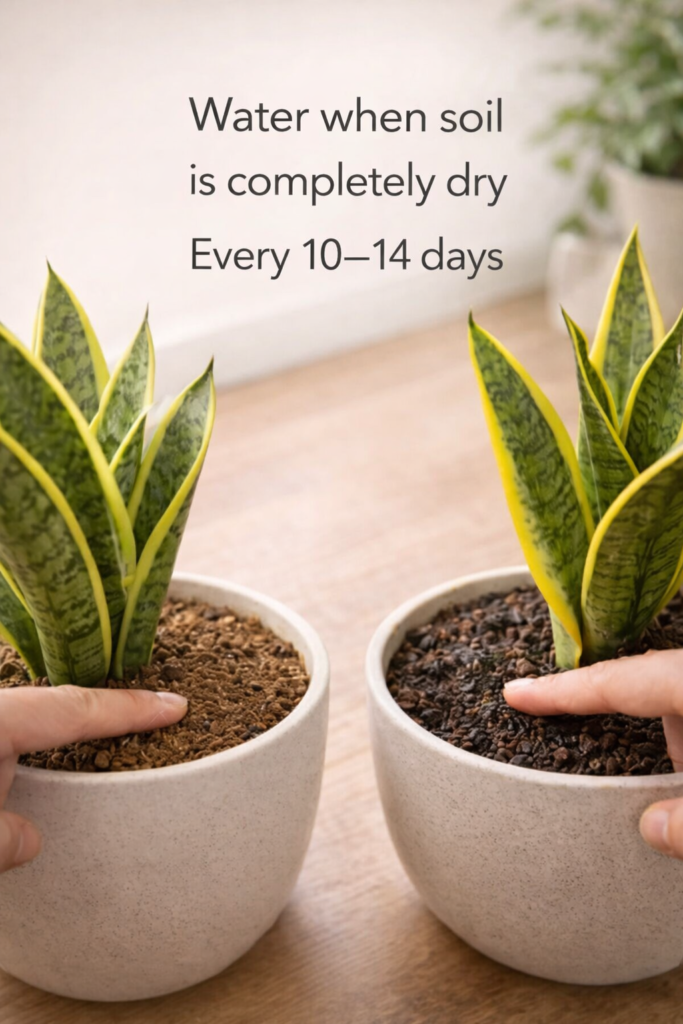
Snake plants prefer dry soil and are highly sensitive to overwatering.
Overwatering is the #1 mistake beginners make with snake plants.
Water only when the soil is completely dry.
If you’re wondering how often to water a snake plant, the answer is: less than you think. In most homes, this ends up being every 10–14 days — but always check the soil first.
Still not sure if you’re overwatering? Check our full guide on overwatering indoor plants to identify the exact signs and fix it before it gets worse.
Most problems start when the plant stays wet for too long.
Best Soil for Snake Plants
Snake plants need well-draining soil to prevent excess moisture from sitting around the roots.
Use a light, fast-draining soil (the kind you’d use for succulents or cacti). You can also improve standard potting soil by adding perlite or sand to increase drainage.
Good drainage is more important than nutrients.
Common Snake Plant Problems
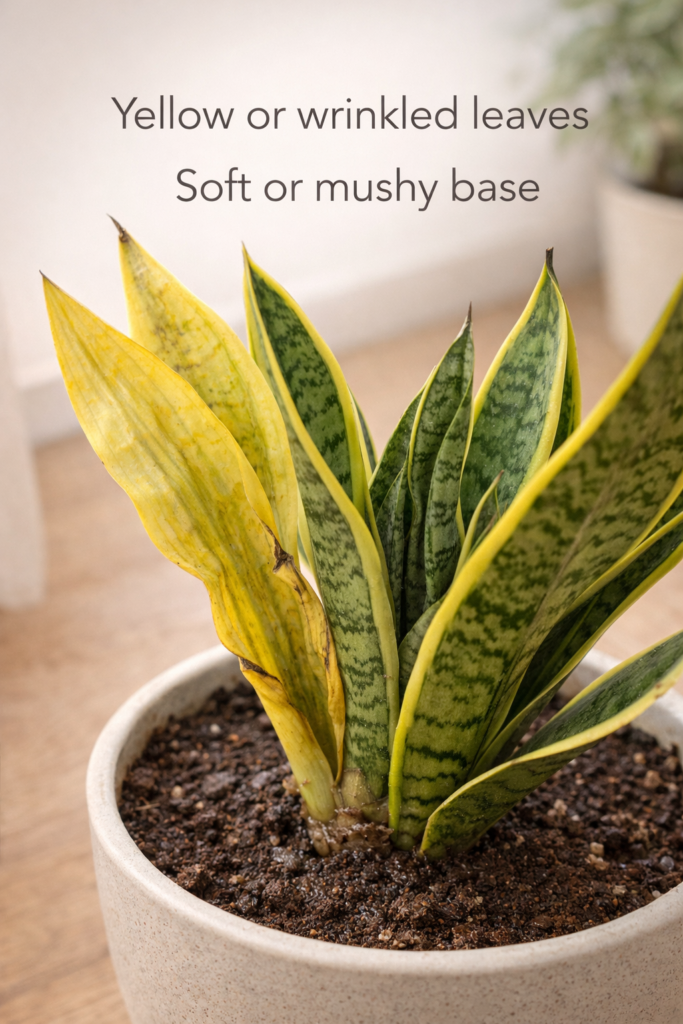
Even though snake plants are hardy, a few issues can still appear:
- Yellow leaves → in most cases, this is an overwatering issue (snake plant yellow leaves fix starts by reducing watering)
- Soft or mushy base → root rot from excess moisture
- Wrinkled leaves → underwatering or prolonged dryness
- Slow growth → lack of light
Most issues are caused by overwatering.
Quick Snake Plant Care Tips
- Water only when soil is fully dry
- Use well-draining soil
- Keep in indirect light
- Avoid overwatering
Get watering right, and your snake plant will be fine. Get it wrong, and it won’t.