
TL;DR
- If a corner still looks wrong even with a snake plant, it’s usually not the plant — it’s how it’s placed.
- Snake plants don’t behave like typical decor in corners, so small changes in proportion and placement make a bigger difference than expected.
- The fix is simple: adjust the position, scale the base properly, and add just one element for context — not a full setup.
Why Your Snake Plant Corner Still Looks Wrong (Even If the Plant Is Fine)
When you add a snake plant to a corner and the result looks random, the issue is usually the setup, not the plant itself — it happens more often than you’d expect.
A snake plant doesn’t complete a corner — it highlights how that corner is set up.
The same plant can look intentional in one room and completely out of place in another.
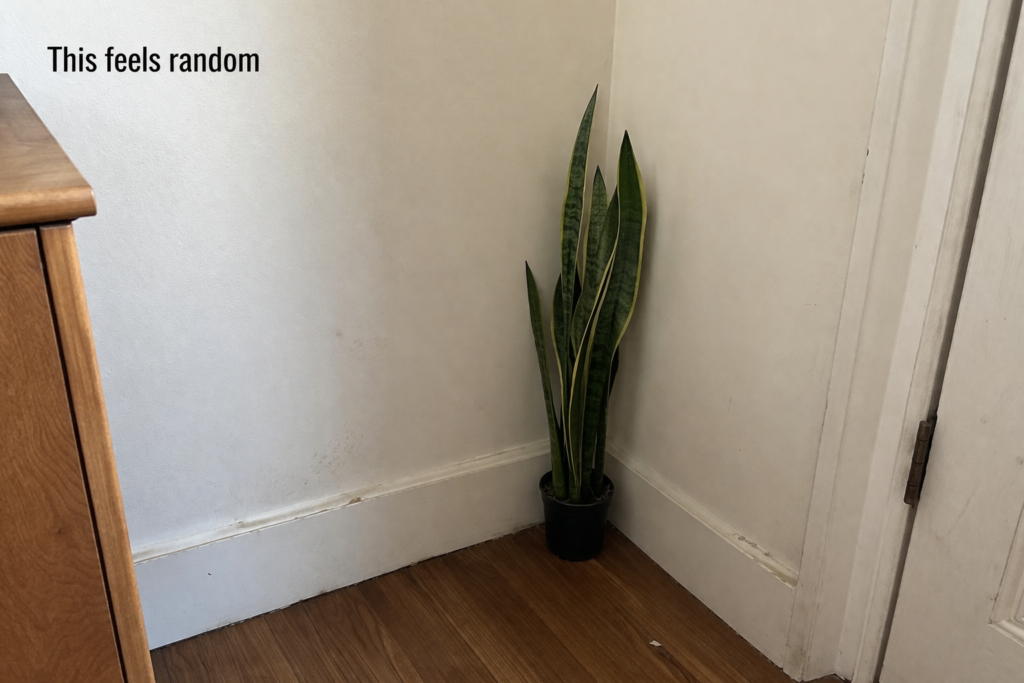
This Is Usually What’s Breaking the Setup
In most small corners, the problem is simple:
- something feels slightly off
- the pot feels too small
- everything sits too tight together
👉 Result: it looks placed out of convenience, not intention
What Changes When You Adjust a Snake Plant Corner
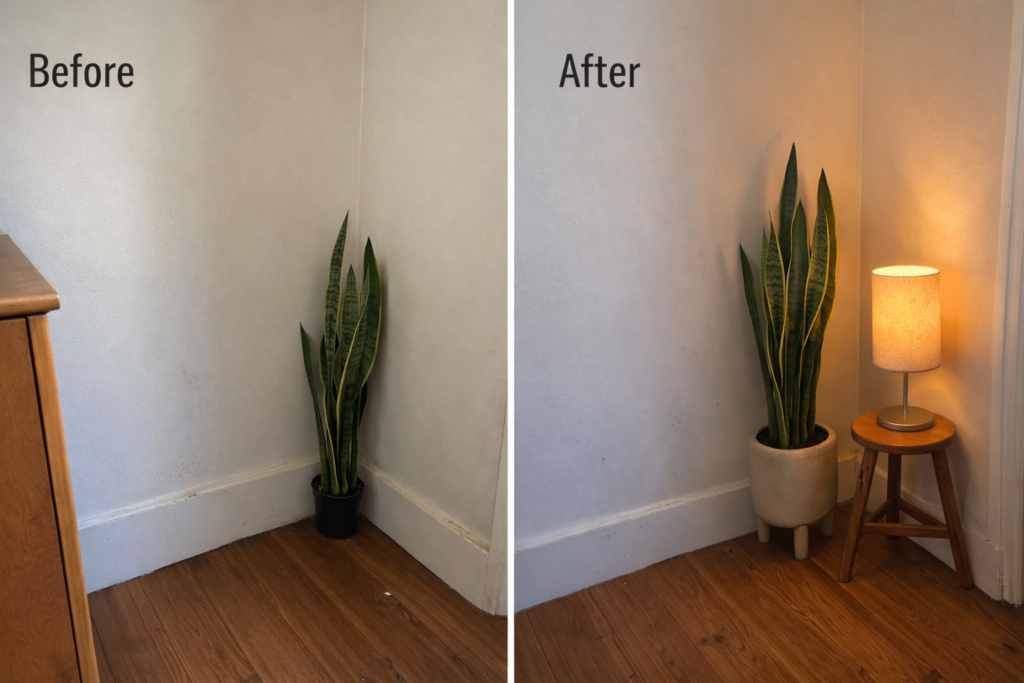
❌ Before
- Snake plant placed directly in the corner
- Pot feels undersized or generic
- No visual relationship with anything around it
👉 Result: looks like storage, not styling
✅ After
- Plant pulled slightly forward (6–12 in / 15–30 cm)
- Pot has enough visual weight for the plant
- One element nearby creates context — without turning it into a full setup
👉 Result: the corner feels intentional without looking “designed”
Snake Plant Corner Decor: Why This Plant Is Easy to Misuse
Snake plants are often recommended for small spaces and low light (see how they actually behave in different conditions in our snake plant care guide).
So they end up just getting dropped wherever there’s space.
❌ Assumption:
“If it survives anywhere, it works anywhere”
✅ Reality:
It survives in most spots — but visually, it only works when proportions and positioning are right.
Most “snake plant corner decor” ideas fail for one reason:
they treat it like a filler, not a structural element.
👉 Snake plants look worse when treated like decorative fillers.
They work best when they’re the only strong vertical element in the corner — so your eye lands on them first.
Everything else should stay secondary.
How to Fix a Snake Plant Corner (Without Redesigning the Space)
Instead of rebuilding the whole corner, adjust these three things:
1. Reposition the Plant (Most Important)
Don’t place it exactly where the walls meet.
Move it slightly out of the exact corner and let it sit just off-center. Even a small shift changes how the plant relates to the space.
2. Fix the Proportions
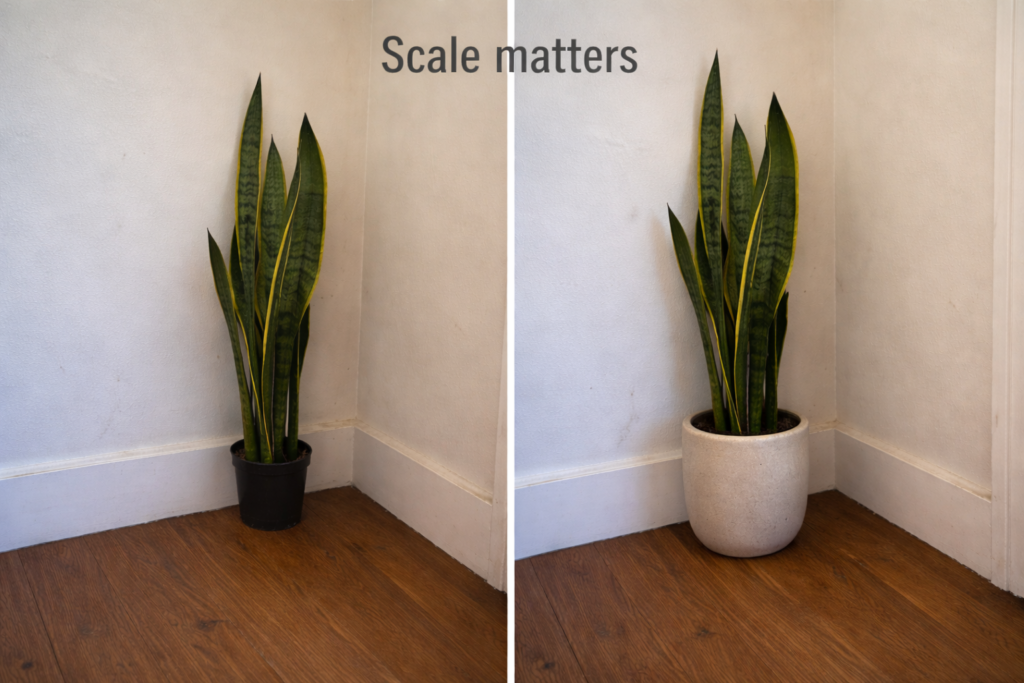
A common issue is mismatch:
- tall plant + tiny pot
- strong vertical leaves + weak base
Use a pot that visually supports the height of the plant. Slightly wider or heavier bases usually work better than minimal ones.
3. Add One Supporting Element
You don’t need a full setup — just one element that makes the plant feel intentionally placed.
Good options:
- a low stool
- a simple side table
- a warm light source
That’s enough to give the corner context.
A Quick Real Example (What Usually Happens)
I tried fixing a corner by adding more plants once.
At first it felt like it should work — more plants, more presence.
But the moment I stepped back, it looked worse — exactly the kind of thing that keeps happening with corners like this.
I’ve fixed this kind of corner more times than I can count.
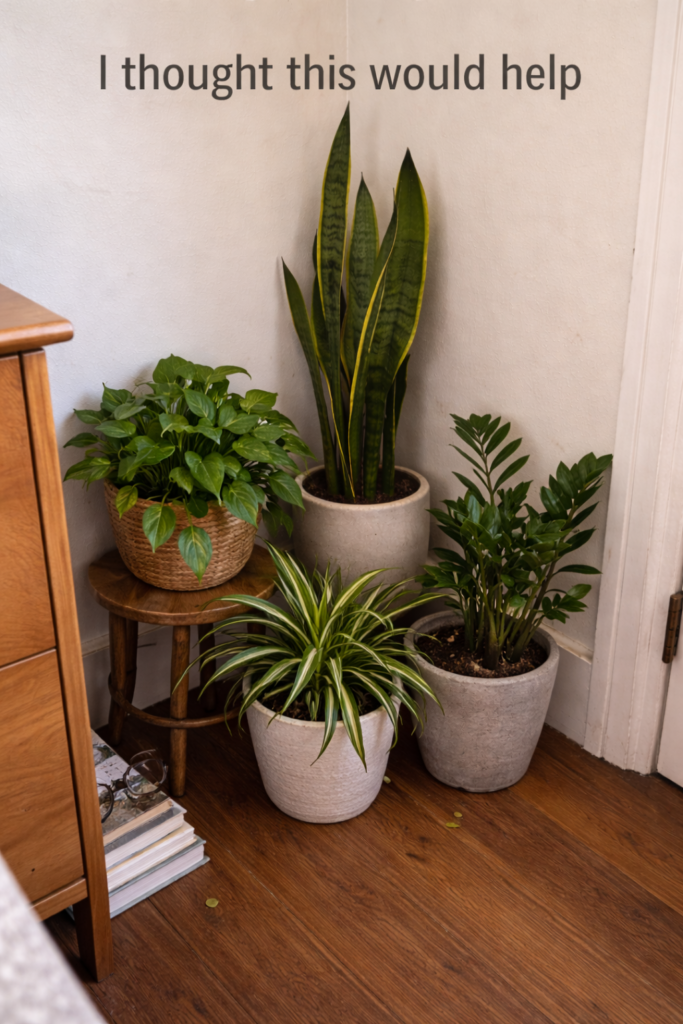
That’s usually when you notice something feels off, but can’t tell why.
The issue wasn’t quantity — the plant didn’t feel properly positioned and sitting in a pot that looked too light for it.
After moving it forward a few inches and swapping the pot, the corner worked without adding anything else.
Why Some Corners Feel Off (And How to Fix That)
In small spaces, the goal isn’t finding the “perfect spot” — it’s avoiding awkward positioning when placing a snake plant in a corner.
👉 What works better specifically for snake plants in corners:
slight asymmetry, clear separation from nearby objects, and avoiding perfectly centered placement
👉 What usually breaks the look:
treating it like a filler between furniture or forcing symmetry in a tight space
Small positioning mistakes are more visible in corners than anywhere else.
Best Snake Plants for Small Corners
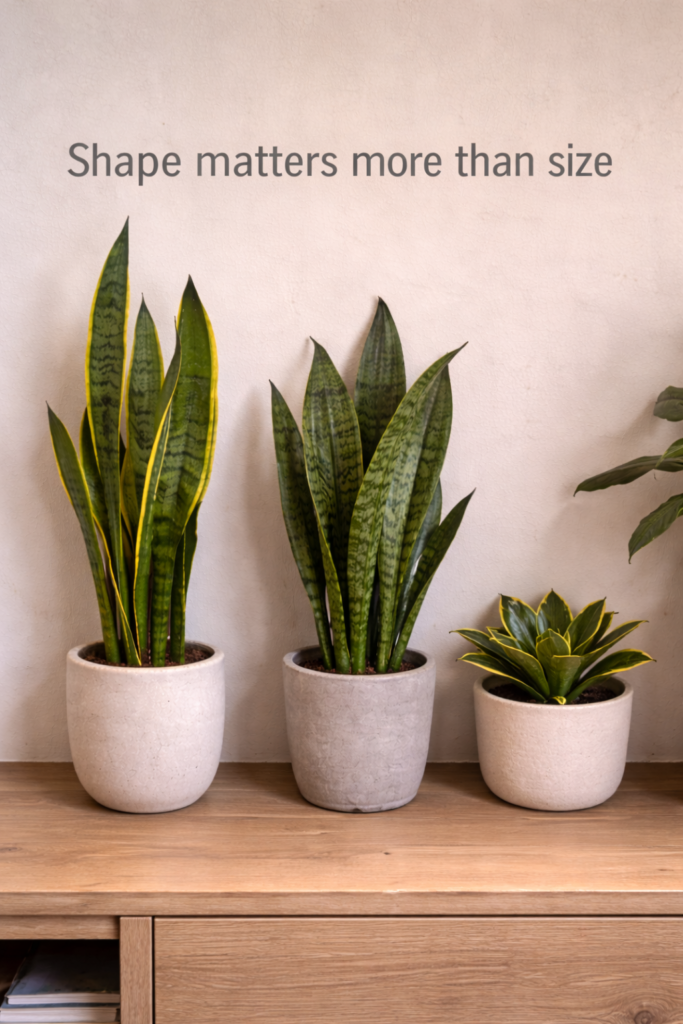
Not all snake plants behave the same visually.
For small corners, these work best:
- Sansevieria Laurentii → tall, structured, strong presence
- Sansevieria Zeylanica → slightly softer, easier to blend
- Bird’s Nest Snake Plant (Hahnii) → works only in very tight spaces
Avoid:
- very thin or irregular varieties → they don’t create a strong visual base
👉 In small corners, shape matters more than variety.
Subtle Adjustments That Make a Big Difference
These details are easy to miss, but they’re what change the result:
- Pot scale vs plant height → the base should visually support the plant
- Visual weight → the plant should feel grounded, not top-heavy
- Alignment → slightly off-center works better than perfectly centered
Here’s what makes snake plant corners tricky:
👉 The cleaner you try to make it, the easier it is to get it wrong.
When everything is too minimal — too centered, too tight, too “perfect” — the corner starts to feel artificial.
A slight imperfection usually looks better than a perfectly balanced setup.
What Usually Makes It Look Worse
👉 The more you try to “fix” the corner, the easier it is to make it worse.
Most failed setups have one thing in common: they try to “finish” the corner instead of correcting it.
Common patterns:
adding extra elements around the plant,
building a full mini-setup in a very tight space,
forcing symmetry in a naturally awkward corner,
or introducing competing elements that pull attention away from the plant
These don’t fix the issue — they make the imbalance more obvious.
If It Still Doesn’t Look Right
Run this quick check:
- Adjust the plant’s position slightly
- Check if the pot feels proportional
- Add (or remove) one nearby element
- Step back and see where your eye lands first
If your eye doesn’t go to the plant naturally, something still needs adjusting.
Final Thought
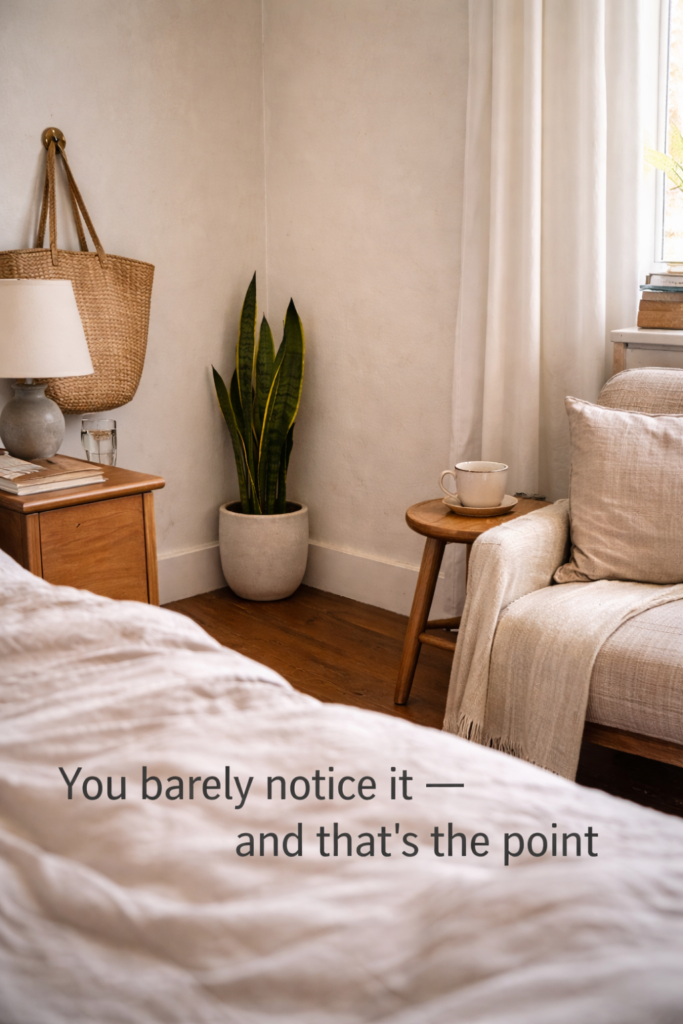
A snake plant won’t improve a bad corner — it makes the setup more obvious.
When placement and proportion are right, the corner stops drawing attention — it just works.