
Running out of room for your houseplants doesn’t always mean you need a bigger home.
These window plant shelf ideas show how to turn unused space around a window into additional room for your houseplants. Windows often have unused space above, beside, in front of, and even within the window opening itself.
From expanding a narrow windowsill to building a layered plant display around an entire window, these ideas show different ways to turn overlooked window space into a much larger indoor garden.
The best option depends on your window, available wall and floor space, natural light, and how permanent you want the installation to be.
Table of Contents
1. Extend a Deep Windowsill
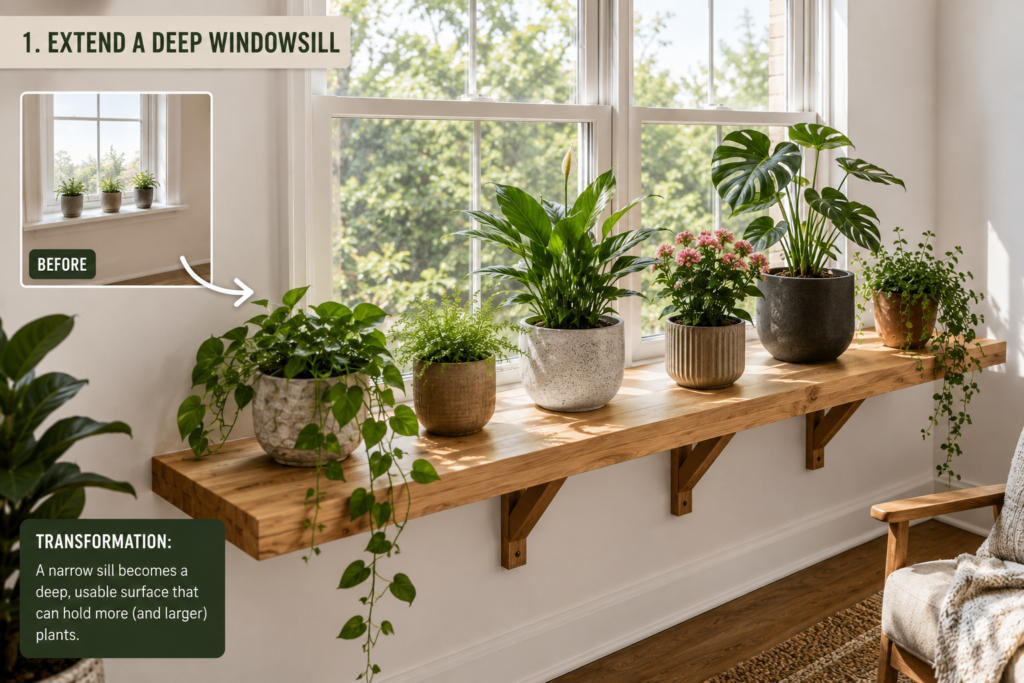
A narrow windowsill can become dramatically more useful when you extend its depth into the room.
Instead of balancing small pots on a shallow ledge, the added surface can accommodate larger planters or several smaller plants.
How it works: Add a properly supported platform that extends beyond the existing sill.
Best for: Windows with a usable existing sill that is simply too shallow.
Keep in mind: The extension needs adequate support for the weight of pots, plants, and wet soil. It should also leave the window functional.
2. Turn the Sill Into a Full-Width Plant Shelf
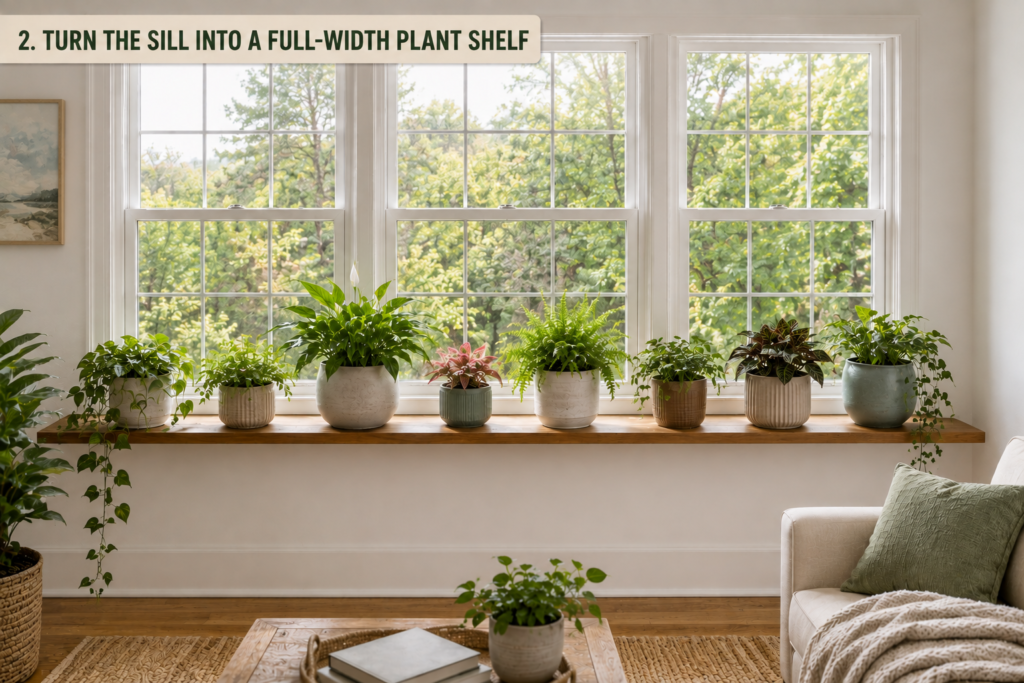
A windowsill doesn’t necessarily have to stop at the exact dimensions of the existing ledge.
A wider, continuous shelf can create one generous planting surface spanning the entire window.
How it works: Install or build a shelf that runs across the full width of the window.
Best for: Wide windows with enough clearance around the frame.
Keep in mind: Account for window handles, curtains, and the way the window opens.
3. Build a Stepped Plant Display
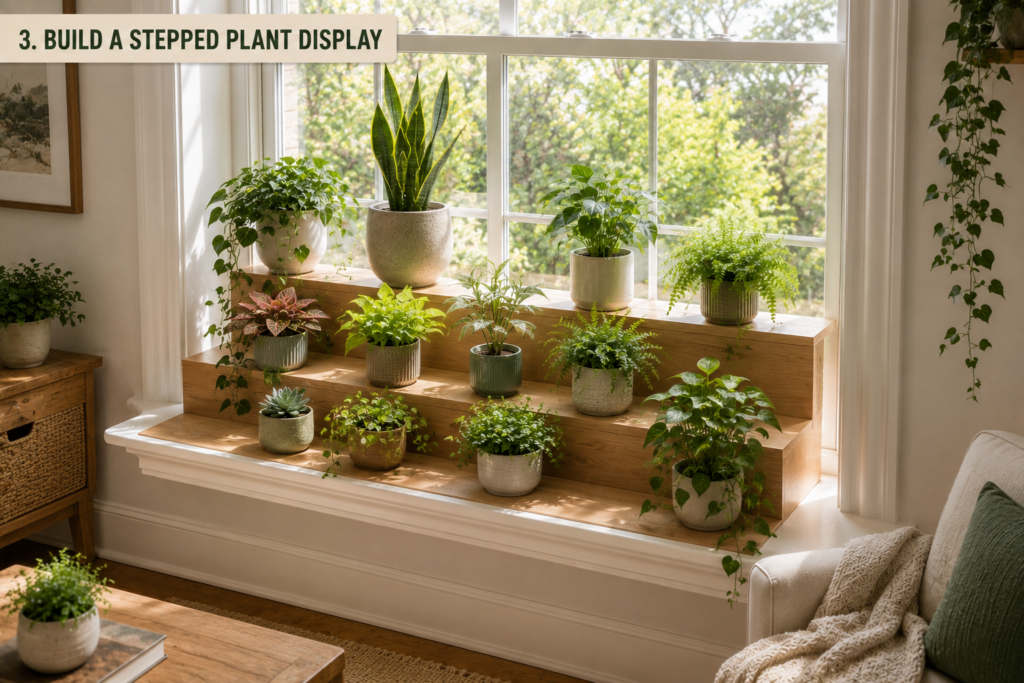
Several staggered levels can turn one shallow planting area into a deeper-looking plant display.
The stepped arrangement also keeps plants at different heights instead of creating one crowded row.
How it works: Use progressively higher platforms or risers to create multiple planting levels.
Best for: Deep sills or window areas where many small plants need to remain visible.
Keep in mind: Check how the arrangement affects light reaching plants on lower levels.
4. Add a Second Level Above the Sill
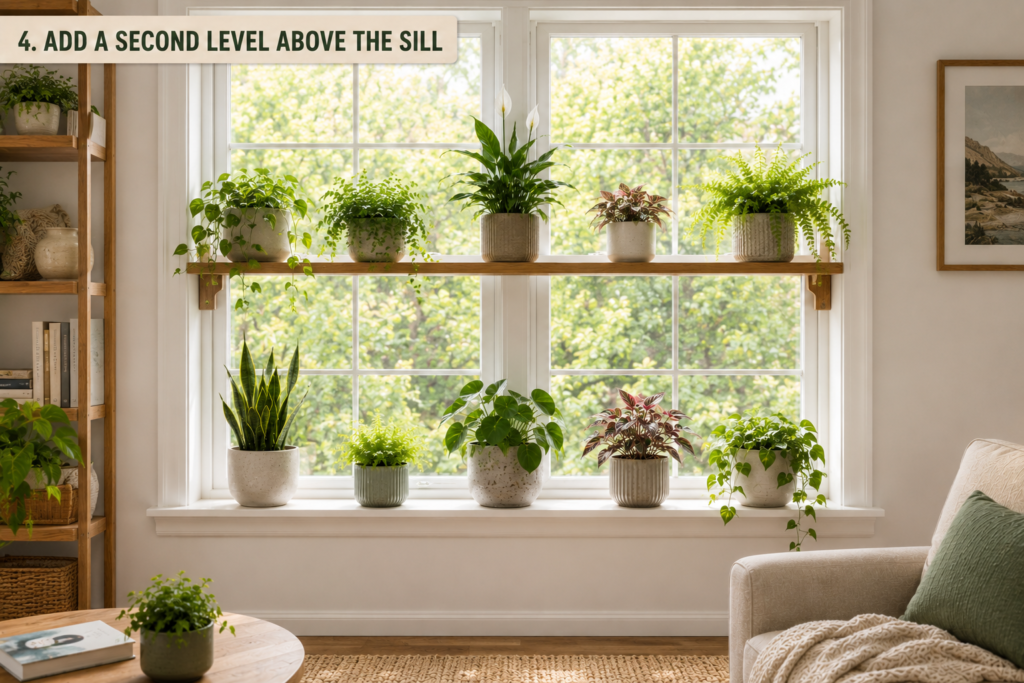
If you don’t have enough horizontal space, look upward.
A second planting surface above the existing sill allows you to use the same window footprint at two different heights.
How it works: Add a raised shelf above the existing sill while keeping enough clearance between the two levels.
Best for: Windows with unused vertical space above the sill.
Keep in mind: Avoid positioning the upper shelf so close to the glass that it interferes with ventilation or window operation.
5. Use Transparent Floating Shelves
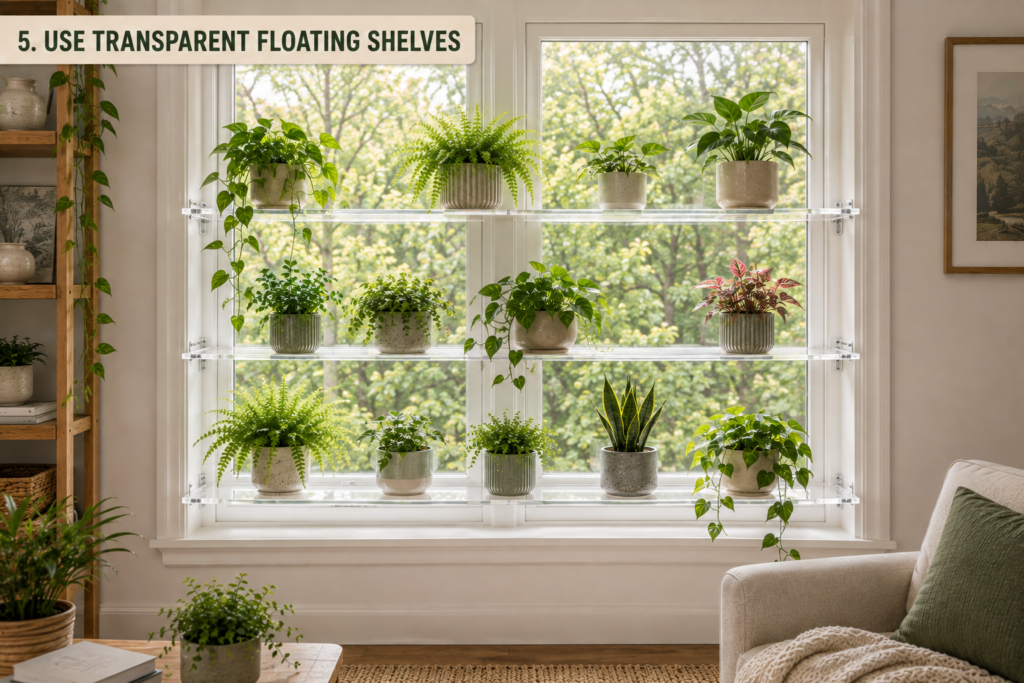
Clear acrylic or glass shelves can add planting surfaces while visually disappearing against the window.
If you’re also considering shelves for other parts of the room, see these floating plant wall shelves for additional options.
This lets the plants become the dominant visual element instead of introducing a heavy shelving structure.
How it works: Mount transparent floating shelves at different heights in front of or beside the window.
Best for: Bright windows where you want additional plant space without making the area feel visually heavy.
Keep in mind: Use appropriate mounting hardware and respect the actual load capacity of the shelves.
6. Stack Multiple Shelves in the Window
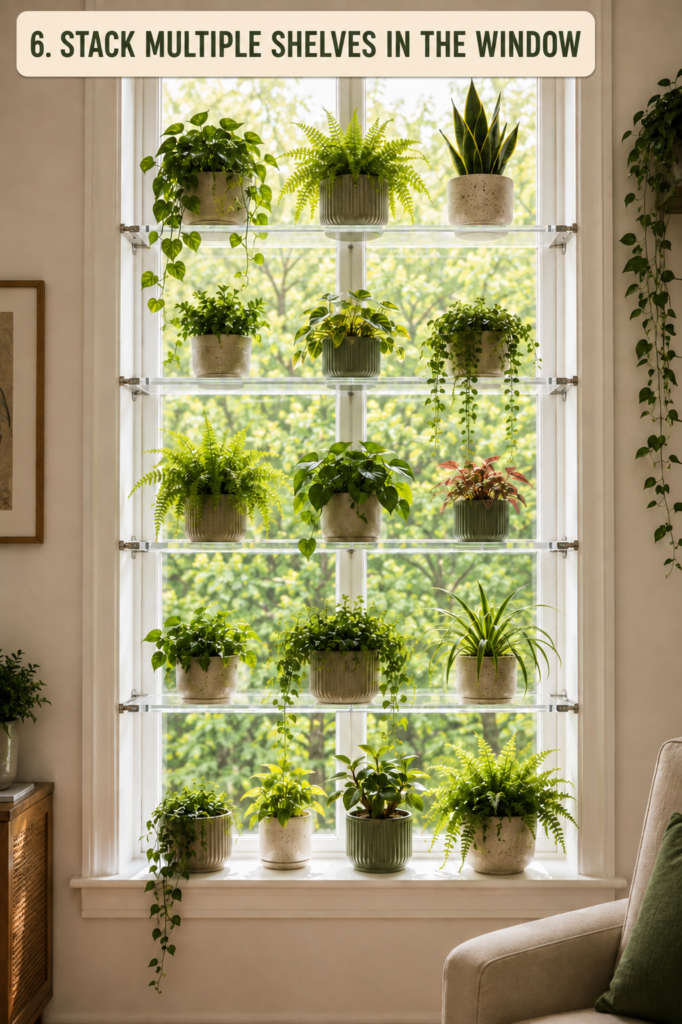
One shelf creates one additional planting surface. Several shelves can transform the vertical portion of a window into a layered indoor garden.
This approach maximizes the available height while keeping the plants concentrated around the same light source.
How it works: Install multiple shelves at different heights within the window area.
Best for: Tall windows with generous vertical clearance.
Keep in mind: Plan spacing around the mature size of the plants rather than simply maximizing the number of shelves.
7. Create a No-Drill Tension-Rod Shelf
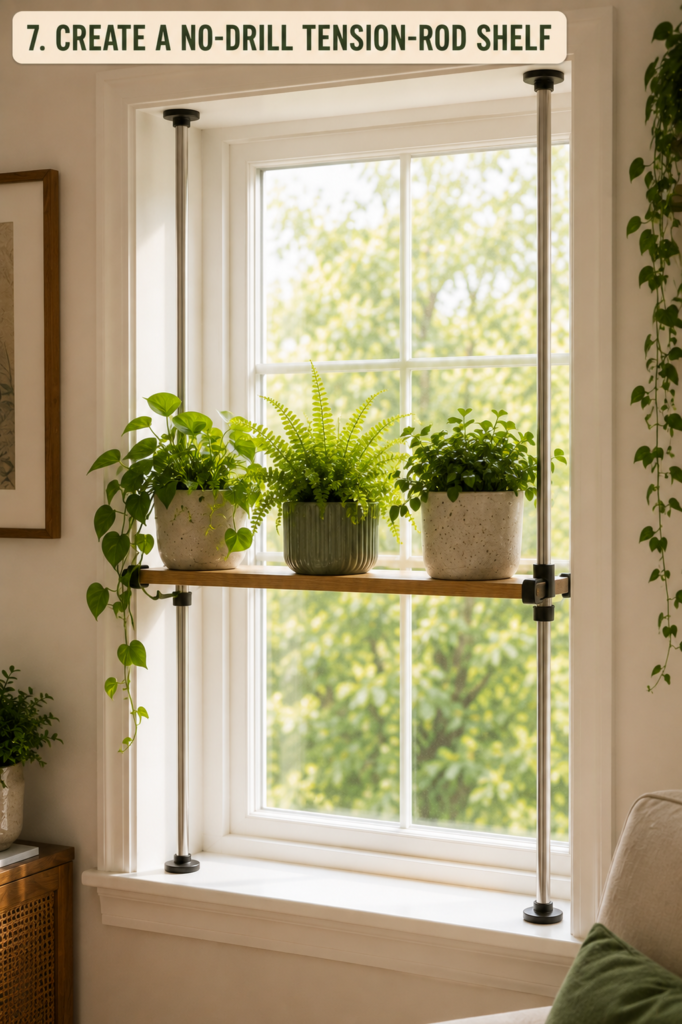
A tension-rod system can create additional shelf space inside a window opening without drilling directly into the surrounding wall.
This can be particularly useful when you want a temporary or renter-friendly solution.
How it works: Tension rods span the sides of the window opening and support a shelf or shelves.
Best for: Window openings with suitable, sturdy side surfaces.
Keep in mind: Load capacity depends on the specific hardware and installation. Do not treat a tension rod’s maximum rating as an appropriate everyday plant load without considering the weight of wet soil and mature plants.
8. Add a Tiered Plant Rack in Front of the Window
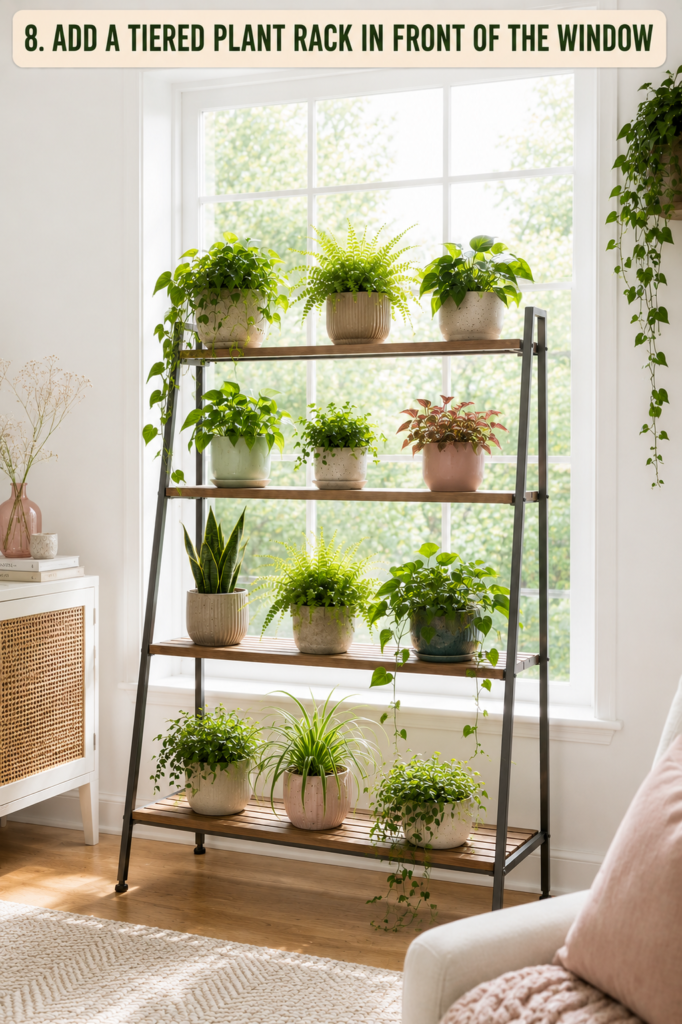
The window itself doesn’t have to support the plants.
A freestanding tiered rack placed directly in front of it can turn otherwise unused floor-to-window volume into several planting levels.
How it works: Position a multi-level rack so the plants receive useful natural light from the window.
Best for: Windows with some available floor space.
Keep in mind: Keep the rack stable and leave enough access to the window for opening, cleaning, and maintenance.
9. Use a Ladder-Style Plant Stand
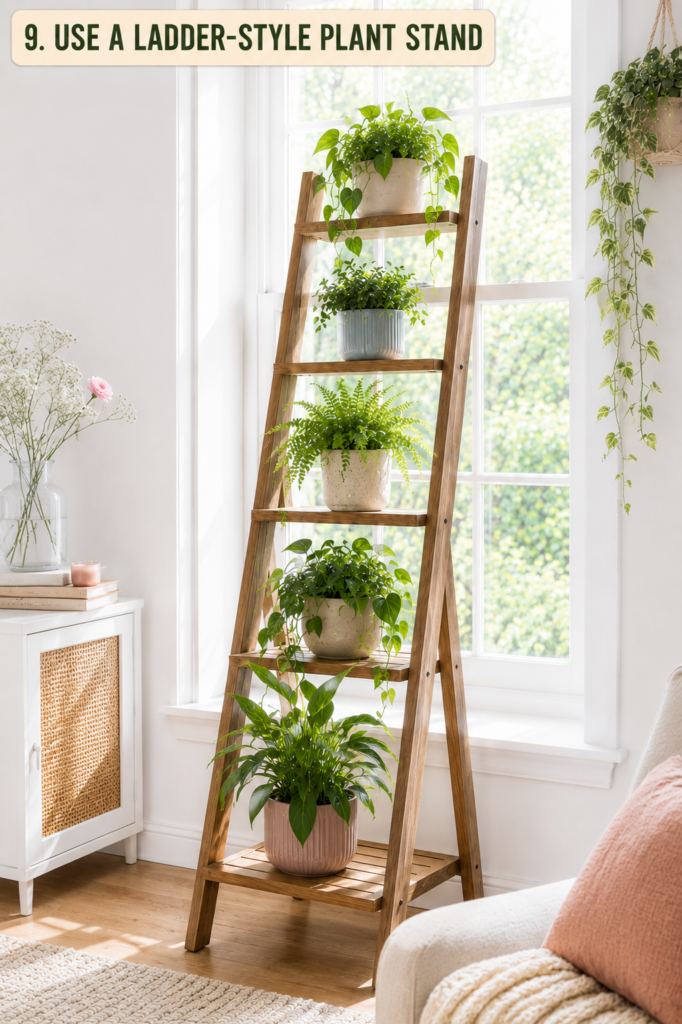
A ladder-style plant stand creates several planting levels while maintaining a relatively narrow footprint.
The progressively higher shelves also create a natural visual progression from smaller plants at the top to larger plants below.
How it works: Place plants on the horizontal levels of a leaning or freestanding ladder-style structure.
Best for: Narrow windows and rooms where floor space is limited.
Keep in mind: Keep heavier pots lower and make sure the structure is securely positioned.
10. Build a Narrow Vertical Plant Tower
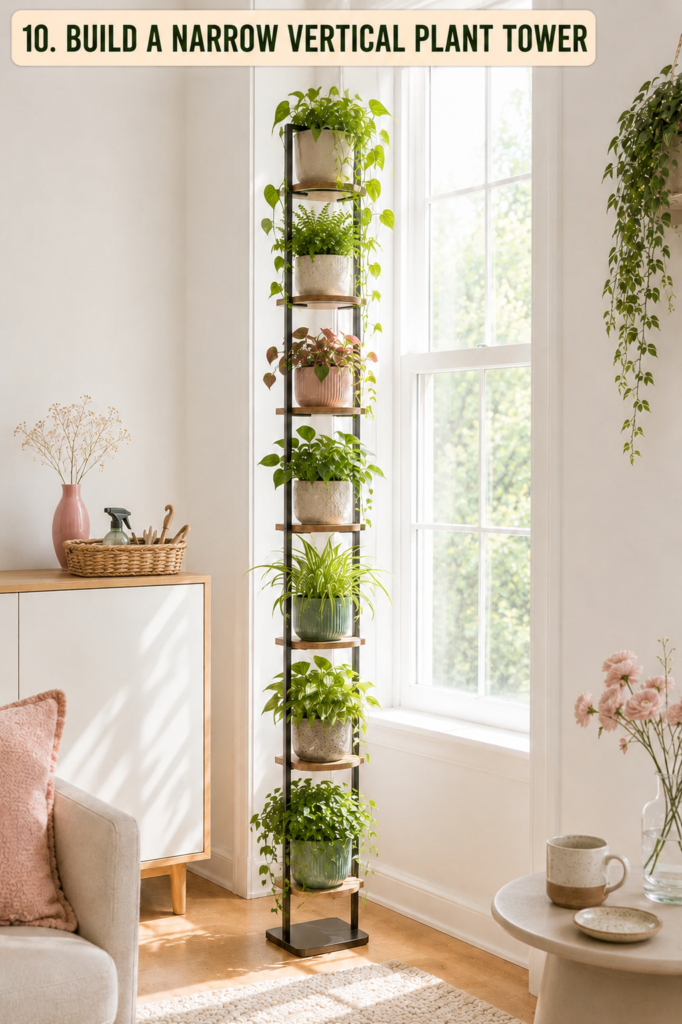
When width is limited, use height.
A narrow plant tower can stack several plants vertically while occupying relatively little floor area.
How it works: Use a tall, compact structure with multiple planting surfaces.
Best for: Small apartments, narrow windows, and tight floor plans.
Keep in mind: The taller the structure, the more important stability becomes. Consider how much light each level actually receives.
11. Use a Freestanding Multi-Level Plant Shelf
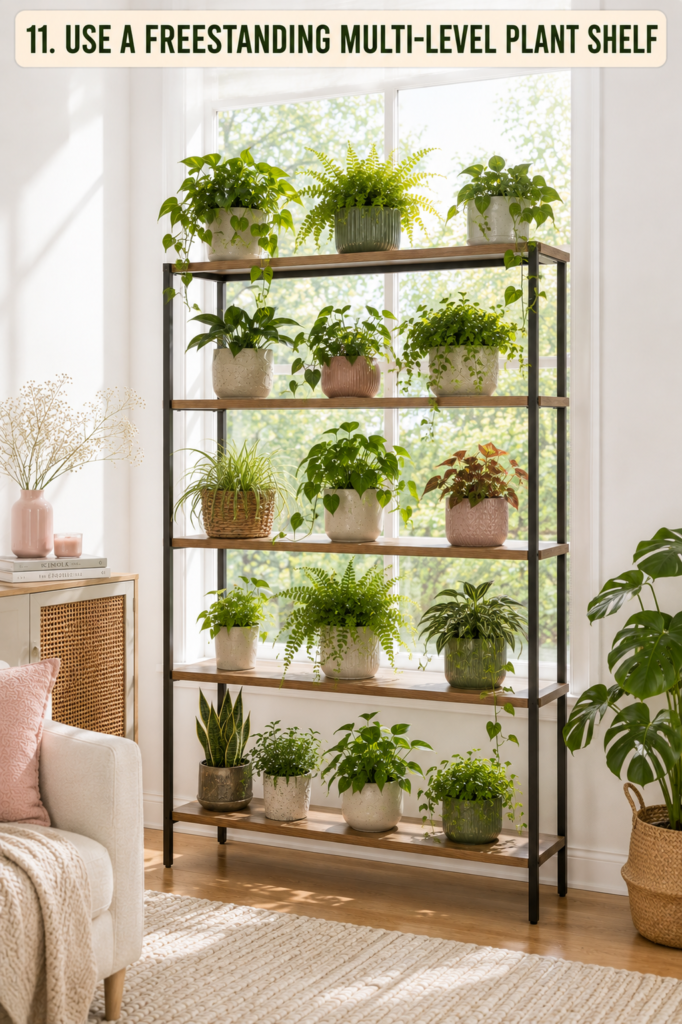
A conventional open shelving unit can become a dedicated indoor garden when positioned beside or in front of a bright window.
Instead of adding one small shelf, you’re turning an entire piece of furniture into plant-growing space.
How it works: Arrange plants across multiple open shelves and position the unit where the plants can benefit from the available natural light.
Best for: Large windows and rooms with available floor space.
Keep in mind: Keep enough space between plants for watering, maintenance, and airflow.
12. Fill the Space Beside the Window
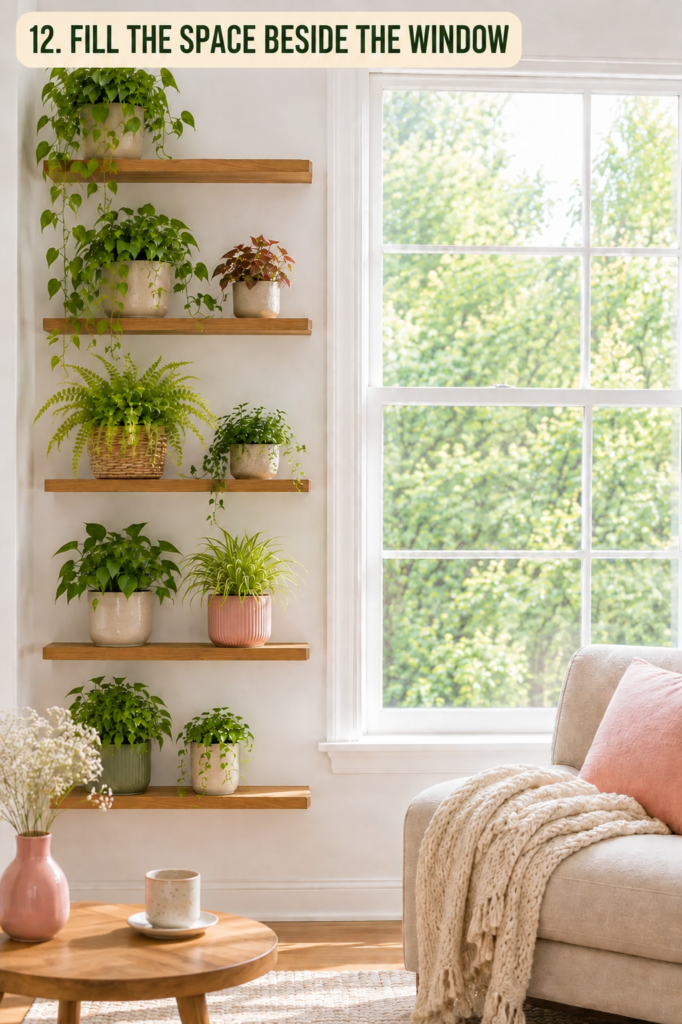
The wall immediately beside a window is often completely unused.
Adding shelves vertically along one or both sides allows you to expand the plant display without occupying the central window area. For more ways to use wall-mounted shelving throughout a room, see these indoor plant wall shelf ideas.
How it works: Install shelves or other planting surfaces alongside the window.
Best for: Windows with substantial wall space on either side.
Keep in mind: The shelves don’t need to be completely full. Leaving some negative space can keep the installation from feeling crowded.
13. Build Shelving Across the Top and Sides
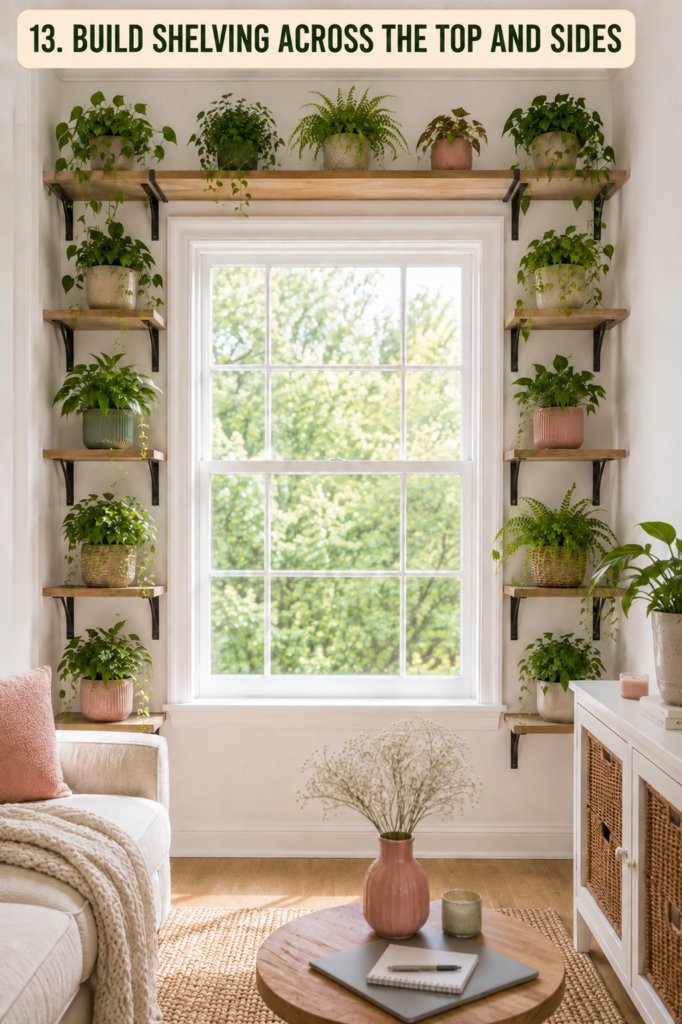
Once the sides of a window are being used, the wall above it provides another opportunity.
Combining side shelving with an upper shelf creates a three-sided composition around the window.
How it works: Use coordinated planting surfaces along the sides and across the top of the window.
Best for: Windows surrounded by enough uninterrupted wall space.
Keep in mind: Keep the actual window opening visually accessible and make sure the upper shelf remains practical to reach.
14. Frame the Entire Window With Shelving
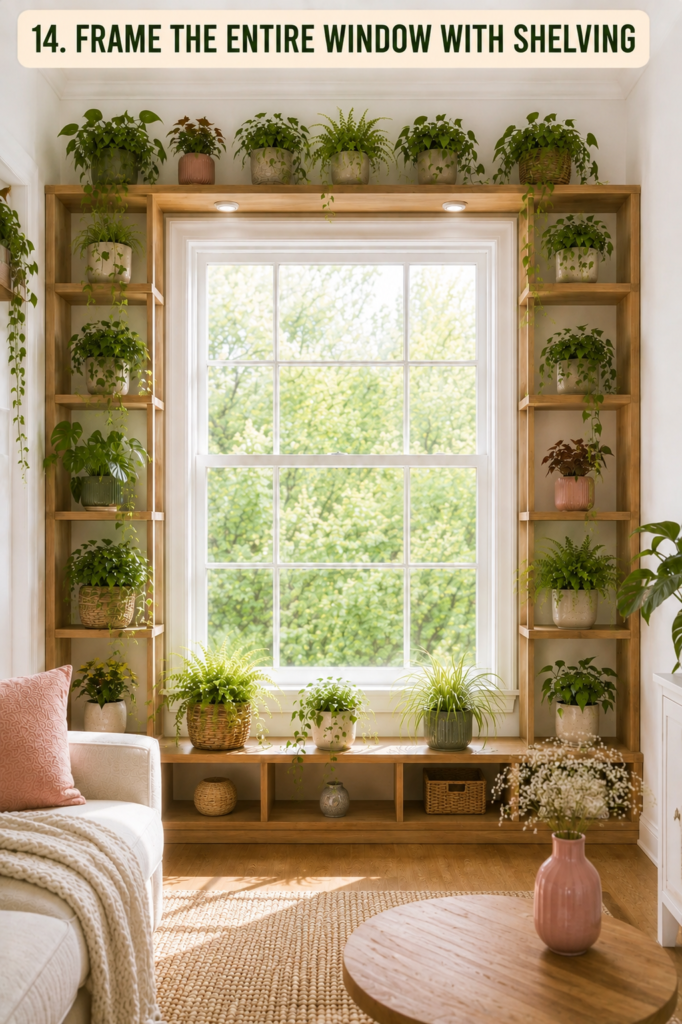
For a more dramatic transformation, treat the entire window surround as one large plant installation.
Shelving can follow the perimeter of the window, making the plants feel integrated into the architecture rather than isolated objects sitting on a sill.
How it works: Build coordinated shelving around multiple sides of the window opening.
Best for: Larger windows with generous surrounding wall space.
Keep in mind: This is a more permanent approach, so plan the structure around the room’s architecture and the way the window operates.
15. Create a Corner Plant Display Around the Window
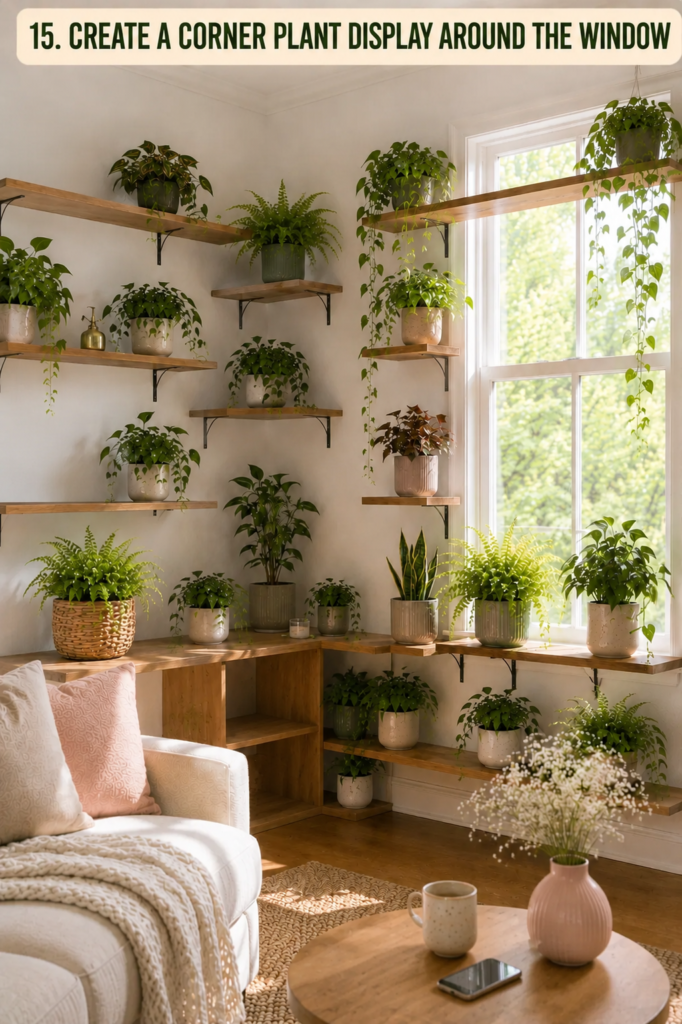
A window positioned near a room corner creates another opportunity: extend the plant display from the window onto the adjacent wall.
Instead of concentrating every plant directly in front of the glass, the arrangement can visually continue around the corner.
How it works: Combine window-adjacent shelving with shelving or plant stands on the adjoining wall.
Best for: Corner windows or windows positioned close to a room corner.
Keep in mind: Maintain a clear path through the room and avoid making the corner feel visually cramped.
16. Use the Wall Directly Above the Window
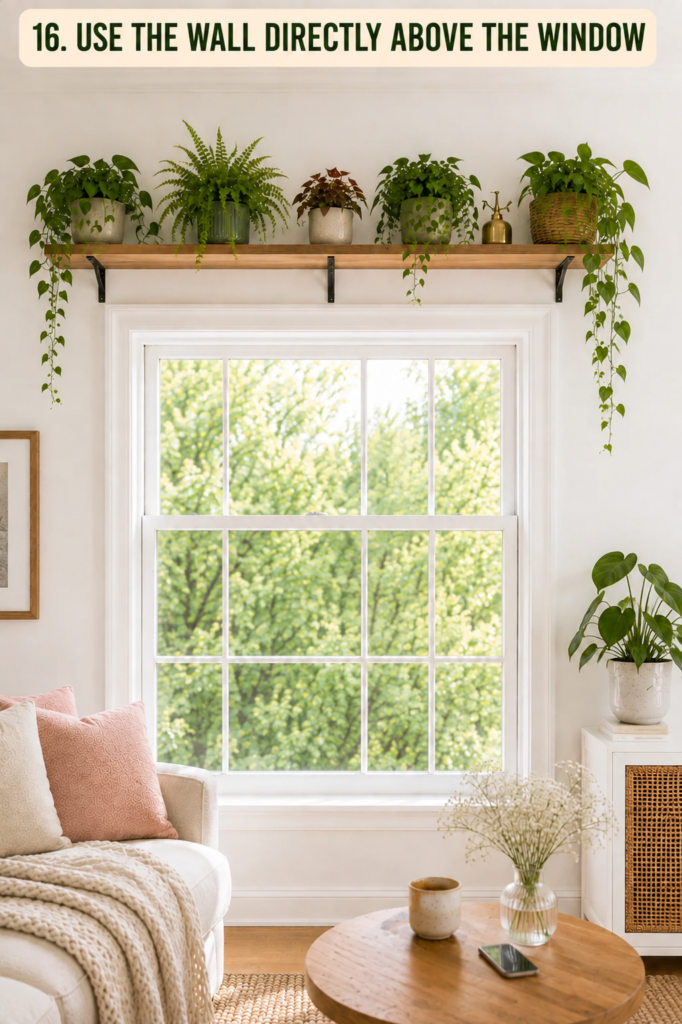
The area above a window can provide an entirely new planting level without consuming floor space.
A shelf positioned directly above the frame can hold plants while using vertical space that would otherwise remain empty.
How it works: Install a shelf above the window while keeping the frame and opening accessible.
Best for: Windows with substantial space between the frame and ceiling.
Keep in mind: Make sure the shelf remains reachable for watering and maintenance.
17. Suspend Multiple Plant Levels in Front of the Window
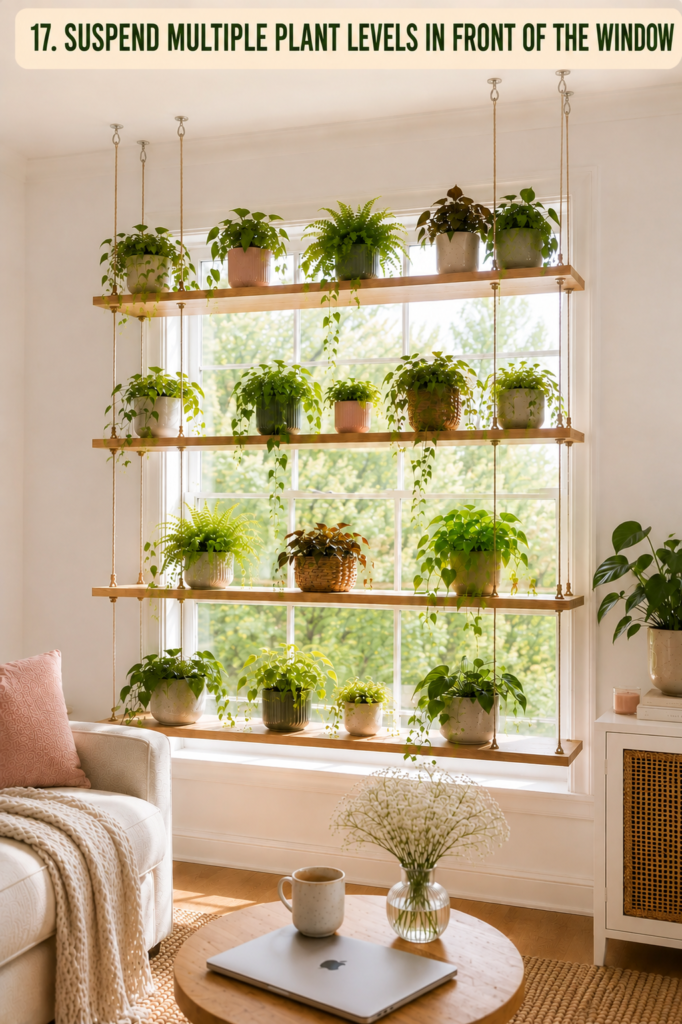
Suspended shelves can create planting surfaces at several heights without requiring a conventional floor-standing unit.
Because the shelves occupy different vertical levels, they can increase plant capacity while maintaining a relatively light visual structure.
How it works: Hang several shelves from secure overhead supports.
Best for: Tall windows with suitable overhead mounting points.
Keep in mind: The support must safely handle the combined weight of the shelves, pots, plants, and wet growing medium.
18. Hang a Plant Shelf From an Existing Curtain Rod
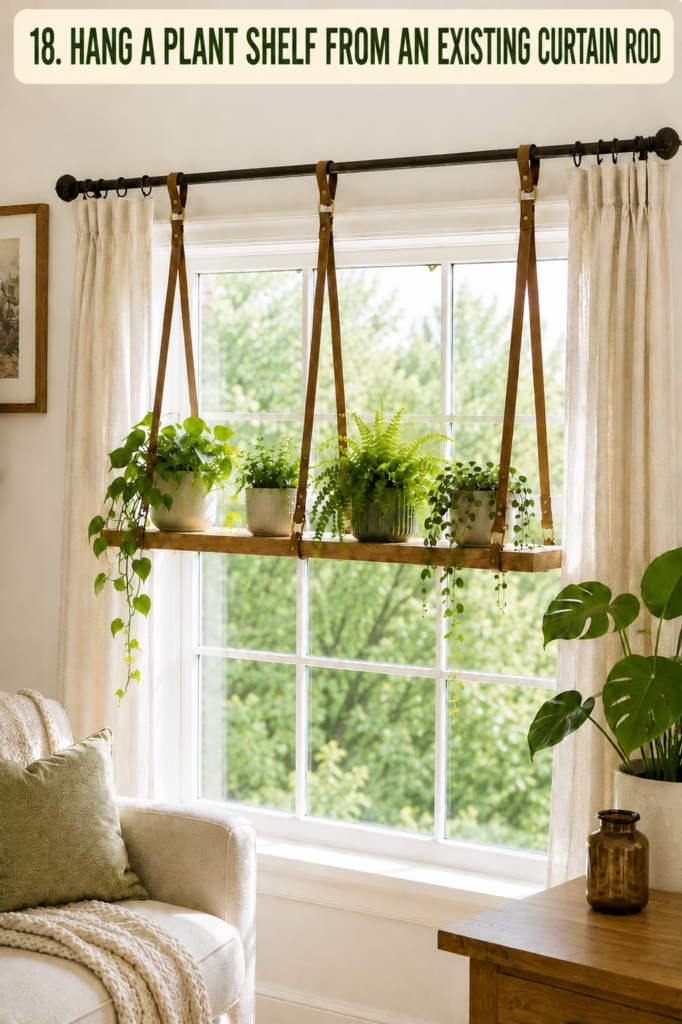
The area around a window often already contains an overhead support: the curtain rod.
Instead of hanging plants directly from the rod, you can use it as the suspension point for a single narrow plant shelf, creating additional planting space without attaching the shelf directly to the wall.
How it works: Suspend one lightweight shelf below a properly supported curtain rod using secure straps or vertical supports, then place lightweight plants on the shelf.
Best for: Windows that already have a strong, appropriately rated curtain rod and enough vertical clearance for a suspended shelf.
Keep in mind: Never assume a curtain rod designed for curtains can safely support a plant shelf. The rod, mounting hardware, suspension straps, shelf, and combined weight of pots, plants, and wet growing medium must all be suitable for the load.
19. Create a Fold-Down Plant Shelf
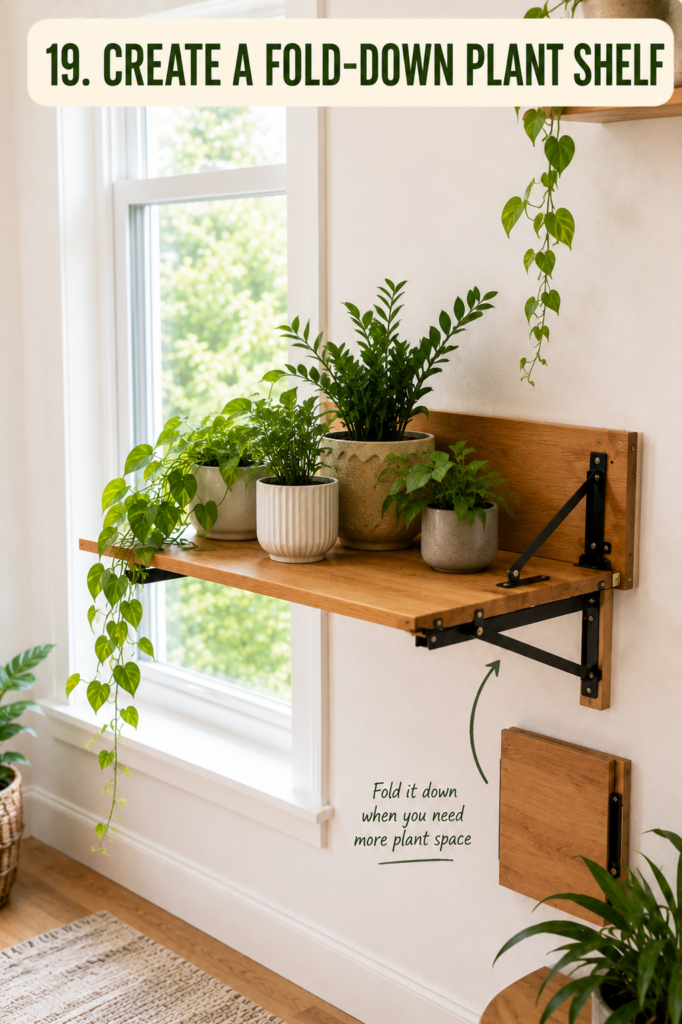
A fold-down shelf can create extra planting space when you need it without permanently occupying the surrounding area.
When extended, the shelf provides a stable horizontal surface for plants; when folded up, it stays close to the wall and frees the space below.
How it works: Install a wall-mounted hinged shelf that folds down into a horizontal position when needed. Use suitable brackets or folding supports to hold the shelf securely when extended.
Best for: Small rooms, narrow window areas, and spaces where flexibility is more important than permanent planting capacity.
Keep in mind: Make sure the hinges, brackets, wall anchors, and shelf can safely support the combined weight of the pots, plants, and wet growing medium. Leave enough clearance for the shelf to open and close without interfering with the window.
20. Create a Macramé-Hung Plant Shelf
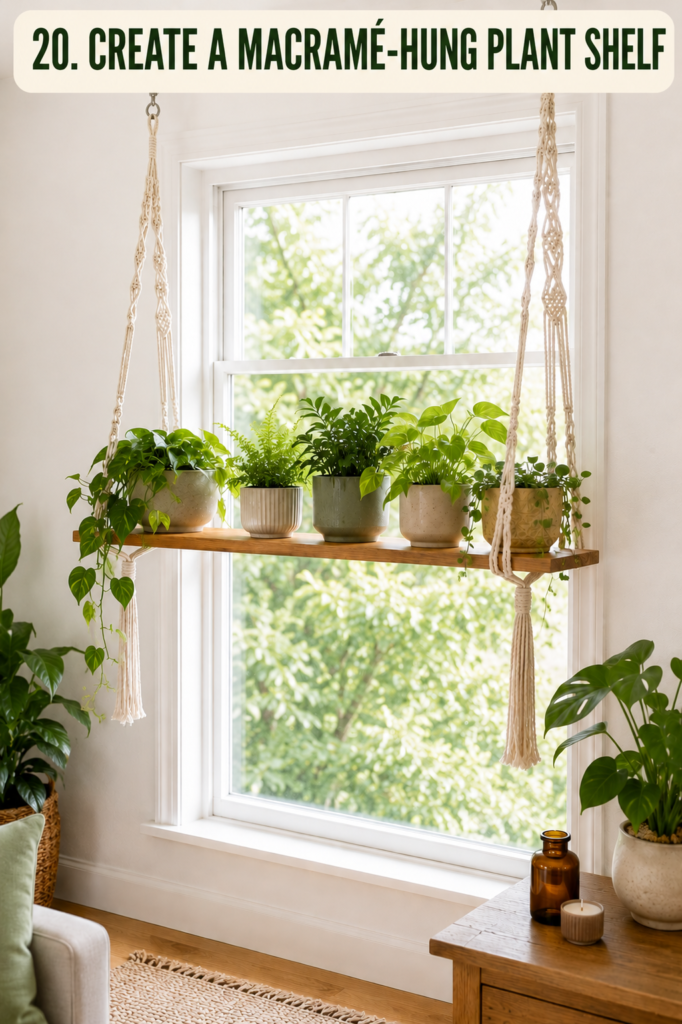
A macramé suspension system can turn a single narrow shelf into a lightweight plant display while adding vertical interest around a window.
Instead of hanging the plants themselves, the macramé supports the shelf, creating a dedicated horizontal surface for potted plants without taking up floor space.
How it works: Suspend one narrow plant shelf from the ceiling or another secure overhead support using a macramé hanger, then arrange lightweight potted plants across the shelf.
Best for: Windows with unused vertical space and interiors where a softer, handcrafted alternative to conventional shelf brackets fits the room.
Keep in mind: Use secure overhead mounting and a macramé system rated for the combined weight of the shelf, pots, plants, and wet growing medium. Keep the shelf stable and clear of the window’s moving parts.
Final Thoughts
You don’t necessarily need more floor space to grow more plants.
A window gives you several directions to expand: outward from the sill, upward within the opening, forward into the room, sideways along the wall, and downward from above.
The most effective transformation depends on what your particular window gives you to work with.
So instead of asking:
“How many plants can fit on my windowsill?”
Try asking:
“How much unused space is there around my window?”
That shift in perspective can turn a small plant collection into a much larger and more intentional indoor garden.